

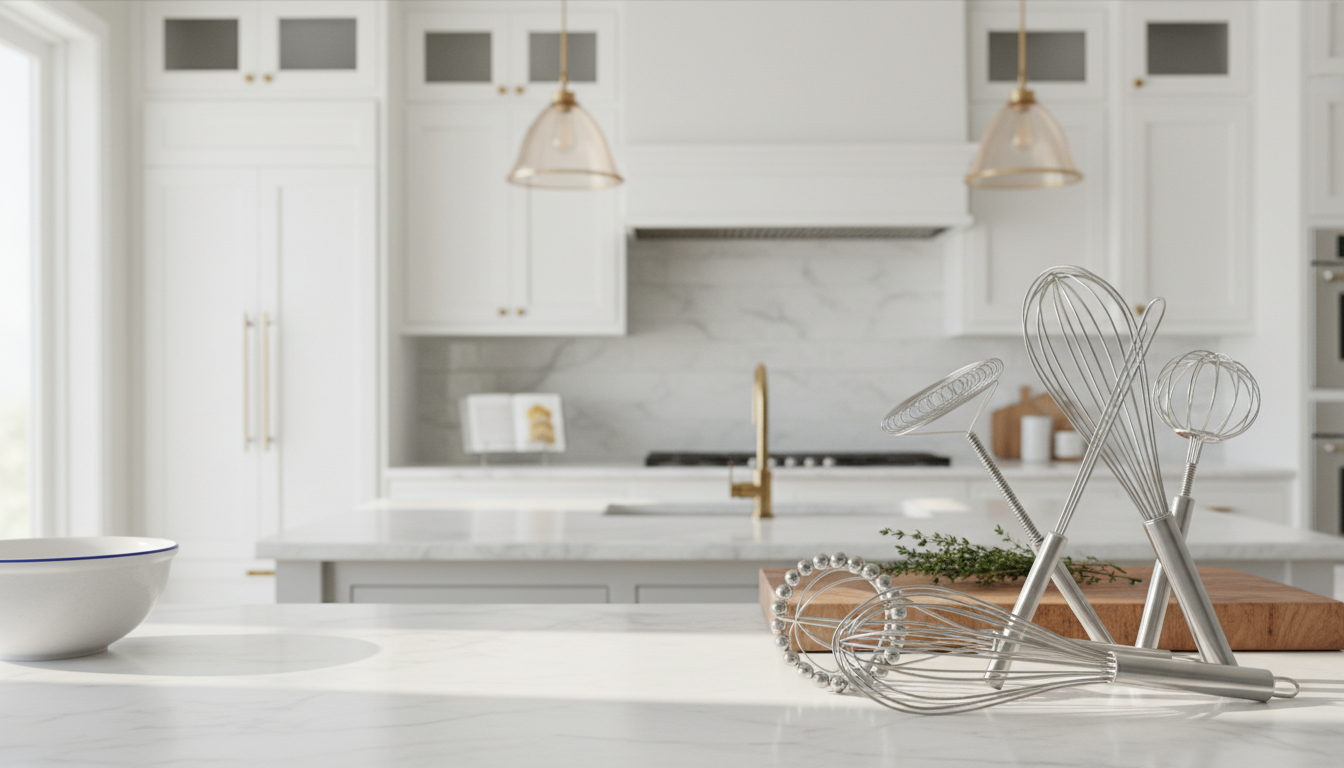
From balloon whisks that serve as the Swiss Army knife of mixing to specialized Danish dough whisks that power through thick batters without clogging, this comprehensive guide demystifies how different whisk designs transform your cooking through unique wire arrangements, materials, and techniques. You'll discover why French whisks excel at emulsifying delicate sauces while flat whisks become game-changers for gravy, learn the science behind wire spacing and thickness that determines whether you're incorporating air for fluffy meringues or powering through heavy doughs, and understand when to reach for silicone-coated versions to protect your nonstick investments. The article goes beyond basic shapes to reveal how ball whisks reach impossible corners, spiral whisks handle varying hydration levels, and twirl whisks conquer narrow containers--giving you the knowledge to choose the right tool instead of struggling with the wrong one. By mastering proper whisking motions like the side-to-side technique that doubles your aeration speed and learning maintenance secrets like cleaning with soapy whisking motions, you'll achieve better results in less time while extending your tools' lifespan. Whether you're building a three-piece starter set or adding specialized varieties for bread baking, this guide empowers you to make informed decisions based on your actual cooking habits rather than collecting unnecessary gadgets, ultimately transforming everyday tasks like whipping cream or making roux from frustrating chores into effortless kitchen victories.
Understanding Whisk Basics
Choose a stainless-steel whisk whose wire thickness, loop spacing, and handle style match your task--thick wires for heavy batters, thin wires for airy creams--so its turbulence-creating, air-trapping design blends ingredients swiftly without rusting, bending, or damaging your pan.
The anatomy of a whisk
A whisk consists of two main components: a narrow handle and a series of wire loops joined at the opposite end [1]. The wire loops vary in thickness, arrangement, and quantity depending on the whisk type [2].
Most whisks feature either multiple wires that cross and overlap before meeting at separate points in the handle, or a single continuous wire that forms specific shapes [3]. The wire construction allows whisks to perform two essential functions: incorporating air into ingredients and thoroughly blending mixtures [2].
The best whisks use high-quality stainless steel wires that won't rust or bend during use, ensuring reliable performance whether you're whipping cream or mixing pancake batter [3].
Materials used in whisk construction
Modern whisks use materials carefully chosen for durability and functionality. The most common material is stainless steel - it won't rust, react with acidic ingredients, or lose its shape over time [4].
Wire thickness matters too: thicker wires power through heavy batters while thinner ones offer the flexibility needed for delicate sauces [4]. Handles come in different styles - all stainless steel for durability or ergonomic grips that make extended whisking more comfortable.
Just be careful with soft-grip handles near heat, as not all are designed to withstand high temperatures [4]. For specialized needs like protecting nonstick surfaces, we'll explore silicone-coated options in detail later.
The science behind whisking
Whisking works through two simple but powerful effects: creating turbulence and trapping air. As you move a whisk through liquid, it creates swirling currents that blend ingredients thoroughly [5]. The wire loops also capture tiny air bubbles that expand throughout your mixture - that's what makes whipped cream fluffy and meringues light [5].
Wire spacing is crucial here. Too close together and ingredients get stuck; too far apart and they won't mix properly. That's why different whisks excel at different tasks [5].
Here's a practical tip: when whipping egg whites or cream, use a side-to-side motion rather than stirring in circles. This creates more friction and incorporates air faster, giving you better results in less time [6]. Understanding these basics helps you choose the right whisk and technique for each recipe.
Classic Whisk Designs
Choose the balloon whisk as your all-purpose kitchen MVP for everything from folding custards to mixing pancake batter, but reach for the precision-packed French whisk when you need flawlessly airy hollandaise or vinaigrette that won't separate.
Balloon whisks: The versatile kitchen staple
Think of the balloon whisk as your kitchen's Swiss Army knife - those rounded wires that expand into a bulbous shape handle just about any mixing task you throw at them. The curved design hugs the contours of your mixing bowls perfectly, so you can scrape every bit of batter without leaving anything behind [7]. Here's what makes them so practical: they have just enough wires to get the job done without turning into a sticky mess when you're working with thick batters.
Plus, cleanup is a breeze - just tap the whisk against your bowl edge and trapped ingredients fall right out [8]. Now, you might think the balloon shape means they're perfect for whipping meringues, but that's actually not their strong suit. If you're serious about aeration, look for models with an extra layer of tines [7].
What balloon whisks really excel at is versatility - from folding delicate custards to combining dry ingredients for your weekend pancakes [9]. If you're building your kitchen tool collection and can only choose one whisk, this versatile style gives you the most bang for your buck [7].
French whisks: Precision for sauces and custards
French whisks are the precision instruments of the whisk world. With their narrower shape and more tightly-packed wires, they give you the control you need for finicky tasks like emulsifying a vinaigrette or whisking up a silky hollandaise [10]. The tapered design is particularly handy when you're working in smaller pots - you can reach right into the corners where ingredients like to hide.
Those densely-packed wires are also champions at beating air into eggs for the fluffiest scrambled eggs you've ever made, or transforming cream into perfect peaks [11]. Just keep in mind that all those wires can work against you with thick batters. Cookie dough or heavy pancake batter will get stuck between the tines and turn cleanup into a chore [11].
Save your French whisk for what it does best: creating smooth, perfectly blended sauces and dressings that would make any chef proud [10]. When you're working in tight spaces like a small saucepan, this whisk's narrow profile really shines [11].
Flat whisks: Ideal for deglazing and roux
The flat whisk might look unusual with its wide, U-shaped design, but once you use one for making gravy or deglazing a pan, you'll understand why it's a game-changer. Those stainless steel wires arranged in a flattened pattern can reach every corner of your pan and scrape up all those delicious browned bits that add so much flavor to your sauces [12]. What really sets flat whisks apart is their simplified wire arrangement - ingredients don't get trapped like they do in traditional whisks.
Everything stays in your sauce where it belongs, and cleanup becomes remarkably easy [12]. When working with non-stick cookware, you'll want to protect those surfaces (we cover silicone-coated options in detail later in this guide) [10]. This is your go-to tool for making a perfect roux, smooth gravy, or any custard that needs constant attention.
The flat design lets you maintain contact with the pan bottom, preventing scorching and ensuring even cooking. Just remember - this isn't the whisk for whipping cream or mixing cake batter. It's a specialist that does a few things exceptionally well [10].
Specialized Whisk Varieties
Ball whisks reach the corners your balloon whisk misses, but when you need one tool to handle everything from runny batter to stiff bagel dough, the spiral whisk's coiled wire delivers uniform mixing without collapsing or clogging.
Ball whisks: Innovative spherical design
Ball whisks feature individual wires tipped with small weighted spheres that splay out from the handle, rather than forming connected loops. This unique design excels at reaching into sharp pot corners where traditional rounded whisks can't access, while also providing excellent coverage across flat surfaces like skillets.
The weighted balls allow the wires to naturally conform to the shape of any container, making them particularly effective for mixing light batters and working in measuring cups. However, ball whisks have limitations - their tines tend to collapse to a single point when working with thick custards or heavy batters, making them less versatile than balloon whisks for general use.
For home cooks, ball whisks prove most valuable for tasks like scrambling eggs in a pan or blending ingredients in tight spaces, though they're not ideal for recipes requiring precise stirring control.
Spiral whisks: Coiled efficiency for small batches
Spiral whisks excel at handling both low and high-hydration mixtures through their coiled wire design. The spiral configuration creates optimal stretching action while maintaining consistent mixing results across small batches.
Unlike traditional balloon or French whisks, spiral whisks can effectively process varying textures - from light, airy batters to denser doughs - making them particularly versatile for tasks like preparing baguette dough, bagels, and various bread types. Their specialized shape allows for thorough ingredient distribution while maintaining precise control over the mixing process.
When choosing between whisk styles for batch mixing, spiral designs offer unique advantages through their ability to create uniform results while adapting to different hydration levels and recipe requirements. Note that spiral whisks differ from sauce whisks (covered in the next section) in their mixing action and primary uses - while sauce whisks pump vertically, spiral whisks work through rotational motion for dough processing.
Dough whisks: Tackling thick batters and doughs
The Danish dough whisk, known as 'brodpisker' in Denmark, features a unique three-dimensional design with stainless steel coils arranged in different sizes. This specialized whisk excels at mixing thick doughs and batters without getting clogged, functioning as a hybrid between a wooden spoon and balloon whisk.
Its minimal surface area and rigid wire construction allow it to cut through dense mixtures while preventing ingredients from sticking, making it particularly effective for bread doughs, muffins, and other thick batters. The whisk's open shape proves especially valuable for incorporating add-ins like dried fruits and nuts evenly throughout doughs without creating patchy distribution.
While excellent for initial mixing and combining ingredients, the dough whisk doesn't replace hand kneading for developing gluten strength - it works best to bring ingredients together until the dough becomes cohesive and manageable. For bakers who frequently work with heavy batters and doughs, a quality whisk paired with this specialized dough tool creates the perfect mixing arsenal.
Types of Whisks: A Comprehensive Guide to Whisk Varieties
From spiral and twirl whisks that reach into the tightest corners with an up-and-down pump, to silicone-coated ones that safeguard your nonstick pans at searing 600 degreesF, each whisk variety unlocks specific culinary superpowers you'll wield the moment you match the tool to the task.
Sauce whisks: Designed for reaching pan corners
As we explored with spiral whisks earlier, the sauce whisk shares that same ingenious single-wire coiled design. What makes this tool special is how it transforms your whisking motion - instead of the usual circular stirring, you'll use an up-and-down pumping action that's surprisingly effective at reaching into pan corners and scraping up those flavorful bits stuck to the bottom.
This pumping technique works wonders when you're incorporating liquid into deep pans or building a sauce from scratch. While it might look similar to a balloon whisk at first glance, the single-wire construction gives you distinct advantages for sauce work, though you'll want to reach for a flat or balloon whisk when you need more precise control for delicate emulsions.
Twirl whisks: Compact solution for small containers
Twirl whisks, sometimes called galaxy whisks, are your go-to tool when working in narrow containers like measuring cups or small jars. Their single springy coil design makes them perfect for those times when a regular whisk just won't fit.
The flexible spiral shape naturally conforms to reach every corner and the base of your container, ensuring you get smooth, evenly mixed results every time. These specialized whisks shine when you're working with small batches of custards or dissolving gelatin, though keep in mind they're designed for liquids only - that flexible coil won't handle thick batters.
Quality versions use durable 18/10 stainless steel that will last for years with proper care. While they're fantastic for specific tasks, you'll still want a balloon or French whisk on hand for more versatile mixing needs.
Silicone-coated whisks: Protecting non-stick surfaces
Silicone-coated whisks are essential kitchen tools when you're working with nonstick cookware or enameled Dutch ovens - surfaces that need extra care to stay scratch-free. These whisks feature traditional wire loops wrapped in heat-resistant silicone that can handle temperatures up to 600 degreesF, making them safe for everything from stovetop cooking to hot sugar work. The best designs use eight moderately flexible loops at different lengths, giving you multiple contact points with your ingredients while being gentle on your cookware.
When shopping for a silicone whisk, pay attention to the handle comfort - you'll want something with an ergonomic grip that won't slip when things get steamy in the kitchen. Skip those thin steel handles that can become slippery and uncomfortable during longer mixing sessions. While silicone whisks might feel a bit less responsive than metal ones when tackling thick batters, they're unbeatable for protecting your investment in quality cookware.
Look for
Choosing the Right Whisk for Your Kitchen
Pick one versatile, ergonomic-handled whisk that matches your most frequent kitchen tasks, clean it immediately after use with a quick soapy-water whisking motion, and you'll out-perform a drawer full of neglected tools while keeping bacteria and rust at bay.
Assessing your cooking needs and preferences
Selecting the right whisk starts with understanding your primary cooking needs. Rather than collecting every style, focus on the tasks you perform most often.
As covered in the Classic Whisk Designs section, certain whisks excel at specific applications - but your cooking habits should guide your choices. Consider how often you make sauces, whip cream, mix batters, or work with delicate cookware.
Test potential whisks by mimicking your typical whisking motions - a comfortable grip becomes essential during extended use, and handles with ergonomic designs or silicone grips often provide better control [23]. Start with one versatile option that matches your most frequent tasks, then add specialized tools as your needs evolve.
Whisk maintenance and care tips
Proper whisk maintenance starts with immediate cleaning after use - either wash right away or place in water to prevent ingredients from hardening. For efficient cleaning, fill a bowl with warm soapy water and use whisking motions to clean between the tines, letting the same action that mixes ingredients remove debris [24].
This method proves especially effective for reaching narrow spots where tines connect to handles, which can be difficult to clean with traditional sponge methods [24]. For whisks used with raw eggs or oily ingredients, thorough cleaning becomes particularly important to prevent bacteria growth [24].
Clean whisks prove their worth with tasks like making ganache or working with chocolate, creating smoother textures in less time than traditional spoons [25]. For wooden-handled whisks that can't go in dishwashers, this manual cleaning method helps maintain the tool's integrity while ensuring complete sanitization [24].
Investing in a quality whisk set
When investing in quality whisks, prioritize versatility and durability over quantity. A well-chosen collection typically includes three core pieces based on the whisk types detailed throughout this guide. Quality construction matters - look for stainless steel wires that resist rust and remain non-reactive with acidic ingredients, paired with handles featuring ergonomic non-slip grips for comfort during extended use [26].
For optimal functionality, whisks with moderately wide shapes between 2-3 inches at their widest point provide effective aeration while maintaining maneuverability [27]. The Misen whisk exemplifies these qualities with professional-grade construction designed for everyday use. As you build your collection, add specialized options based on actual needs - perhaps a mini whisk for small batches or additional silicone-coated versions if you frequently use multiple pieces of nonstick cookware.
Remember that a few well-made whisks will outperform a drawer full of mediocre options.
- Balloon whisks are the most versatile all-purpose kitchen whisk for general mixing tasks.
- French whisks excel at emulsifying sauces and beating air into eggs in small pots.
- Flat whisks are ideal for making gravy, roux, and deglazing pans while preventing scorching.
- Danish dough whisks handle thick batters and bread doughs without clogging like traditional whisks.
- Silicone-coated whisks protect nonstick cookware from scratches and withstand high heat.
- Choose whisks based on your primary cooking tasks rather than collecting every specialized type.
- Clean whisks immediately after use by whisking in warm soapy water to remove debris from tines.
- https://www.allrecipes.com/types-of-whisks-7486198
- https://www.culinarydepotinc.com/blog/types-of-whisks-and-their-uses/?srsltid=AfmBOoqvCW7X3nRCcZNs30ynE36shHj2zWq5YAFV3LgShjjcYq9Iwu3W
- https://joythebaker.com/2016/06/baking-101-whats-in-a-whisk/
- https://www.thespruceeats.com/best-whisks-5079742
- https://www.wasserstrom.com/blog/2023/09/07/whisks-the-silent-heroes-of-your-kitchen-arsenal/?srsltid=AfmBOoq16Iz6vbowew1wEPPwHv5L0aeD56hFOKKh3Th78DPKzkPtZI85
- https://misen.com/blogs/news/what-is-a-whisk-used-for-unveiling-its-essential-culinary-role?srsltid=AfmBOoo8oX5HxUyoLtAGUkkzOCH_MzynYYQExsEd6yhORXBbQ0ukgycT
- https://www.seriouseats.com/how-to-know-which-whisk-to-use
- https://www.culinarydepotinc.com/blog/types-of-whisks-and-their-uses/?srsltid=AfmBOor4933WU0PRwyWv1jgvEcQFUc--2zZje992zliYeM7P0tE9J-83
- https://www.goodfoodstories.com/types-of-whisks/
- https://www.tasteofhome.com/article/whisk-types-guide/
- https://www.thekitchn.com/differents-kinds-of-whisks-23186616
- https://misen.com/blogs/news/what-is-a-whisk-used-for-unveiling-its-essential-culinary-role?srsltid=AfmBOoq4LmdYNwJv2vPVvWT1hdOSd5Lp8-9aBAh5nnehoN-Dg_zJwuYA
- https://bakingbiscuit.com/as-great-as-the-sum-of-its-parts/
- https://www.epicurious.com/expert-advice/this-danish-dough-whisk-can-make-any-bread-cake-or-muffin-better-article
- https://www.seriouseats.com/danish-dough-whisk-brodpisker
- https://www.kingarthurbaking.com/blog/2021/05/13/dough-whisk-better-baking
- https://www.wasserstrom.com/blog/2023/09/07/whisks-the-silent-heroes-of-your-kitchen-arsenal/?srsltid=AfmBOorfy28Fz7LT9l6ceskpPByg3S3mYx-ai6aBnZndWmSF8s7qg9CI
- https://www.culinarydepotinc.com/blog/types-of-whisks-and-their-uses/?srsltid=AfmBOorA-iP4CaDqhSNs3fgbLXeDX0pYesOjWTfmNaH49LXfID3eqtJH
- https://thepracticalkitchen.com/favorite-whisks/
- https://gygi.com/blogs/news/which-whisk-should-you-use?srsltid=AfmBOoo0Y05J3TiClxe4Wly5LkQtVMlpZPi6t_dL8xtZFnz6wCcW3iba
- https://www.americastestkitchen.com/equipment_reviews/2253-nonstick-whisks
- https://www.wasserstrom.com/blog/2023/09/07/whisks-the-silent-heroes-of-your-kitchen-arsenal/?srsltid=AfmBOoqXwhJ8UFuzLD64w40v2GPbSUy4ljD51lWRAaa981mGjz7Aj7sp
- https://www.thespruceeats.com/whisks-buyers-guide-909071
- https://www.thekitchn.com/best-easiest-way-to-clean-a-whisk-257765
- https://gygi.com/blogs/create/the-gygi-guide-to-whisks?srsltid=AfmBOorb-lA4AKC2iKXj7wwcOl9kUp-XswJkEZS_980If31nuxHU6W0f
- https://www.seriouseats.com/best-whisks-11728337
- https://www.foodandwine.com/best-whisks-7547120
- https://www.bonappetit.com/story/best-whisk?srsltid=AfmBOoqAVF6Ym7TUW06OgPDBP8aTe-kC3zPJJSKEqZr2Pgrs79rz5-hY