

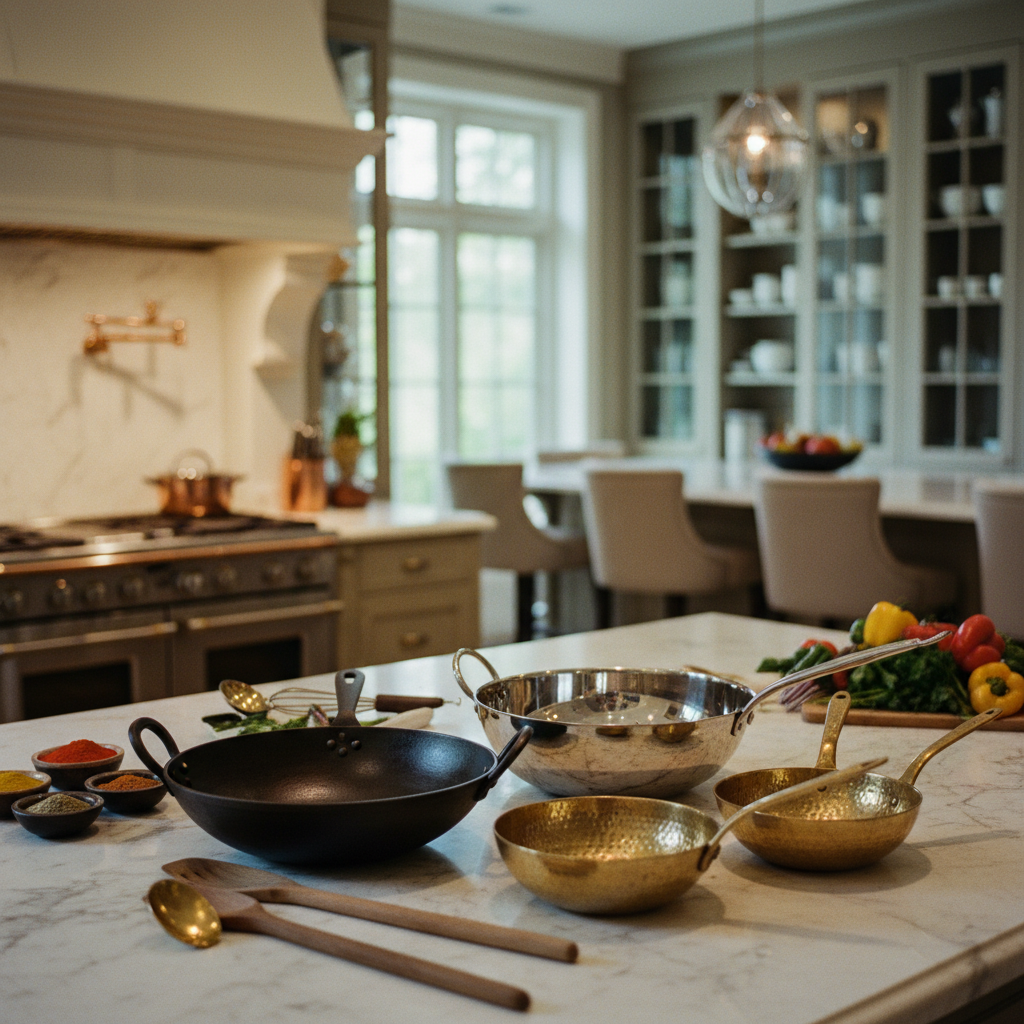
The kadai--India's ancient, deep, circular pan that fuses the best traits of a wok and Dutch oven--delivers even heat, splash-free frying, and one-pot convenience for everything from week-night stir-fries to slow-simmered curries, and this guide equips you to choose, use, and maintain one like a pro. You'll discover how cast-iron enriches food with natural iron and ages into a non-stick heirloom, why tri-ply stainless is the worry-free, induction-friendly workhorse, and when copper or brass merits the extra upkeep for lightning-fast heat control. Size charts, health-focused material comparisons, and cooktop-compatibility tests take the guesswork out of buying, while step-by-step tutorials on tadka, bhunao, and dum cooking unlock authentic North-Indian karahi, South-Indian coconut seafood, and speedy 30-minute paneer meals--all in a single vessel that replaces multiple pans and tucks neatly into small kitchens. Learn to season, clean, and store each metal type so your kadai resists rust, tarnish, or scratched coatings and improves with every meal, ultimately becoming the versatile, flavor-building centerpiece that turns everyday ingredients into restaurant-quality dishes and lasting kitchen memories.
Introduction
A kadai's ancient, celebration-tested design--deep curved walls that prevent splatters, even heat that banishes hot spots, and heirloom-worthy versatility--lets you fry, simmer, and stir-fry in one stable pan while turning everyday meals into gatherings.
What is a Kadai?
Think of a kadai as your kitchen's multitasking powerhouse - it's essentially a deep, circular pan that brings together the best features of a wok and Dutch oven. You'll recognize it by its distinctive wide, sloped sides that curve inward and its flat bottom that sits perfectly stable on your stovetop.
This smart design isn't just for looks - those steep sides keep oil from splattering all over your kitchen during deep-frying, while still giving you plenty of room to stir and toss ingredients without making a mess. The thick, heavy construction ensures your food cooks evenly without those annoying hot spots that can ruin a perfectly good meal.
Whether you're frying up crispy pakoras, letting a complex curry simmer for hours, or quickly stir-frying vegetables for dinner, this one vessel handles it all with ease.
Historical Origins and Cultural Significance
The kadai's story begins thousands of years ago in ancient Sanskrit texts, where it was called 'kataha' and even mentioned in the Vedas as 'bharjanapatra.' This cooking vessel evolved from the 'karah' - a larger pot that families across the Indian subcontinent traditionally used for boiling milk and making thick cream. But here's what makes the kadai special: it's never been just about cooking.
These vessels have always been at the heart of celebrations - from intimate family dinners using 30cm kadais to massive 2-meter-wide versions that feed hundreds at weddings and festivals. The kadai's influence spread across cuisines throughout India, Nepal, Sri Lanka, Pakistan, Bangladesh, Afghanistan, and even the Caribbean.
Some families would engrave their kadais to commemorate special events, turning everyday cookware into treasured heirlooms. Over generations, the kadai became a symbol of hospitality itself - especially when bubbling over open fires, bringing people together through food.
Why Kadai Remains Essential in Modern Kitchens
So why does the kadai still deserve a spot in your modern kitchen? Simple - it solves real cooking problems you face every day. That deep, curved shape means less cleanup after frying, while the wide base gives you plenty of room to work. Need to whip up a quick stir-fry for dinner?
Your kadai's got you covered. Want to let a curry simmer all afternoon until the flavors meld perfectly? Same vessel, no problem. Today's kadais have evolved too - you'll find options that work on induction cooktops and develop their own natural non-stick surface over time.
Many home cooks realize one good kadai can replace several specialty pans, which is perfect if you're working with limited cabinet space. When you invest in quality cookware like a
Article Overview and Key Takeaways
Ready to find your perfect kadai? This guide walks you through everything you need to know - from picking the right material to mastering those essential cooking techniques that make all the difference.
We'll explore the different types of kadais and how each one affects your cooking, help you figure out what size works for your household, and share the maintenance secrets that'll keep your kadai performing beautifully for years. You'll discover what makes a kadai different from your standard pots and pans (spoiler: it's those design details we covered in later sections), plus get inspired with popular recipes that showcase just how versatile this vessel can be.
Whether you're just starting to explore Indian cooking or you're ready to upgrade from that old pan that's seen better days, you'll find practical advice tailored to your cooking style and needs.
Types of Kadai: Materials and Their Properties
Choose cast iron for heirloom flavor and natural iron boosts, or tri-ply stainless for professional, acid-proof performance that turns every sizzle into perfectly even curries.
Cast Iron Kadai: Traditional Excellence
Cast iron kadais bring time-tested benefits to your kitchen. Their thick construction delivers superior heat retention and distribution - once heated, cast iron maintains steady temperatures perfect for both high-heat searing and gentle simmering [10]. A well-seasoned cast iron kadai develops natural non-stick properties without any chemical coatings, getting better with each use [10].
As an added bonus, cooking in cast iron naturally adds small amounts of dietary iron to your food - especially helpful if you're looking to boost iron intake [10]. Research confirms that meat and vegetable dishes absorb more iron than legumes when cooked in cast iron [11]. These versatile vessels handle everything from crispy deep-frying to slow-simmered curries with ease [10].
Yes, traditional cast iron can feel heavy, but newer lightweight versions offer the same benefits while being 50% easier to handle [10]. With proper care and regular seasoning, your cast iron kadai becomes a kitchen companion that improves with age, developing richer flavors over generations [10]. (For specific health considerations of different materials, see our detailed comparison below.)
Stainless Steel and Triply Kadai: Modern Versatility
Stainless steel and tri-ply kadais bring professional-grade performance to home kitchens. Tri-ply construction works like a sandwich - an aluminum core between stainless steel layers ensures even heating without hot spots [12]. These workhorses resist rust, stains, and warping even at high temperatures [13].
The non-reactive surface means you can cook acidic tomato curries without worry about metallic tastes sneaking into your food [12]. Whether you're flash-frying pakoras or slowly developing a complex curry, these kadais handle it all [13]. The consistent heat distribution makes tempering spices a breeze - you'll know you've hit the right temperature when you hear that satisfying sizzle [13].
Yes, tri-ply costs more upfront than basic options, but the durability and cooking performance make it a smart long-term investment [12]. Plus, they work on every heat source from gas to induction, perfect for any kitchen setup [12].
Aluminum and Non-stick Kadai: Convenience Options
*Note: Detailed information about aluminum and non-stick kadai options, including their benefits and considerations, can be found in the "Health Implications of Different Kadai Materials" section below.*
Specialty Kadai Materials: Copper, Brass, and Others
Copper and brass kadais showcase traditional craftsmanship with unique cooking benefits. Copper responds instantly when you adjust the heat - turn it down and the temperature drops immediately, giving you precise control for temperamental dishes [14]. Brass kadais blend copper's quick response with better durability and heat retention than aluminum [15]. Fair warning: both need extra TLC.
Copper requires regular polishing to maintain its shine, while brass needs careful coating maintenance [14]. Brass kadais heat up fast and hold temperature longer than aluminum or steel, ensuring consistent cooking throughout your dish [14]. The zinc-copper alloy in brass can add trace minerals to food, though you'll want to avoid acidic ingredients that react with the metal [14]. Planning to cook with tomatoes or tamarind?
Make sure your brass kadai has tin coating (kalai) for safety [14]. Yes, these traditional materials demand more attention than modern options, but many cooks swear by how they enhance flavors and aromas in curries, dals, and fried foods [14]. Plus, their golden glow makes a stunning presentation piece for special occasions [14].
Choosing the Right Kadai for Your Needs
Pick a stainless-steel or well-seasoned cast-iron kadai in the 2-7 L range that fits your household size so you can cook tangy curries and deep-fry without chemicals leaching or lifting a pan you can't handle.
Health Implications of Different Kadai Materials
When you're choosing a kadai, the material directly affects both your cooking and your health. Stainless steel stands out as one of the safest choices - it won't react with tomato-based curries or other acidic ingredients, so there's no worry about unwanted chemicals in your food [16]. If you're looking to boost your iron intake naturally, cast iron kadais offer a unique benefit by adding small amounts of dietary iron to your meals (as mentioned in our materials overview) [16].
On the flip side, aluminum kadais can be problematic. When you cook acidic or salty foods for extended periods, the metal may leach into your dishes [16]. Non-stick options work great until the coating gets damaged - then they can release harmful chemicals [17].
Here's a simple rule: if you see scratches or chips in any cookware, it's time to replace it [17]. For peace of mind, stick with stainless steel or well-maintained cast iron. While stainless steel may release trace amounts of nickel and chromium with acidic foods, this actually decreases the more you use it [17].
Size and Capacity Considerations
Choosing the right kadai size makes all the difference in your cooking experience. As we covered in the introduction, kadais typically come in 20-30cm diameters, though you'll find specialty sizes from 16-32cm [18]. Here's a practical guide: A 2-liter kadai works perfectly for cooking for one or two people, while 5-7 liter models handle family meals or batch cooking with ease [19]. Think about depth too - if you love making crispy pakoras or deep-fried treats, go deeper.
For quick stir-fries and sautéing, a shallower kadai gives you better control. The key is matching size to your needs. Too small means you're stuck cooking in batches (and who wants that?). Too large wastes energy and takes up precious storage space.
Also consider the weight - a massive cast iron kadai might offer versatility, but can you comfortably lift it when it's full? Most home cooks find a medium-sized kadai gives them the flexibility they need without the workout.
Heat Source Compatibility (Gas, Induction, Electric)
Your kadai needs to work with your cooktop, and modern designs have you covered. If you cook on induction, look for kadais with flat, thick bases made from magnetic materials [20].
Here's a quick test: grab a fridge magnet and see if it sticks to the base. If it does, you're good to go on induction [20].
Tri-ply construction (which is widely available
Budget, Quality, and Value Assessment
Finding the right balance between price and quality takes some know-how. Entry-level non-stick kadais offer convenience at lower price points, while basic stainless steel provides durability for everyday cooking [21]. The sweet spot for many home cooks? Tri-ply construction - yes, it costs more upfront, but the superior heat distribution and versatility across all cooktops make it a smart long-term investment [22].
Cast iron and specialty materials like copper fall into the mid-to-high range, offering unique benefits for specific cooking styles [21]. When you're comparing options, look beyond the price tag. Check the thickness of the materials - thicker generally means better heat retention and durability. Examine how the handles attach (riveted beats welded) and whether there's a solid warranty backing the product [23].
Here's what really matters: a quality kadai that suits your cooking style will outlast several cheaper replacements. Focus on construction quality and how well it matches your needs rather than getting caught up in brand names or fancy finishes. The best kadai is the one you'll reach for day after day.
Kadai vs. Other Cookware: Design and Functionality
With its curved walls, flat base, and heat-hugging heft, the kadai gives you rock-solid stability and slow-building depth that outclasses a wok's quick toss and a saucepan's single-purpose design--making it the one pot that can sear whole spices, simmer curries for an hour, and deep-fry without missing a beat.
Distinctive Design Elements of a Traditional Kadai
As we explored in the introduction, kadais feature distinctive curved walls and a flat bottom that distinguish them from other cookware. What truly sets the kadai apart are the dual looped handles - a practical design element that provides secure grip and balanced lifting, especially important when the vessel is full of hot oil or heavy curries [25].
Traditional kadais were built thick and heavy, typically from cast iron or wrought iron, creating exceptional heat retention that modern cookware often struggles to match [25]. Today's kadais maintain these time-tested design principles while embracing modern materials - you'll find options ranging from traditional cast iron to tri-ply stainless steel that delivers the same even heating with added versatility across all cooktops [25].
Kadai vs. Wok: Comparing Asian Cooking Vessels
Think of it this way: if a wok is built for speed, a kadai is built for depth. The wok's rounded bottom and lightweight carbon steel construction make it perfect for the rapid tossing and high-heat cooking of Chinese stir-fries [26]. Its single long handle lets you lift and swirl ingredients with one hand - essential for that characteristic "wok hei" smokiness [26].
The kadai takes a different approach. Its flat base and dual handles offer rock-solid stability, while the thicker walls hold heat like a champ [26]. Where a wok excels at 30-second vegetable stir-fries, a kadai shines during hour-long curry simmers and steady-temperature deep frying.
The kadai's wider base also gives you more cooking surface - perfect when you're building layers of flavor with whole spices and aromatics [26]. Each vessel reflects its culinary heritage: the wok for quick Chinese techniques, the kadai for India's patient, flavor-building methods [26].
Kadai vs. Standard Pans and Pots
Your standard saucepan does one job well. A skillet handles another. But a kadai?
It's the multitasker that makes other cookware jealous. The key difference lies in the construction - where typical pans use thin walls for quick heating, kadais embrace thick, substantial builds that hold and distribute heat evenly [27]. Those curved walls aren't just for show.
Try deep-frying in a straight-sided pot and you'll quickly appreciate how the kadai's design naturally guides splatter back into the vessel while giving you room to stir without fear of overflow [27]. The dual handles make more sense than you might think - when you're lifting a kadai full of bubbling oil or a heavy curry, that balanced grip becomes essential [27]. Standard cookware often forces you to choose between heat retention (cast iron skillets) or even heating (aluminum saucepans), but kadais deliver both through smart construction and centuries of design refinement [27].
Unique Advantages of Cooking with a Kadai
So why choose a kadai over your trusty Dutch oven or favorite skillet? It comes down to versatility and technique. The kadai's unique shape creates distinct cooking zones - use the wide base for building your spice base (tadka), then push ingredients up the sloped sides to make room for the next addition [28]. This natural workflow makes complex, multi-step recipes surprisingly manageable [28].
The vessel excels at temperature control in ways other cookware can't match. Need to quickly cool down overheating spices? Those curved walls let you swirl and redistribute ingredients instantly. Deep-frying pakoras?
The shape naturally creates a temperature gradient that helps maintain consistent oil heat [28]. Perhaps most importantly, a quality kadai becomes a one-pot solution for techniques that typically require multiple vessels - from the initial spice tempering through the final simmer, everything happens in one perfectly designed space [28].
Cooking with a Kadai: Techniques and Popular Dishes
Master the kadai's four essential techniques--tadka, bhunao, dum, and small-batch deep-frying--and you'll unlock the authentic flavors behind everything from onion-free karahi chicken to kadai paneer, all built on the bold backbone of freshly crushed kadai masala.
Essential Kadai Cooking Techniques
Mastering kadai cooking starts with tadka (tempering), where spices bloom in hot ghee to develop deep flavors. Here's the right sequence: heat ghee until nearly smoking, reduce heat, then add alliums first, followed by whole spices, herbs, and finally powdered spices [29]. As discussed in previous sections, the kadai's design makes it perfect for this splatter-prone technique. Another essential technique is bhunao - constant stirring over medium-high heat to create a thick, spiced paste that forms the base of many dishes [29].
The trick? Add small amounts of liquid repeatedly while browning ingredients. This builds those rich, complex flavors you're after [29]. For dum cooking, the kadai lets food slowly steam in its own moisture under low heat, allowing spices and herbs to fully release their flavors [29].
And when deep-frying, stick to the traditional method: use fresh oil or ghee in small batches, with just 1-2 inches of oil [29]. Whether you're using a traditional cast iron, modern stainless steel, or any specialty kadai, these fundamental techniques remain the foundation of authentic Indian cooking.
Famous Kadai Dishes: Beyond Kadai Paneer and Chicken
Kadai dishes extend far beyond the popular kadai paneer and chicken variations. The authentic North Indian karahi chicken traditionally uses no onions or bell peppers, relying instead on ghee or mustard oil, tomatoes, ginger, garlic, and coarsely crushed whole spices [31]. Modern restaurant versions incorporate onions to balance the tomatoes' acidity and bell peppers for smoky depth when stir-fried at high heat [31].
The dish's signature flavor comes from kadai masala - a blend of crushed coriander seeds, fennel seeds, dried red chilies, and black pepper that gives these dishes their distinctive taste [31]. While restaurant versions often include yogurt, cream, or cashew paste for richness, home cooks can adjust these additions based on preference [31]. The kadai's versatility has inspired countless regional variations, from kadai mushroom to kadai chole (chickpea curry), each featuring a robust, semi-dry consistency that lets vegetables retain their crunch while absorbing the vessel's unique flavors [32].
These dishes typically showcase a medley of vegetables cooked just enough to maintain texture while developing complex flavors through the kadai's superior heat distribution [32]. The popularity of kadai preparations stems from their ability to develop rich 'bhuna' flavors, where ingredients are sautéed until they release their full aroma and color - a hallmark of authentic Indian cuisine [32].
Regional Variations in Kadai Cooking
Kadai cooking techniques vary significantly across India's regions, each reflecting local ingredients and preferences. In South India's coastal areas, you'll find seafood-heavy preparations using coconut-based gravies and fresh curry leaves [33]. Bengali cooks adapt the technique by blooming whole spices in pungent mustard oil for that distinctive regional flavor [34].
The Lucknow region's dum pukht technique transforms kadai cooking entirely - ingredients slow-cook in a sealed vessel, developing complex flavors through steam retention [34]. Each region brings its own spice combinations: South Indian dishes feature curry leaves and coconut, while Bengali cooking emphasizes panch phoron (their signature five-spice blend) [34]. What's fascinating is how traditional methods like bhuna and dum take on distinct regional characteristics.
Whether you're vigorously stirring a coastal fish curry or gently simmering a Lucknowi preparation, the kadai handles it all [33]. These regional variations showcase why one quality kadai can serve so many different cooking traditions [34].
Contemporary Applications and Recipe Ideas
Modern kadai cooking embraces fusion while keeping things authentic. Try these creative twists: masala pasta in tangy tomato sauce, chaat nachos topped with chickpeas and chutneys, or tandoori quesadillas filled with spiced paneer [35]. For a contemporary take on classics, Pakistani-style chicken karahi uses minimal oil compared to restaurant versions while keeping that signature tomato-based gravy.
The secret? Finish with fresh green chilies, cilantro, and ginger for aromatic impact [35]. Quick kadai recipes work for busy weeknights too - kadai paneer, mushroom, and mixed vegetables cook up in just 30 minutes without sacrificing flavor [36].
Whether you're using traditional iron or modern stainless steel, these contemporary applications show how fundamental techniques adapt beautifully to creative cooking [35].
Care, Maintenance, and Longevity of Your Kadai
Treat your kadai right--match stainless steel to gentle soap, cast iron to salt scrub and re-oil heat, non-stick to soft sponge, and copper to a 30-second vinegar-salt-flour polish--and it will sear, simmer, and shine for decades.
Proper Cleaning Methods by Material Type
Different kadai materials require specific cleaning approaches for optimal maintenance. For stainless steel kadais, wash with warm soapy water and a soft sponge - these can typically go in the dishwasher but hand washing helps preserve their finish. Cast iron kadais need gentler treatment - clean immediately after use with hot water and a stiff brush, avoiding soap to protect the seasoning.
For stuck food, make a paste with kosher salt and warm water for gentle scrubbing. Non-stick kadai surfaces require extra care - use only soft sponges and mild soap to prevent damaging the coating. For aluminum kadais showing discoloration, a baking soda paste works effectively - apply briefly then wipe clean.
Copper and brass kadais develop tarnish over time, but restore their shine using a simple paste of equal parts vinegar, salt, and flour. Apply for 30 seconds, then polish in circular motions. For stubborn residue on stainless steel or non-stick surfaces, powdered cleansers like Bar Keepers Friend and Cameo prove most effective when used with appropriate scrubbers - nylon for non-stick and copper scrubbers for stainless steel.
Seasoning and Maintaining Different Kadai Types
Different kadai materials require specific seasoning and maintenance approaches. Cast iron kadais need initial seasoning to develop their non-stick properties - this involves thoroughly cleaning the vessel, applying a thin layer of vegetable or flaxseed oil, then heating until the oil bonds with the surface to create a protective coating. Similar to quality pre-seasoned carbon steel pans, this process builds natural non-stick qualities over time.
For stainless steel and tri-ply kadais, regular cleaning with mild soap and proper drying prevents tarnishing, while avoiding abrasive cleaners helps maintain their finish. Non-stick kadais require gentler maintenance using soft sponges and mild detergents to protect their coating, with special care taken to avoid metal utensils that could scratch the surface. Ceramic kadais need careful handling to prevent chipping, while aluminum versions benefit from proper oiling before use to enhance their cooking performance.
Cast iron kadais specifically demand consistent re-seasoning over time to maintain their non-stick qualities and prevent rust formation.
Storage Best Practices to Prevent Damage
Proper storage prevents damage and extends your kadai's lifespan. After washing, thoroughly dry the kadai with a towel and heat it briefly on the stove to eliminate any remaining moisture that could cause rust. For cast iron kadais specifically, apply a thin protective layer of vegetable or mustard oil using newspaper or cotton cloth before storing.
Avoid the common mistake of soaking kadais in water or leaving them wet in the sink, as extended water exposure accelerates rust formation. Regular use actually helps prevent rust compared to letting the kadai sit unused for long periods. For acidic dishes, store the kadai completely dry and oil-free, as acidic residue can react with the iron and cause corrosion.
When stacking cookware, place a cloth or paper towel between items to prevent scratches and maintain the kadai's surface integrity.
Extending Your Kadai's Lifespan: Do's and Don'ts
Proper maintenance habits dramatically extend your kadai's lifespan. For cast iron kadais, match utensils to the surface - silicone or wood for non-stick coatings, while metal utensils work well with seasoned cast iron surfaces. When rust appears, avoid discarding the kadai - instead clean thoroughly and re-season the surface.
Keep maintenance eco-friendly by using salt scrubs for stubborn spots and plant-based oils for seasoning. For stainless steel kadais, prevent discoloration by avoiding extended exposure to heat or mineral-rich water, as these can affect the surface appearance without impacting performance. Address any scratches immediately to maintain the cookware's integrity, and avoid stacking pots carelessly during storage as this can lead to dents and surface damage.
With consistent care following these material-specific guidelines, your kadai transforms into a cherished kitchen heirloom that improves with age and regular use.
Conclusion
Key Insights About Kadai Cookware
After exploring the world of kadai cookware, you've discovered how this versatile vessel can transform your cooking. As we've seen throughout this guide, the kadai's distinctive curved design and exceptional heat distribution make it an invaluable addition to any kitchen.
Whether you're deep-frying pakoras or slow-simmering complex curries, the right kadai becomes your trusted cooking companion. Remember these key takeaways from our comprehensive guide: - Material matters: Cast iron for traditional cooking and iron enrichment, stainless steel for worry-free versatility - Size selection: Start with what fits your household needs (detailed in our Size and Capacity section) - Proper care: Follow material-specific maintenance for years of reliable performance - Cooking techniques: Master tadka, bhunao, and dum methods to unlock authentic flavors
Selecting the Ideal Kadai for Your Cooking Style
Ready to select your ideal kadai? Here's your quick decision guide based on what we've covered: Match Your Cooking Style: - Heavy-duty traditional cooking?
Consider cast iron (see our Cast Iron section for seasoning tips) - All-purpose versatility? Stainless steel or tri-ply works beautifully - Quick weeknight meals?
Non-stick options simplify cleanup Consider Your Kitchen Setup: - Check heat source compatibility (especially for induction) - Evaluate storage space and handling comfort - Think about your typical batch sizes For specific recommendations on sizes, materials, and features, refer back to our detailed sections above. The perfect kadai for you depends on your unique cooking needs and preferences.
Recommended Brands and Where to Purchase
When you're ready to purchase your kadai, focus on these shopping considerations: What to Look For: - Quality construction with thick, even bases - Comfortable, heat-resistant handles - Compatibility with your cooktop - Appropriate size for your household - Warranty coverage for peace of mind Shopping Tips: - Compare materials based on your maintenance preferences - Read user reviews for real-world performance insights - Consider starting with one versatile size before expanding your collection - Look for pre-seasoned options if choosing cast iron Whether you shop online or in specialty stores, prioritize quality construction and materials that match your cooking style.
A well-chosen kadai becomes a kitchen investment that improves with age and use.
For those seeking versatile cookware options, explore specialty kitchenware stores or online marketplaces with high customer ratings.
Embracing the Kadai in Your Culinary Arsenal
Your kadai journey doesn't end with purchase - it begins. This versatile vessel opens doors to authentic flavors and cooking techniques that have been perfected over centuries. From your first tadka to mastering complex curries, each use deepens your connection to this remarkable cookware.
Start simple. Choose one kadai that fits your needs, learn its personality, and let it become part of your cooking routine. With proper care (covered in our maintenance sections), your kadai will reward you with increasingly better performance over time.
Remember: great cooking isn't just about having the right tools - it's about understanding how to use them. Your kadai awaits, ready to help you create memorable meals that bring people together. Now it's time to heat it up and start your culinary adventure.
- Cast iron kadais add dietary iron to food and improve with seasoning over time.
- Tri-ply stainless steel kadais give even heating and work on all cooktops, including induction.
- Kadai's curved, deep walls cut oil splatter and let you stir-fry, simmer and deep-fry in one pan.
- Pick kadai size by household: 2 L for 1-2 people, 5-7 L for families; deeper for frying, shallower for stir-fries.
- Clean cast iron with hot water and a brush--no soap--and dry thoroughly to prevent rust.
- Avoid scratched non-stick or long acidic cooks in aluminum to stop chemical leaching.
- Master tadka first: heat ghee, add spices in order, then use bhunao stirring for rich curry bases.
- https://www.vinodsteel.com/blogs/blog/what-is-the-use-of-kadai-in-the-kitchen?srsltid=AfmBOoqHBmEGdooE6VCrlcnRFpQUhLhdb-cZnpkNnxFRd537XsqONziy
- https://en.wikipedia.org/wiki/Karahi
- https://www.kadai.co.uk/kadai-world/blog/the-kadai-story/?srsltid=AfmBOopfLdmrjZWKI-G-1657SaAOn30xNaOszmPosYa0OR4LWvnDCZnH
- https://brodees.com/the-art-and-science-of-cooking-with-the-kadai/
- https://misen.com/blogs/news/everything-you-need-to-know-about-kadai-types-uses-and-care?srsltid=AfmBOorXOby6jAbZx23m1M3VTRJvKf2FIEZOW-4oJAYQOKMy6iSmsx0i
- https://www.potsandpans.in/blogs/articles/the-benefits-of-cooking-with-a-traditional-kadai-in-2025?srsltid=AfmBOor5_vfTeJawlOYO7ZQshy6yEgzbVxjehJ7okdkHpfNUq2TuAqP7
- https://macclite.com/blogs/health-life-macclite/what-is-karahi-or-kadahi-exploring-its-best-use-in-2024-non-stick?srsltid=AfmBOoqRD7rhkFIglXcOthwxeH0jcO1zVYnQRCPJaRj0bevmijYoJ_xh
- https://sonucookware.com/blogs/news/how-to-choose-a-kadai-for-cooking
- https://shop.ttkprestige.com/blog/post/buying-guides/how-to-choose-the-perfect-kadai?srsltid=AfmBOordEykdyfqcOFUeLpo71LWRdM8876gnMbEc32OexbWL8doxD1qD
- https://stahlkitchens.com/blogs/news/benefits-of-cast-iron-cookware?srsltid=AfmBOopF0H2l9kJqIXAUUlS5h6CQaaBCjkTBTiejaybzjJv2a45Zk-aN
- https://pmc.ncbi.nlm.nih.gov/articles/PMC8266402/
- https://www.omichef.com/blogs/news/aluminium-kadhai-or-tri-ply-stainless-steel-kadhai-which-one-is-better?srsltid=AfmBOoqAFfhOkxNX7z7S5PHLrxlCdDuwm_fTqdphBg9cS2_rnJqEOjzW
- https://www.potsandpans.in/blogs/articles/steel-kadai-for-cooking-versatile-cookware-for-indian-meals?srsltid=AfmBOopYbK_RshjyO-8NWVXYRPMY2-DxNRkd6lD5qALrzT7SXBDSnBC6
- https://www.kalasians.com/blogs/news/7-benefits-of-cooking-in-brass-utensils-brass-kadhai?srsltid=AfmBOopRBGg0Jpip192MlOvYmM_IJfsZnEnA22erJxt2EQJkLoBYVTIg
- https://stahlkitchens.com/blogs/news/which-metals-are-best-for-cooking?srsltid=AfmBOooUFersVBMpZpnBRV1yAw4Lp2wB0Oc8ae4M94THjKM3p-sjty1N
- https://stahlkitchens.com/blogs/news/which-kadai-is-good-for-health?srsltid=AfmBOoqgJged-8C1Rgf7XTKaiAh7sv5Kq91NZDKMYYtYqwzPcLxE5Ga1
- https://www.goodrx.com/health-topic/environmental/dangerous-cookware-to-avoid?srsltid=AfmBOoo5uR2R1neKfQ6JPaDO6caxhkh5-ULQ5QP2bPtXJdXUt-4k09ag
- https://www.potsandpans.in/blogs/articles/the-essential-guide-to-kadai-sizes-for-everyday-cooking-in-2025?srsltid=AfmBOopGLgXKgMRGynYGmU3sd9LDEGCoBHOgCSeGElubauKj8RSBTrmc
- https://shop.ttkprestige.com/blog/post/buying-guides/how-to-choose-the-perfect-kadai?srsltid=AfmBOoo-0YHfTvH1D7BRxFhQ8S7E7VQSn1v8PmqGfIgp2IEemXd4gR8a
- https://stahlkitchens.com/collections/induction-base-kadai?srsltid=AfmBOopx1fuK3n5riVU3AWQi3T2u1P-XPDszXzhYy9IUyLMlEim8VKKw
- https://shop.ttkprestige.com/blog/post/buying-guides/how-to-choose-the-perfect-kadai?srsltid=AfmBOopnW4dm0wTV6cdmvmDJk7voRwPKZYNVY1KhyR-DfNnD0Sxeb7vU
- https://www.vinodsteel.com/blogs/blog/triply-kadai-vs-anodized-kadai-which-is-the-better-cookware-for-your-kitchen?srsltid=AfmBOorDFFoKXPGrwHbvWyeMDoXxT07PhhFwJ9k9P7JXBDNAb-yH7btQ
- https://www.slurrp.com/article/5-most-popular-stainless-steel-kadhai-for-cooking-1683728910374
- https://misen.com/blogs/news/everything-you-need-to-know-about-kadai-types-uses-and-care?srsltid=AfmBOopz2fBUJNXPp8YBztoLaqU9piun3OTaUbBikwaW8QqOy1P4mMTk
- https://vinodcookware.com/blogs/articles/kadai-vs-wok-understanding-the-differences?srsltid=AfmBOopxHCFp93gdcvPQ8q8W--Po5l5yvpmk2v3l3ZZSg0QBwTIbAhbM
- https://vinodcookware.com/blogs/articles/kadai-vs-wok-understanding-the-differences?srsltid=AfmBOooF9l037UhIv48ZaxGN4o6CEoe4wUdncJuOzPLwDeNq31CVa9d3
- https://vinodcookware.com/blogs/articles/kadai-vs-wok-understanding-the-differences?srsltid=AfmBOoraQeVn7x1FhaGLNw6gSEyLcUu0Ej4wCZEHvNJjxXgZ2WtCM_Qk
- https://misen.com/blogs/news/everything-you-need-to-know-about-kadai-types-uses-and-care?srsltid=AfmBOooE4PjDG-10aht7rIHoKnhk6ZlX_7OUlEmBI_e-vCka5mi4fvsk
- https://blog.pureindianfoods.com/basic-techniques-of-indian-cooking/
- https://www.munchery.com/blog/indian-cooking-101-the-spices-tools-and-techniques-for-cooking-indian-food-at-home/
- https://www.indianhealthyrecipes.com/kadai-chicken/
- https://www.tarladalal.com/recipes-for-kadai-indian-323?page=11
- https://misen.com/blogs/news/everything-you-need-to-know-about-kadai-types-uses-and-care?srsltid=AfmBOoqdCEIarDpEulZwk33oBLaizSZiXtC7vj6E3uWTNfTEK-XS-5Mi
- https://www.haldinyc.com/indian-cooking-techniques-demystified.html
- https://www.teaforturmeric.com/chicken-karahi/
- https://food.ndtv.com/food-drinks/5-indian-kadhai-recipes-that-are-prepared-in-just-30-minutes-3780827
- https://www.whirlpool.com/blog/kitchen/how-to-clean-pots-and-pans.html
- https://support.americastestkitchen.com/hc/en-us/articles/22917543970587-Cookware-Cleaning
- https://www.theindusvalley.in/blogs/blog/how-to-use-cast-iron-cookware-for-the-first-time?srsltid=AfmBOopWPKbHCEbwfivJkaJKTxK8UubjAs435ZyRTLF9_NSzoAjOoaiT
- https://shop.ttkprestige.com/blog/post/buying-guides/how-to-choose-the-perfect-kadai?srsltid=AfmBOoo-O1PHYj4HazDf0I5igyd-fOOUeBV7akHfbXxIl1j2IegKBoeg
- https://food.ndtv.com/food-drinks/no-more-rusty-kadhais-tips-for-keeping-your-kadhai-in-top-shape-3880780
- https://misen.com/blogs/news/everything-you-need-to-know-about-kadai-types-uses-and-care?srsltid=AfmBOoqwlnl95RUekU8JjklB9ShwPEKpwF-dT1f_Bgut-5CW2fl393YU
- https://www.potsandpans.in/blogs/articles/stainless-steel-cookware-maintenance-tips-for-longevity?srsltid=AfmBOopeUvMnjMwa2317CceALN4vqFo8cV8DxbgdOtekSStlUnBffmMh
- https://shop.ttkprestige.com/blog/post/buying-guides/how-to-choose-the-perfect-kadai?srsltid=AfmBOooH8XINKWG33zey38rqnzbxL7IT5JY1aNShGOPhgX7otSVBWRs3
- https://misen.com/blogs/news/everything-you-need-to-know-about-kadai-types-uses-and-care?srsltid=AfmBOophua63ivULIcb0h1icahQnoRe6GIMg12bUE2gHwocoWC_rJHUZ
- https://shop.ttkprestige.com/blog/post/buying-guides/how-to-choose-the-perfect-kadai?srsltid=AfmBOorvjsXfgPR84rlEo4saCkvgEDvDcomIneRwzjJ_GbcPKSdIHmNp
- https://www.theindusvalley.in/collections/kadai?srsltid=AfmBOoqQgfI-PVUxXtvZB-pA1_SuQL2pzXzKxmWh-GI41noc4smIiaFb
- https://www.reddit.com/r/IndianFood/comments/hrdhnf/looking_for_the_best_indian_kadai_us/
- https://www.quora.com/Which-stainless-steel-Kadai-is-the-best
- https://vinodcookware.com/blogs/articles/why-the-indian-kitchen-is-incomplete-without-a-kadai?srsltid=AfmBOorkLWmZsGAnK5JJM3x8RFIqlsPGCIIg799G6bFD83M9Qmd7uk37
- https://www.potsandpans.in/blogs/articles/the-benefits-of-cooking-with-a-traditional-kadai-in-2025?srsltid=AfmBOopPQUIo38-uEzrXxsUSX8KXzYwm7-8SxkZXzeV8ltvPyFmvhnWg