

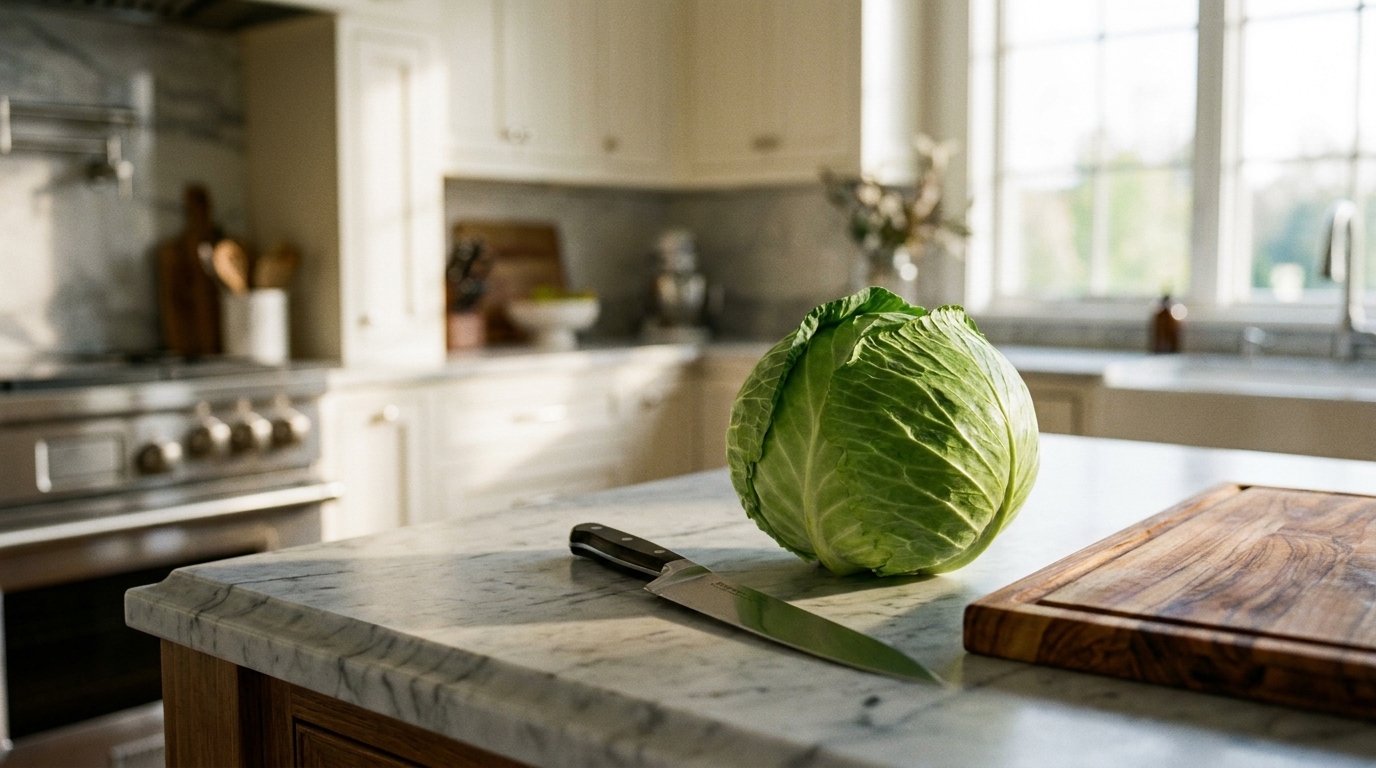
Master the essential techniques for cutting cabbage into the right shape and size for any dish, from raw slaws to roasted wedges. Matching your cutting method to the recipe ensures better texture, even cooking, and proper dressing absorption.
Understanding Cabbage Varieties and Selection
Pick the right cabbage variety for your cooking method--green cabbage works everywhere, red holds color with acid, Napa needs quick heat, and Savoy wraps beautifully.
Types of cabbage and their characteristics
Most cooks work with four main cabbage types, each suited to different cooking methods. Green cabbage has firm, tightly packed leaves with a mildly peppery raw flavor that turns sweeter when cooked, making it the standard choice for coleslaw and sauerkraut [1].
Red cabbage shares that dense structure but contains more anthocyanins, which gives it antioxidant properties and keeps its crunch intact through braising and pickling [2]. Savoy cabbage is the mildest European variety, with crinkled, loosely layered leaves tender enough to eat raw or use as wraps [1].
Napa cabbage -- a distinct species, Brassica rapa -- has a juicy, crunchy texture and pairs best with quick-heat applications like stir-fries and kimchi [2].
Choosing the right cabbage for your recipe
Matching cabbage variety to your cooking method prevents texture and color problems before they start. Green cabbage is the most forgiving -- its sturdy ribs hold up to roasting, braising, and fermenting equally well, making it the default choice when you're unsure [3].
Red cabbage works across the same range of applications, but its color bleeds into surrounding ingredients; if you're using it in a lighter-colored dish, add vinegar or lemon juice to help set the purple hue during cooking [3][4]. Napa wilts fast when raw, so dress and plate it immediately rather than prepping it ahead of time [3].
Savoy is the right call when you need leaves intact for stuffing or rolling, since its natural elasticity holds fillings without tearing [3].
Proper storage and preparation before cutting
Store whole, unwashed cabbage heads in your crisper drawer with the outer leaves on -- they shield the inner head and keep it fresh for up to 2-3 months [5]. If you've already cut into a head, wrap it tightly and use it within 10-14 days [5].
Don't wash the whole cabbage before storing it; wet heads rot faster [5]. When you're ready to start cutting, peel off the outer leaves, then rinse only the cut surfaces or individual leaves under cold water -- not the whole head [5].
A flat, stable cutting board makes a real difference when working with a dense, round head that can roll easily.
Essential Tools for Cutting Cabbage
A sharp chef's knife, Santoku, or Nakiri handles most cabbage cuts, while a mandoline or food processor speeds up batch prep for slaws and ferments.
Selecting the ideal knife for cabbage cutting
A standard 8-inch chef's knife is the most practical choice for cutting cabbage -- its sharp tip and substantial blade handle a dense head without resistance [6]. A 5-inch Santoku with a hollow-edge blade is a solid alternative: the air pockets along the blade prevent cut slices from sticking as you work through the head [6].
A Nakiri -- a flat-tipped Japanese vegetable knife -- lets you chop through cabbage using a clean up-and-down motion rather than a rocking cut [6]. Whichever knife you reach for, sharpness matters most -- a dull blade requires more pressure and loses control through a dense core, so check your edge before you start.
Using a mandoline for uniform slices
A mandoline cuts cabbage into slices a knife can't reliably match -- consistent thickness across every pass, which matters for coleslaw and kimchi where even dressing depends on even cuts. [7] Set the blade between 2-3mm for slaw or thinner raw applications; go up to 4-5mm if you want more texture in a stir-fry or braise. [8] Quarter and core the cabbage before you start -- flat faces track more predictably across the blade than curved outer surfaces. [7] Always use the hand guard and stop slicing when the piece is smaller than your fist; the last inch is where the majority of mandoline injuries occur. [8]
Additional tools to enhance cabbage preparation
Beyond a knife and mandoline, a food processor with a slicing or shredding disc handles large batches faster than hand-cutting and produces consistent results for coleslaw, kimchi, or sauerkraut prep. [10] A rotary grater with interchangeable blades is another practical option -- the hand-crank motion keeps fingers away from the cutting surface while producing even shreds with less effort than a box grater. [9] A bench scraper is worth adding to the lineup as well: use it to sweep cut cabbage from board to bowl in one pass, which speeds up cleanup and keeps the workspace clear between cuts.
How to Cut a Cabbage Head: Step-by-Step Guide
Remove the tough outer leaves and core before cutting, then slice crosswise to get the tender shreds that work best for coleslaw and raw salads.
Removing outer leaves and washing the cabbage
The outer leaves of a cabbage head are tougher and more fibrous than the inner layers -- pull them off by hand at the root before you start cutting. [11] Removing them matters most when you're prepping cabbage raw, since their coarse texture is more noticeable in dishes like coleslaw where every bite counts. [12] Wash the cabbage after cutting rather than before -- rinsing a whole head and then cutting introduces moisture that can water down dressings or interfere with browning during cooking. [11] Run cut surfaces or individual leaves under cold water, then dry thoroughly with a salad spinner and kitchen towels before using. [11]
Quartering the cabbage and removing the core
Stand each cabbage half flat-side down and cut through the center to produce four equal quarters [11]. To remove the core, angle your knife at roughly 45 degrees and cut diagonally across the tough white base -- each quarter's core comes free in one triangular piece [13].
The core is denser than the surrounding leaves and doesn't soften well in raw applications; discard it, or save it for soups and braises where extended heat can break it down [13]. Lay each trimmed quarter flat on its cut side before your next cuts to keep it stable -- cabbage quarters will roll on a curved surface [11].
Slicing techniques for various cabbage dishes
With each quarter cored and laid flat on its cut side, slicing crosswise produces the long shreds used in coleslaw, slaw-style tacos, and raw salads -- the thinner the cut, the more gently the cabbage chews and the better it absorbs dressing [11].
A slightly thicker crosswise cut retains structure through stir-fry heat, where thin shreds would collapse and go watery before the rest of the dish finishes cooking [11].
For Napa cabbage, split the cored wedges into flat leaf stacks and press them rib-side up before slicing -- the elongated leaves don't sit as evenly in a standard wedge stack, and flattening them first produces more consistent strips [14].
Specialized Cutting Techniques for Different Recipes
The way you cut cabbage determines how it tastes and cooks--thin shreds for salads, uniform squares for soups, and wedges with the core intact for roasting.
Shredding cabbage for coleslaw and salads
For coleslaw and raw salads, how thin you cut cabbage changes both its texture on the palate and how well it absorbs dressing -- thinner cuts chew more gently and take on seasoning throughout, while thicker cuts can feel heavy and stay underdressed in the center. [11] The top leaves of a cabbage head are naturally thinner and less fibrous than the base leaves, making them the better option when the cabbage will be eaten raw. [15] A mandoline set between 2-3mm consistently produces finer, more uniform shreds than a knife -- that uniformity matters in coleslaw, where uneven strips create an inconsistent texture in every bite. [11] Avoid washing shredded cabbage right before dressing it; excess moisture dilutes the dressing and makes the final dish taste flat. [11]
Chopping cabbage for stir-fries and soups
Chopping cabbage into squares or rough chunks -- rather than long shreds -- gives stir-fries and soups the structure they need to hold up through extended heat. [16] Slice each cored quarter into strips first, then rotate and cut crosswise to produce even squares, similar to how you'd dice a carrot. [16] For soups and braises, uniformity matters more than exact size -- uneven pieces cook at different rates, leaving some soft while others are still firm when the rest of the dish is done. [16] Tougher outer leaves that you'd skip for raw slaw work well here, since extended heat softens their denser fibers. [11]
Creating cabbage wedges for roasting or grilling
For wedges intended for roasting or grilling, each piece needs to retain some of the core -- it's what holds the leaves together through high heat. [17] Cut the head into 6 to 8 wedges by slicing straight through the core; trimming it out first, as you would for slaw, lets the layers separate before the exterior can brown. [18] Roasting at 425-500 degreesF (220-260 degreesC) drives the caramelization that makes cooked cabbage worth eating -- lower heat steams the interior before the outside chars. [18][19] Arrange wedges in a single layer on a lined baking sheet, oil and season both cut faces, then use cooking tongs to flip once midway through a 20-35 minute cook. [19]
Preserving and Storing Cut Cabbage
Store cut cabbage in an airtight container in your fridge's coldest spot, and it'll stay fresh for 3 to 14 days depending on how well you seal it.
Proper storage methods for cut cabbage
Once cut, cabbage loses moisture faster than a whole head and starts to brown on exposed edges -- both happen more slowly with the right container and fridge placement. Store cut cabbage in an airtight container or bag in the coldest part of your refrigerator, away from the door where temperatures fluctuate most [20].
Keep it away from ethylene-producing produce like apples and bananas, which accelerate spoilage [20]. Depending on how well it's sealed and how cold your fridge runs, cut cabbage stays usable anywhere from 3 days [20] to up to 10-14 days [5] -- trim any browned edges before using and discard if the smell turns sulfurous or the texture goes slimy.
Freezing cabbage for long-term use
Freezing cabbage extends its shelf life well beyond refrigeration, but blanching first is non-negotiable -- skipping it produces mushy, off-flavored results after thawing.
Cut cabbage into shreds, thin wedges, or individual leaves, then water blanch for 1½ minutes before moving it to an ice bath to stop cooking. [22] Drain thoroughly and pat dry -- excess moisture trapped between leaves causes freezer burn. [21] Pack into airtight bags or containers with about ½ inch of headspace, then seal and freeze. [22] Plan to use frozen cabbage only in cooked applications like soups, stews, and stir-fries; the texture softens enough during freezing that it won't hold up raw. [23]
Tips for maintaining cabbage freshness and crispness
Crispness starts at purchase -- pre-cut cabbage from the store wilts faster and loses more vitamin C than a whole head you cut yourself, so buying whole is the better default when freshness matters. [20] Cut only when you're ready to use it, since exposed edges lose moisture quickly and start to brown within hours. [20] For shredded cabbage prepped ahead, push as much air as possible out of the storage bag -- excess air accelerates wilting regardless of how cold your fridge runs. [24] If you're making coleslaw in advance, hold the dressing until just before serving; it draws moisture from the shreds over time, softening the texture and diluting the flavor. [24]
- Green cabbage is the most forgiving variety for roasting, braising, and fermenting.
- An 8-inch chef's knife or Santoku with a sharp blade is essential for cutting dense cabbage heads.
- Remove outer leaves by hand, then cut the head in half, quarter it, and core at a 45-degree angle.
- Thin crosswise cuts (2-3mm) work best for coleslaw and raw salads; thicker cuts retain structure in stir-fries.
- Store cut cabbage in airtight containers in the coldest part of your fridge for 3-14 days.
- Blanch cabbage for 1.5 minutes before freezing to prevent mushy texture and off-flavors.
- Cut cabbage only when ready to use, since exposed edges brown and lose moisture within hours.
- https://www.finedininglovers.com/explore/articles/10-different-cabbage-varieties-and-how-cook-them
- https://sowtrueseed.com/blogs/gardening/types-of-cabbage?srsltid=AfmBOoqo_L1i7hRnAgcRdoKpRi_gp14xlcdopwVmSAmIdm4eWTnqLUcK
- https://www.bonappetit.com/story/4-types-of-cabbage?srsltid=AfmBOoqQh1rERpRs_hBJCJrceFGrsmapHn4DFVUrbsBD2RFkFuAPYf5b
- https://www.bbcgoodfood.com/howto/guide/15-types-of-cabbage
- https://www.blueglassfarm.com/crops/cabbage/
- https://www.forksoverknives.com/how-tos/which-knives-to-use-for-what-dirt-candy-chef-amanda-cohen/
- https://chefsupplyco.com.au/blogs/kitchen-essentials/easy-steps-for-cabbage-slicing-with-a-mandoline?srsltid=AfmBOoqJWGyl7hj7M_vYMqP9lQRE9KpMyoBjsjN83-WUqLpnkCLwZC2K
- https://lovegreatfinds.com/blogs/news/what-is-mandoline-slicer-guide?srsltid=AfmBOoquaUnCQo6L9TN8qkTAbUyPouHhFii9VVXED3T9o9TsCSQ9b86v
- https://www.zulaykitchen.com/blogs/kitchen-tips/best-tools-for-cutting-and-chopping-vegetables?srsltid=AfmBOop2HN0WTZMeMvV-GX-1JaFZm56kr86PJ53ufIB07e4OtP2-YueI
- https://naturalkitchenschool.com/50-essential-kitchen-tools-and-their-uses-ultimate-guide/
- https://www.fifteenspatulas.com/how-to-cut-cabbage/
- https://www.epicurious.com/expert-advice/how-to-cut-cabbage-step-by-step-article
- https://www.culinaryhill.com/how-to-cut-cabbage/
- https://www.healthyseasonalrecipes.com/how-to-cut-cabbage/
- https://galainthekitchen.com/recipes/how-to-shred-cabbage-for-salad/
- https://www.chocolatemoosey.com/how-to-cut-cabbage/
- https://www.thespruceeats.com/how-to-cut-a-head-of-cabbage-into-wedges-3057583
- https://www.seriouseats.com/easy-roasted-cabbage
- https://stripedspatula.com/roasted-cabbage-wedges/
- https://www.marthastewart.com/how-to-store-cabbage-8764995
- https://www.simplycanning.com/best-way-to-freeze-cabbage/
- https://nchfp.uga.edu/how/freeze/vegetable/freezing-cabbage-or-chinese-cabbage/
- https://www.bhg.com/cabbage-storage-11942575
- https://www.thetakeout.com/1775335/how-store-cabbage-crunchy/