

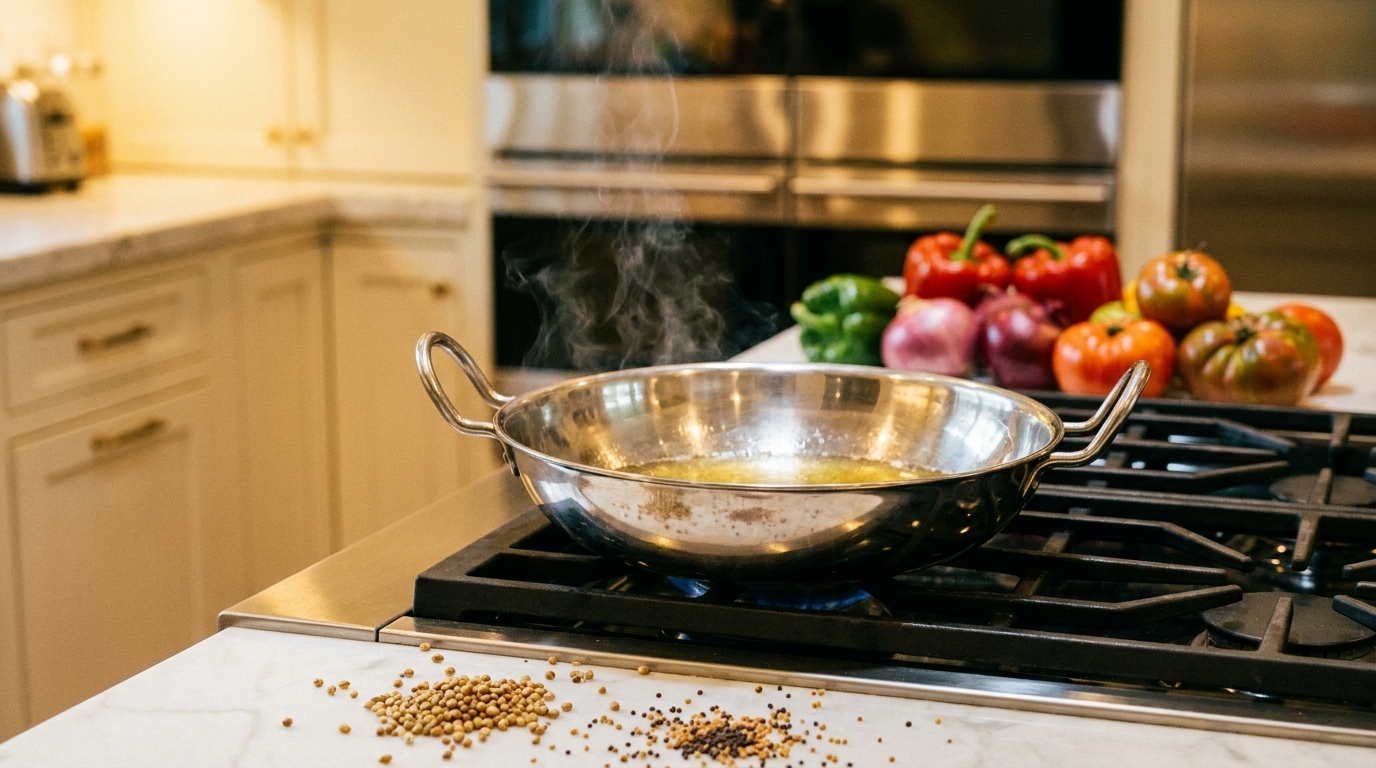
A kadai is a deep Indian cooking vessel designed for slow-simmered curries and deep-frying, with steep inward-sloping sides and dual handles that differ fundamentally from a wok's geometry and single-handle design.
What Is a Kadai and How Does It Differ From a Wok?
A kadai's steep sides and dual handles create even heat for slow-simmering curries, while a wok's design excels at rapid stir-frying.
The Core Definition: Indian Kadai vs. Asian Wok Design
A kadai (also spelled karahi or kadhai) is a deep, circular cooking vessel with a wide, flat bottom and steep inward-sloping sides, built for Indian cooking methods like slow-simmering curries and deep-frying. [2] Understanding the different kadai types helps clarify why this pan looks so similar to a wok at first glance -- both are curved and deep, but their geometry serves different purposes.
A wok has a wider base with shallower sloping sides and traditionally a round bottom, optimized for high-heat tossing and quick stir-frying. [1] The clearest design difference is the handle setup: a kadai has two small loop handles for stability when maneuvering heavy gravies, while a wok uses a single long handle suited for rapid tossing motions. [1]
Shape, Depth, and Heat Distribution: Why These Differences Matter for Your Cooking
The kadai's steep, inward-sloping sides and deep bowl concentrate heat evenly across a larger surface area, keeping simmering curries at a stable temperature and containing oil during deep-frying without splattering. [4] A wok's shallower slope creates distinct heat zones -- the center runs intensely hot for searing, while the upper walls stay cooler, letting you push ingredients aside to manage multiple cooking stages at once. [4] That zoned heat suits rapid stir-frying but works against the slow, even cooking that Indian dishes require. [4] Choosing between them isn't about which is better overall -- it's about matching the vessel's geometry to what you're actually cooking.
Essential Kadai Cooking Techniques: From Stir-Frying to Deep Frying
Match your oil temperature to the cooking method--tadka needs a shimmer, deep-frying needs sustained heat, and the mustard seed test tells you when you're ready.
Mastering Heat Control and Oil Temperature for Kadai Dishes
Heat control in a kadai means matching your oil temperature to the task -- tadka works best when oil shimmers but doesn't smoke, while deep-frying needs sustained higher heat. [5] For everyday kadai cooking, target 150 degreesC-250 degreesC depending on the method, since oil pushed past its smoke point breaks down into acrolein and compounds that alter both flavor and food quality. [6] Ghee, groundnut oil, and refined mustard oil are reliable choices because they stay stable at the temperatures Indian cooking demands -- unlike lighter oils that degrade quickly under high heat. [6] A practical test: drop one mustard seed into the oil before your tadka -- if it pops immediately, the temperature is right; if it scorches before popping, lower the flame before adding any spices. [5]
Common Kadai Cooking Methods and When to Use Each One
The kadai suits four core cooking methods, each matched to a different dish type and pace.
Tadka (tempering) means adding whole spices to hot oil for a few seconds to crack them open and pull out their flavor -- use it at the start of curries, dal, and vegetable dishes to build the aromatic base. [7] Deep-frying takes advantage of the kadai's steep walls to contain oil and cook pakoras, samosas, or bhajis evenly without splattering. [7] Stir-frying at high heat suits quick vegetable and protein dishes like chicken karahi, while slow-simmering over lower, steadier heat develops body and depth in gravies that need more time to come together. [7]
Choosing the Right Kadai Material: Stainless Steel, Cast Iron, and Carbon Steel Compared
Cast iron, carbon steel, and stainless steel each suit different cooking styles and maintenance routines in Indian cooking.
Comparison Table: Kadai Materials, Heat Retention, and Maintenance Requirements
Each kadai material handles heat and maintenance differently -- a distinction that matters when Indian cooking demands both intense heat for tadka and sustained low heat for slow curries. Cast iron holds heat exceptionally well once hot, ideal for steady deep-frying, but it's heavy, needs consistent re-seasoning, and rusts if left wet. [8] Carbon steel heats and cools faster, weighs less, and requires less frequent seasoning upkeep -- better suited for quick temperature shifts during active cooking. [8] Stainless steel won't develop natural non-stick properties, but resists reacting with acidic ingredients like tomatoes and tamarind; our cast iron vs stainless steel guide covers those tradeoffs in more detail. [9]
| Material | Heat retention | Heat responsiveness | Maintenance | Best kadai use |
|---|---|---|---|---|
| Cast iron | Excellent -- stays hot long after heat is reduced | Slow to heat and cool | Season regularly; hand-wash only; dry immediately to prevent rust | Deep-frying, slow-simmered curries |
| Carbon steel | Good -- slightly less than cast iron | Fast to heat and cool | Season occasionally; hand-wash; dry promptly | Tadka, stir-frying, quick vegetable dishes |
| Stainless steel | Moderate | Medium responsiveness | No seasoning required; hand-wash recommended | Acidic dishes -- tomato and tamarind-based curries |
Seasoning, Cleaning, and Long-Term Care for Different Kadai Types
For cast iron and carbon steel kadais, the care routine follows a simple cycle: wash, dry, and oil after every use. [10] Hand wash in warm, soapy water, dry completely, then apply a thin coat of oil to the surface -- this prevents rust and builds seasoning with each cook. [10] For stuck food, use a pan scraper or simmer water in the pan for 3-5 minutes to loosen residue before washing. [10] Soaking or dishwashing either material strips the seasoning and invites rust, so both are hand-wash only. [10] Picking the best oil for seasoning a carbon steel pan affects how fast the surface develops -- some oils bond to metal more effectively and build a more durable layer.
Popular Kadai Curry Dishes and Flavor Profiles You Can Master at Home
Mastering kadai curry means understanding how fresh-ground spices, high heat, and the pan's geometry work together to create distinct flavors and textures.
What Makes Kadai Curry Taste Distinct: Spices, Cooking Method, and Pan Choice
Kadai curry gets its distinct taste from three factors working together: freshly ground spices, high-heat cooking, and the pan's geometry.
Traditional kadai masala relies on whole coriander seeds that are dry-roasted and crushed fresh before each cook, which delivers a sharper, more aromatic flavor base than pre-ground blends.[11] Cooking bell peppers, onions, and tomatoes over high heat keeps each ingredient structurally intact rather than dissolving them into a smooth gravy -- this texture contrast and separation of individual flavors is what sets kadai dishes apart from cream-based or slow-simmered curries.[11] The kadai's steep walls concentrate heat to simultaneously bloom spices and sear vegetables, a dynamic that a flat-bottomed pan with wider heat dispersion can't replicate as efficiently -- which is why the vessel itself is considered part of the recipe, not just the tool.[11]
Building Your Kadai Cooking Foundation With Essential Tools and Ingredients
The tools that pair with a kadai are few but specific.
A jhaara -- a perforated round metal spatula -- lets you turn deep-fried items for even browning and drain oil when lifting them from the pan, which a solid spoon or flat spatula can't do as cleanly.[12] A masala dabba keeps your most-used whole spices organized in one container with small individual compartments and a dedicated spoon, so you can add coriander, cumin, or mustard seeds to hot oil without hunting through separate jars -- speed matters when spices bloom in seconds.[13] A spice grinder or mortar and pestle rounds out the setup: grinding whole spices fresh before each cook delivers sharper, more aromatic flavor than pre-ground blends, and whole spices hold their potency longer in storage.[13]
- A kadai's steep, inward-sloping sides concentrate heat evenly for slow-simmered curries and deep-frying without splattering.
- Kadai cooking requires matching oil temperature to the task: 150-250 degreesC for tadka and deep-frying, tested with a single mustard seed.
- Cast iron holds heat best for deep-frying and slow curries; carbon steel heats faster for tadka and stir-frying.
- Hand-wash and oil cast iron and carbon steel kadais after every use to prevent rust and build seasoning.
- Freshly ground whole spices, high-heat cooking, and the kadai's geometry create the distinct texture and flavor separation in kadai curries.
- A jhaara (perforated spatula) and masala dabba (spice container) are essential tools that enable efficient cooking and faster spice blooming.
- https://food.ndtv.com/food-drinks/kadhai-vs-wok-what-is-the-difference-which-one-should-you-buy-8079895
- https://www.vinodsteel.com/blogs/blog/what-is-the-use-of-kadai-in-the-kitchen?srsltid=AfmBOooEggcsX9Y5BYV_f8Oh16l8QgvqzumP-y0IcETQuZ3Zn9bZKbdD
- https://www.solamexhome.com/beyond-the-shape-how-woks-and-frying-pans-actually-cook-differently.html
- https://www.vinodsteel.com/blogs/blog/what-is-the-use-of-kadai-in-the-kitchen?srsltid=AfmBOooFClRnSCoAIf0LTTzkg6VTLrUosIknOc-YHgzDOBbey8FKU5xZ
- https://www.asaicookware.com/blogs/all/best-cookware-for-tadka-indian-cooking?srsltid=AfmBOoocayZHI2T12yLfaxjkrPsYnewI48y3SXMo8EGcDHhOD9xtZb53
- https://kichera.in/blogs/articles/safe-cooking-temperatures?srsltid=AfmBOoqiHtudXZTh7V36qvwad8RcbW0x0b-5-tM7yU1uNmYqJePF1E7X
- https://ratatouie.co.uk/what-is-kadai/
- https://stahlkitchens.com/blogs/news/carbon-steel-vs-cast-iron?srsltid=AfmBOoq1x-9y3et-NyzANXf2pIzXKrF5XaJ8fl4x289bxK0sxA9LEodq
- https://kichera.in/blogs/articles/cast-iron-vs-carbon-steel-health?srsltid=AfmBOooKWcU0L0DSDw2LAhOq3udYijMrOr4Jf2_yOLhLeCjuleRO2S5J
- https://www.lodgecastiron.com/pages/cleaning-and-care-carbon-steel?srsltid=AfmBOorNTHvlW43DgiEeJxYRBQChKMiffWrjsxRxw5aD1F485NNiGGKC
- https://a2bma.com/blog/best-kadai-mushroom-massachusetts/
- https://www.saveur.com/essential-indian-cooking-tools/
- https://www.tasteofhome.com/collection/essential-indian-cooking-tools/
- Summary
- What Is a Kadai and How Does It Differ From a Wok?
- Essential Kadai Cooking Techniques: From Stir-Frying to Deep Frying
- Choosing the Right Kadai Material: Stainless Steel, Cast Iron, and Carbon Steel Compared
- Popular Kadai Curry Dishes and Flavor Profiles You Can Master at Home
- Key Takeaways
- References