

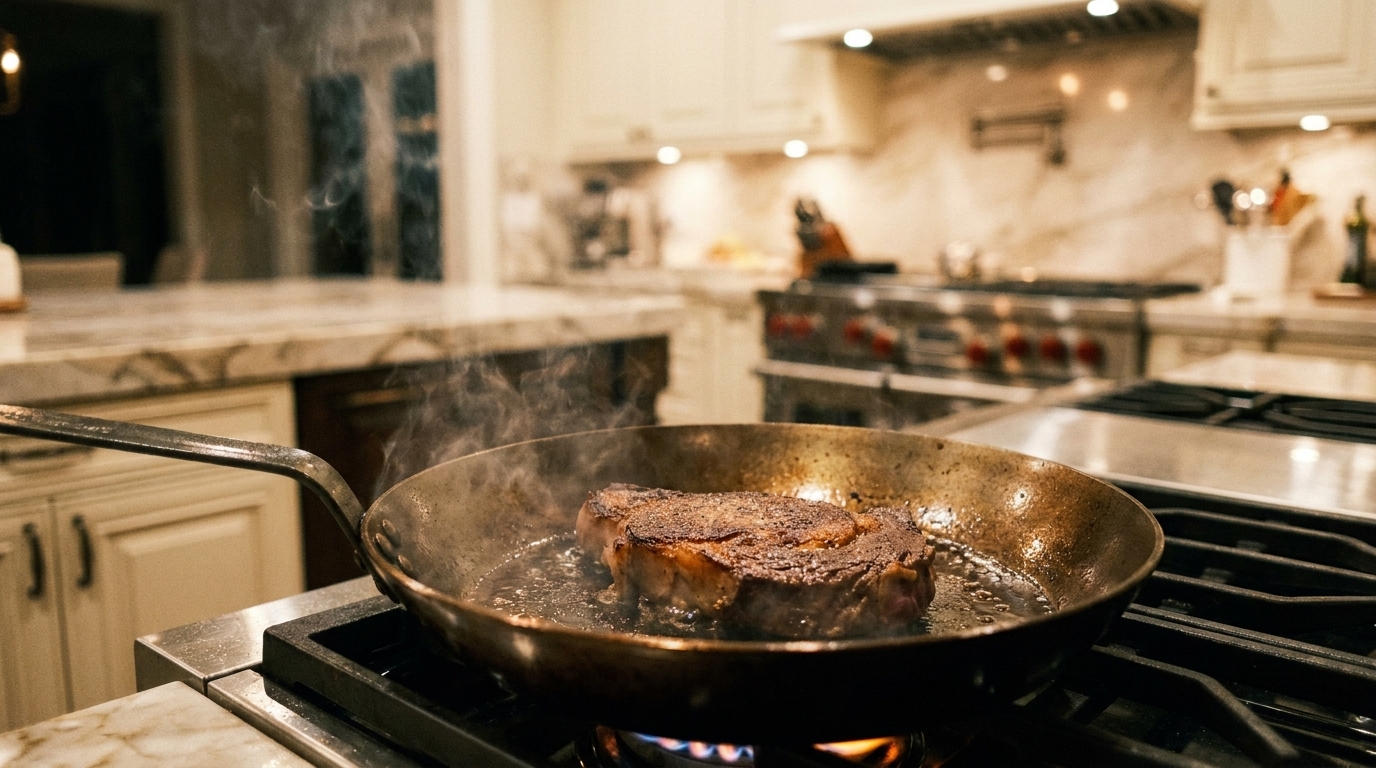
Carbon steel outperforms other PFAS-free options for searing steaks at 600 degreesF because it heats quickly, retains heat effectively, and builds a natural nonstick patina over time. Patting your steak dry before searing and using proper preheating technique ensures the Maillard reaction triggers instantly for a firm, flavorful crust.
Understanding High‑Heat Limits of PFAS‑Free Cookware
Carbon steel heats fast and holds heat like cast iron, making it the top PFAS-free choice for achieving a perfect 600-degree sear.
Heat tolerance across common PFAS‑free materials
Why 600 degreesF matters for steak searing The Maillard reaction -- the chemistry behind a browned crust and deep savory flavor -- starts around 285 degreesF (140 degreesC) and generates its peak concentration of flavor compounds between 310-330 degreesF (154-165 degreesC).[4] Running a pan or grill at 600 degreesF clears that threshold almost instantly on contact, building a firm crust before the interior overcooks.[5] Surface moisture is what undermines even the hottest surface: just 10% residual moisture caps the local temperature at 212 degreesF -- the boiling point of water -- preventing the reaction from triggering until that moisture is gone.[5] Patting your steak thoroughly dry before it hits a high-heat PFAS-free pan is what makes searing at 600 degreesF actually work.
Choosing the Right PFAS‑Free Pan for a 600 degreesF Sear
Carbon steel vs. ceramic vs. stainless steel
For a 600 degreesF sear, carbon steel outperforms the other PFAS-free options -- it heats quickly, retains heat like cast iron, and builds a natural nonstick patina that only improves with use. [6] Well-built multi-ply stainless steel is a strong alternative: uncoated, free of any coating layer to degrade, and reliable up to 800 degreesF in the oven, though it requires proper preheating technique to release food cleanly at high heat. [7] Ceramic-coated pans, by contrast, are typically rated to around 550 degreesF for oven use, and their nonstick properties diminish with repeated high-heat exposure -- making sustained searing a reliable way to shorten their lifespan. [7] If you're weighing ceramic options before buying, this comparison of ceramic coated vs bare ceramic lays out exactly what holds up and what doesn't.
When an outdoor grill outperforms a pan
An outdoor grill outperforms a pan in three specific situations: when kitchen ventilation can't handle sustained high-heat smoke, when you want charcoal or wood smoke as part of the flavor profile, or when you're cooking a cut too large to lay flat in any pan.[8] The trade-off is contact area -- on a grill, the Maillard reaction fires only where grates touch meat, producing grill marks rather than a full, even crust.[9] For cooks who want both extreme heat and complete surface coverage, placing a cast-iron skillet on a high-output propane burner outdoors bridges both approaches -- capable of handling nearly 100,000 BTUs without triggering a smoke alarm or stressing your range hood.[8] Practical Techniques for Searing Steaks at 600 degreesF
Pre‑heating, oil, and temperature control
Preheat a carbon steel or cast iron pan for 5-10 minutes over medium-high heat before adding any oil -- if you're using a grill, closing the lid speeds this up. [11] The water-drop test is the simplest readiness check: flick a few drops into the pan, and they should dance across the surface rather than sit still or instantly evaporate. [11] Add a neutral, high smoke point oil -- canola or vegetable work well -- then wipe the pan nearly dry before the steak goes in; knowing which oil works best for high-heat cooking matters for both the sear and long-term pan care. [11] For temperature control, pull the steak about 5 degreesF below your target internal temp, since carryover heat keeps raising the center even after the pan leaves the burner. [10]
Step‑by‑step steak sear using a PFAS‑free pan
Once the pan is at temperature and the steak goes in, resist moving it for at least 60-90 seconds -- the crust needs uninterrupted contact to set.
If your cut has a fat cap, stand it upright using tongs to render that edge first before searing the flat faces.
Flip once when the first side releases cleanly, then sear the second side for equal time before inserting an instant-read thermometer through the side of the steak -- draw it slowly toward center, looking for the lowest temperature reading. [10] Pull at 5 degreesF below your target doneness and rest the steak on a rack so carryover heat finishes the cook without trapping steam against the crust.

Caring for Your PFAS‑Free Pan After High‑Heat Use
A two-minute post-cook routine of oil and gentle heat builds seasoning with every use and keeps your pan performing at its best.
Cooling, cleaning, and seasoning tips
After searing at 600 degreesF, let the pan cool on the stovetop -- running cold water over a hot cast iron or carbon steel pan can cause it to warp or crack from thermal shock. [12] Wash with warm water and mild dish soap using a non-abrasive sponge; dish soap won't strip a well-built seasoning layer. [13] Dry the pan immediately with a towel, then set it over low heat for a minute to drive off any remaining moisture before storing. [12] While still warm, rub a few drops of neutral oil -- canola or vegetable -- over the surface, wipe nearly dry with a paper towel, and heat until lightly smoking; this two-minute post-cook routine builds seasoning steadily with every use. [13]
Extending lifespan to avoid landfill waste
Carbon steel and cast iron are rescuable in most failure scenarios -- rust responds to a five-minute white vinegar soak followed by re-seasoning, and sticky surfaces usually trace back to excess oil during seasoning, not a worn-out pan. [14] The actual signals that a PFAS-free pan is done are structural: cracks that widen under heat, severe warping that prevents flat contact with a burner, or a seasoning layer that won't bond after repeated attempts. [15] Understanding why pans degrade helps separate normal wear from real failure -- most pans that look ready for the bin can be brought back with consistent care, and every pan that stays in rotation cuts both landfill load and the production footprint of a replacement. [16]
- Patting steaks completely dry is essential--even 10% moisture caps surface temperature at 212 degreesF and prevents the Maillard reaction.
- Carbon steel outperforms ceramic and stainless for 600 degreesF searing: it heats fast, retains heat like cast iron, and builds natural nonstick patina.
- Ceramic-coated pans max out around 550 degreesF and degrade with repeated high-heat use, making them unsuitable for sustained searing.
- Resist moving the steak for 60-90 seconds after it hits the pan--uninterrupted contact is required to set a firm crust.
- Cool pans on the stovetop, never under cold water, to prevent warping or cracking from thermal shock.
- A two-minute post-cook routine--rubbing warm oil over the surface and heating until lightly smoking--builds seasoning with every use and extends pan life by years.
- https://www.solamexhome.com/the-complete-guide-to-oven-safe-pots-everything-you-need-to-know.html
- https://greenamerica.org/whats-best-nontoxic-cookware
- https://www.canada.ca/en/health-canada/services/household-products/safe-use-cookware.html
- https://pmc.ncbi.nlm.nih.gov/articles/PMC12154226/
- https://lifetips.alibaba.com/kitchen-hacks/scientific-study-reveals-how-to-make-perfectly-browned
- https://www.debuyer-usa.com/blogs/guides/carbon-steel-vs-ceramic-pans-which-is-right-for-your-kitchen?srsltid=AfmBOornc59Fppy9ywprifCyVEKwbtMjmRvKONorc2ZmfpvKh5J1KKFm
- https://www.foodandwine.com/best-frying-pans-8384974
- https://anovaculinary.com/blogs/blog/anova-comprehensive-guide-to-outdoor-searing?srsltid=AfmBOopWhpFJ_6JbtjZa7SEN06uXG3qafSNNttsIABNoYSKQA6zJEVqe
- https://girlscangrill.com/recipe/steak/cast-iron-steak/
- https://blog.thermoworks.com/beef/steak-temps-getting-it-right/
- https://www.lodgecastiron.com/pages/how-use-cast-iron-over-any-heat-source?srsltid=AfmBOor-392lo_M2amlIWrXhoRI0YExuy6lSMVyPamXTo4nYylV0a6fL
- https://www.nytimes.com/wirecutter/guides/how-to-clean-cast-iron-skillet/
- https://www.seriouseats.com/how-to-clean-maintain-cast-iron-pan-skillet-cookware
- https://www.debuyer-usa.com/blogs/how-to/boost-longevity-how-to-care-for-carbon-steel-pans?srsltid=AfmBOopyPKf-JODuH1qxcfoUE1aNR2PFODawXSYU7VaMZ8hwehWYkDmK
- https://nephcure.org/safe-kitchen-choices-a-comprehensive-guide-to-non-toxic-cookware/
- https://lifetips.alibaba.com/kitchen-hacks/cast-iron-pots-and-pans-demystified