

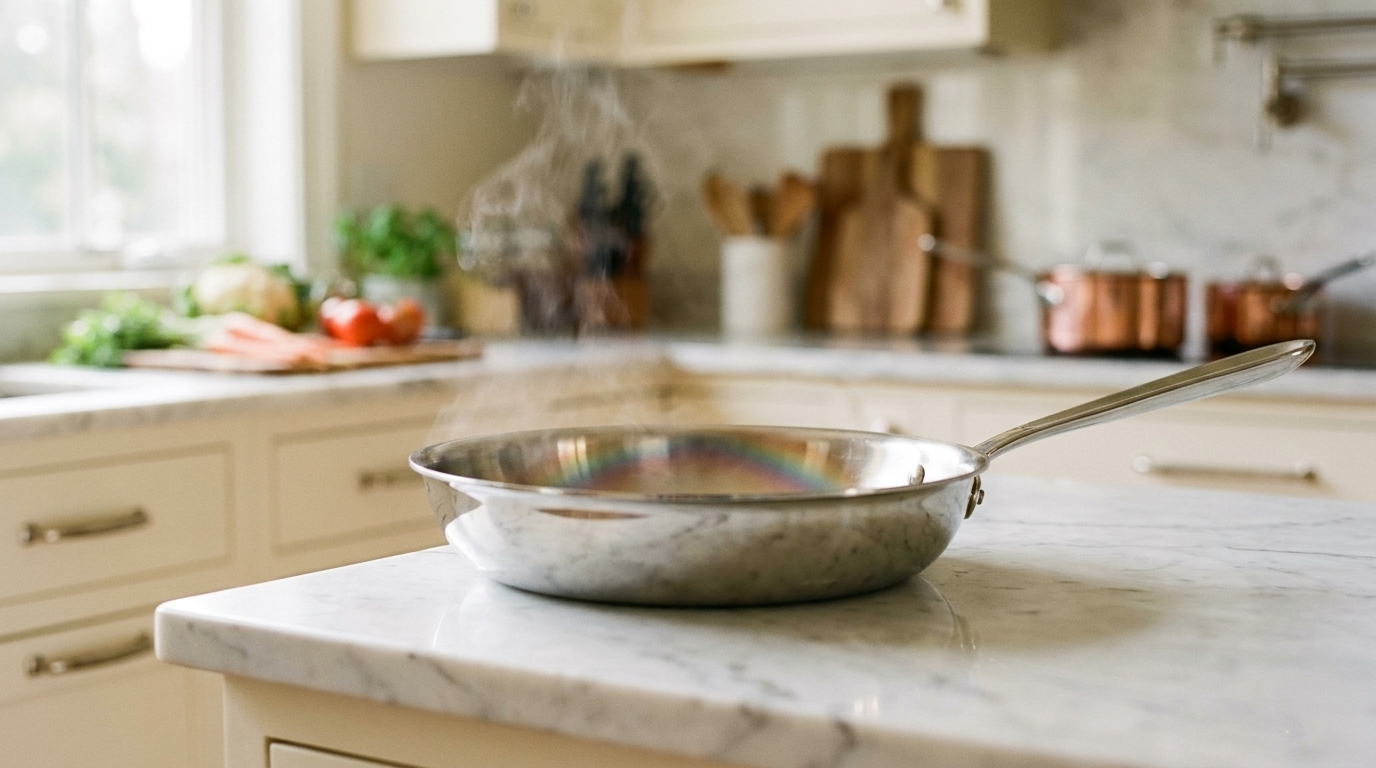
Learn simple daily cleaning routines that keep your stainless steel pans looking new without the myth-busting misconceptions about difficult maintenance. With proper care using basic soap, warm water, and occasional targeted treatments, quality stainless steel cookware performs reliably for decades.
Why Stainless Steel Pans Deserve Your Kitchen Real Estate (And How to Keep Them Looking New)
Stainless steel pans last decades with proper care, resisting rust and corrosion far longer than nonstick alternatives that degrade in just a few years.
The durability advantage: Why stainless steel outlasts other cookware materials
Stainless steel pans outlast most other cookware options because the material resists rust, corrosion, scratching, and denting -- the four failure modes that retire pans early. [2] Nonstick coatings typically last three to five years before the surface degrades enough to require replacement, which compounds the environmental cost every time you buy again. [1] Stainless steel with a copper or aluminum core adds even heat distribution to that durable base, giving you a non-toxic stainless skillet that handles everything from searing to simmering. [1] With proper care, a quality stainless steel pan can perform reliably for decades -- which is exactly why maintenance matters.
Common misconceptions about stainless steel maintenance that waste your time
The most persistent myth is that a stainless steel pan is difficult to maintain -- it isn't.
Most stuck-on food releases after a brief soak in warm, soapy water, and a non-abrasive sponge handles the rest. [3] The idea that stainless steel requires constant polishing to stay bright is equally overstated; regular washing with mild soap covers most situations, with a stainless-specific cleaner reserved for mineral buildup or hard water marks. [3] Stainless steel is also non-reactive, so cooking tomatoes, citrus reductions, or wine-based sauces won't affect flavor or damage the surface. [3] Our how to clean stainless steel pans guide covers each stain type in detail when you need it.

The 5-Step Daily Cleaning Routine That Prevents Discoloration and Buildup
Clean your stainless steel pan while it's still warm to prevent residue from hardening and requiring aggressive scrubbing later.
Immediate post-cooking care: Why timing matters for spotless finishes
The window for easy cleaning on a stainless steel pan is while it's still warm -- residue releases far more readily before it cools and hardens on the surface. [4] Start by scraping out excess oil with a spatula or paper towel, then add a small amount of hot water to deglaze while the pan is still warm. [5] Never submerge a still-hot pan in cold water; the sudden temperature shift -- called thermal shock -- can warp the metal. [5] Once it's cooled enough to handle safely, a quick scrub with dish soap and a non-abrasive sponge takes under five minutes and stops residue from setting into the stuck-on layer that demands heavier cleaning later. [5]
The right tools and products to use without damaging the surface
For routine cleaning, a non-abrasive sponge or long-handled dish brush with mild dish soap handles most jobs without marking the surface. [5] A green Scotch-Brite scouring pad will lightly scratch the steel, but it won't affect performance or lifespan -- steel wool is where you draw the line. [5] For tougher buildup like cooked-on oil or hard water deposits, Bar Keepers Friend powder outperforms baking soda on stubborn stains and restores a brighter shine faster, though baking soda works as a decent substitute if that's what you have on hand. [5] Chlorine bleach, chloride-based cleaners, and oven cleaners are off the table entirely -- they damage the steel's protective chromium layer and can cause pitting over time. [5][6]
Removing Heat Stains, Mineral Deposits, and Stuck-On Food (Stain Identifier Chart)
Each stain type--rainbow heat discoloration, mineral deposits, and stuck-on food--responds to a different cleaning method you can do at home.
Heat discoloration vs. rust: Identifying what you're actually dealing withThe rainbow or blue tint that develops inside a stainless steel pan is heat discoloration -- not rust.
It forms when chromium in the steel reacts with oxygen and high heat, thickening the protective oxide layer that normally keeps the surface corrosion-resistant. [7][8] Rust would appear as reddish-brown pitting or flaking -- true iron oxidation -- and is uncommon on stainless steel unless the chromium layer has been compromised by repeated chloride exposure or abrasive damage. [8] Heat discoloration has no effect on performance or food safety; it's cosmetic only, and it responds well to diluted white vinegar or a stainless-specific cleaner. [7][9]
Targeted removal techniques for each stain type with step-by-step instructions
Each stain type responds to a different method.
Rainbow heat discoloration clears with a splash of white vinegar -- swirl it in the pan and wipe clean. [12] Chalky mineral deposits come off by wetting the surface, sprinkling baking soda onto a damp sponge, rubbing in circles, and rinsing. [10] For stuck-on food, add baking soda to the pan center with a quarter cup of water, bring to a boil, then scrub with a long-handled brush while still hot. [12] Serious scorch marks built up over time need full submersion: place the pan in a large pot of boiling water with about a half cup of baking soda, simmer 15 to 30 minutes, then scrub while still warm. [11][12]


Long-Term Care and Storage: Keeping Your Stainless Steel Pan Kitchen-Ready for Years
Proper drying, careful storage with protective padding, and low-humidity conditions keep your stainless steel pans scratch-free and corrosion-resistant for decades.
Is it healthy to cook with stainless steel pans and how proper maintenance ensures safety
Stainless steel pans are considered a safe cookware option for most people, but two variables determine how much nickel and chromium transfer into food: cookware condition and what you're cooking. [14] Research shows leaching is highest with new pans and drops significantly after about six cooking cycles as protective oxides build up on the surface. [13] Acidic foods like tomato sauce accelerate metal transfer, particularly during long cook times -- a concern more relevant if you have a nickel or chromium sensitivity. [13][14] Scratched or pitted surfaces increase leaching, which is why avoiding abrasive tools and replacing heavily damaged pans is a care & maintenance tip that also carries a direct health benefit. [14][15]
Storage best practices and when to reach out for professional restoration advice
Before putting your stainless steel pan away, dry it completely -- residual moisture leaves calcium deposits when it evaporates off the surface. [16] Hanging is the most reliable storage method to prevent scratches; if you stack pans, place a dish towel, trivet, or protective pad between each piece to cushion contact. [16][17] Keep pans in a low-humidity area, since environmental moisture can accelerate corrosion over time. [17] For deep pitting, a warped base that disrupts even heating, or a handle that no longer sits secure, those are the signs to contact us or seek professional restoration -- a care & maintenance tip that's especially worth following for higher-quality pans you plan to use for decades. [17]
- Quality stainless steel pans last decades with proper care, outlasting nonstick cookware that degrades in 3-5 years.
- Clean while the pan is still warm--residue releases easily before cooling and hardening onto the surface.
- Avoid thermal shock by never submerging a hot pan in cold water, which can warp the metal.
- Rainbow heat discoloration is cosmetic only and safe; use white vinegar or stainless-specific cleaner to remove it.
- Bar Keeper's Friend outperforms baking soda on stubborn stains, but avoid chlorine bleach and chloride-based cleaners entirely.
- Store pans by hanging or stacking with protective pads between pieces to prevent scratches and corrosion.
- Metal leaching decreases significantly after six cooking cycles as protective oxides build up on the surface.
- https://stanfordmag.org/contents/sustainable-cookware
- https://www.house.com.au/blog/understanding-different-cookware-materials?srsltid=AfmBOoozzzurLtvytp2KexXpIYDoCcf-RiIuHOCfhH3Wyk6iTz7dF4Su
- https://www.mahaakitchenware.com/blogs/news/common-myths-about-stainless-steel-cookware-debunked?srsltid=AfmBOoqQdj9fc2NXfVhLVN_CUTU4GCQw7BlkAR9hSBn2dfxM7ixXLOSe
- https://girlandthekitchen.com/blog/how-to-clean-stainless-steel-pans-and-make-them-shine-like-new/
- https://www.nytimes.com/wirecutter/guides/how-to-clean-stainless-steel-pans/
- https://barkeepersfriend.com/blogs/bar-keepers-blog/dos-donts-cleaning-stainless-steel
- https://www.tasteofhome.com/article/discoloration-of-stainless-steel/
- https://avacraft.com/blogs/cookware-care/stainless-steel-stains-part-1?srsltid=AfmBOoofo4SX7pyYimI6pIXtvRLI9vMiXEHv3qfilGBf2aJX7aYQP7wv
- https://www.lagostina.ca/en/blog/debunking-stainless-steel-cookware-myths?srsltid=AfmBOoqPBW-aYNjFgmCb7BsC50wRYn6wUt7PuaDWxqfW1X4hvd17KmIT
- https://www.foodnetwork.com/how-to/packages/help-around-the-kitchen/photos/solutions-for-common-issues-with-stainless-steel-cookware
- https://savorylotus.com/how-to-remove-burned-on-food-from-your-pots-and-pans/
- https://www.technology.org/how-and-why/clean-stainless-steel-pans-tips/
- https://pmc.ncbi.nlm.nih.gov/articles/PMC4284091/
- https://www.aarp.org/home-living/pots-and-pans-safety-guide/
- https://traditionalcookingschool.com/food-preparation/the-scoop-on-stainless-steel-cookware/
- https://madeincookware.ca/blogs/care/the-complete-guide-to-caring-for-stainless-steel-cookware
- https://www.zhenneng.com/blog/how-long-do-stainless-steel-pots-and-pans-last.html