

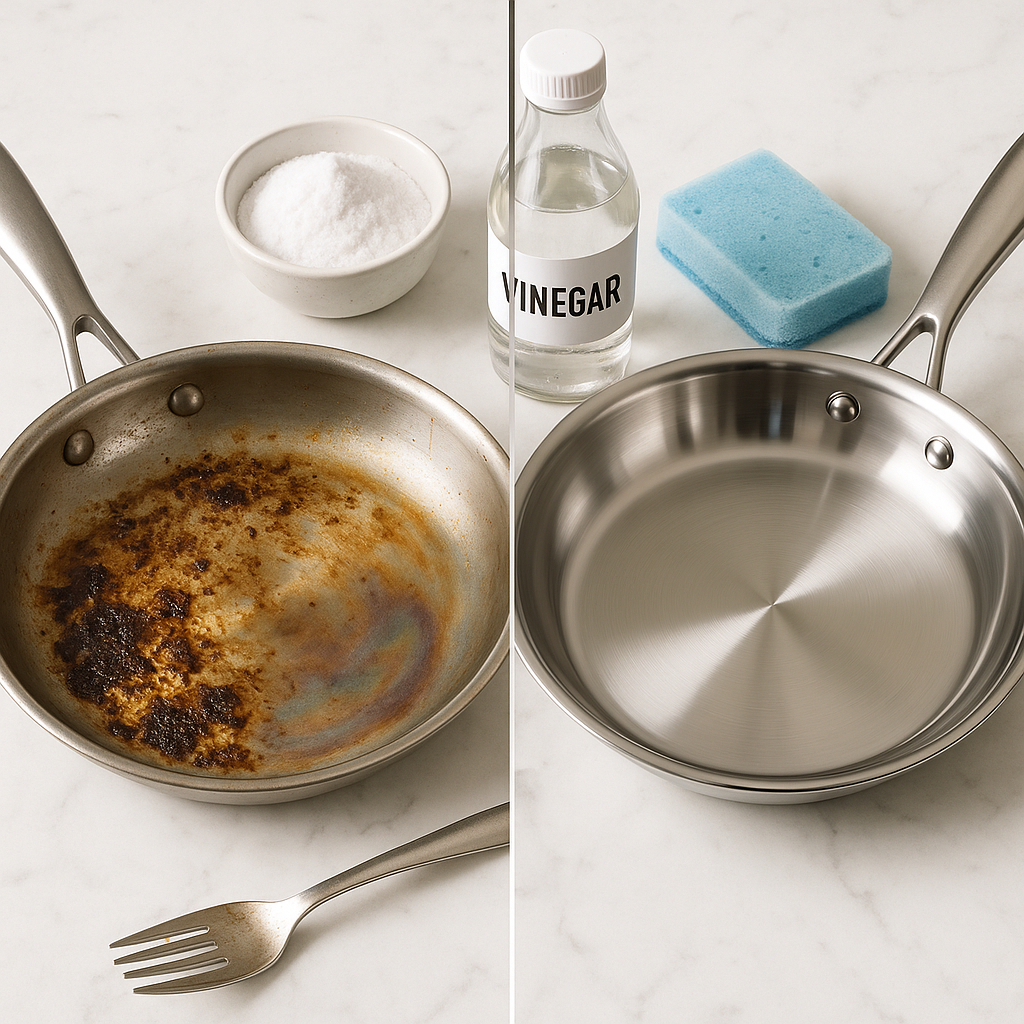
Learn the right techniques to clean stainless steel pans using household ingredients or commercial products without damaging the surface. Proper care--cooling before washing, hand-drying, and avoiding steel wool--keeps your pans performing like new for decades.
Introduction
Stainless steel pans last decades without degrading, but a few habits like thermal shock and harsh detergents can accelerate wear.
Why Stainless Steel Pans Are Kitchen Essentials
Stainless steel pans handle high heat, resist corrosion, and contain no synthetic coatings -- which means no chemicals leaching into your food, even when cooking acidic dishes like tomato sauce.[1] Multi-ply construction, where an aluminum or copper core sits between steel layers, delivers even heat distribution and prevents the hot spots that cause uneven cooking.[2] Unlike nonstick pans whose coatings degrade over time, stainless steel can move from stovetop to high-temperature ovens and withstand decades of daily use without losing performance.[2] That combination of durability, chemical-free cooking, and versatility is why professional chefs treat it as the workhorse of any serious kitchen.[1]
Common Cleaning Challenges and Misconceptions
Most complaints about stainless steel pans trace back to technique, not the material -- food sticking happens almost entirely because the pan wasn't preheated before oil was added.[3] Rainbow discoloration and white mineral spots are widely mistaken for damage, but both are cosmetic reactions that clean up with white vinegar or baking soda.[3] Stainless steel rusting easily is another misconception: chromium in the steel forms a protective oxide layer that prevents rust under normal conditions.[3] Understanding which problems are real versus perceived makes applying care & maintenance tips more straightforward and prevents reaching for the wrong cleaning products.[3]
The Importance of Proper Maintenance for Longevity
Stainless steel can last decades, but a few repeated habits accelerate wear faster than cooking ever will.
Plunging a hot pan into cold water causes thermal shock, which warps the base and diminishes heat distribution over time.[5] Harsh dishwasher detergents can corrode certain grades of stainless steel, and incorrectly stacking pans creates chips and scratches that compound with every use.[5] Following consistent care & maintenance tips -- letting pans cool before washing, hand-washing instead of machine cleaning, and storing them with protective layers between surfaces -- is what separates a pan that lasts a few years from one that holds up for generations.[4]

Understanding Stainless Steel Properties
Stainless steel won't react with acidic foods and requires no seasoning, so it works perfectly from your first use with just soap and water.
What Makes Stainless Steel Different from Other Cookware
Stainless steel's key advantage over carbon steel and cast iron is that it requires no seasoning and won't react with acidic ingredients like tomatoes, wine, or vinegar -- so you can braise, deglaze, and simmer without altering flavor or damaging the pan. [6] Its light-colored interior makes it easier to monitor fond development, the caramelized protein layer that forms during searing and anchors most pan sauces. [7] Carbon steel and cast iron both react poorly with acidic foods and require gradual seasoning buildup before they perform well, while stainless steel works from the first use with nothing more than soap and water. [6] That non-reactive, low-maintenance surface is what makes it the most versatile option for everyday stovetop cooking. [7]
How Heat Affects Your Stainless Steel Pans
Stainless steel responds physically to heat in ways that directly affect how food cooks on its surface.
When chromium in the steel meets oxygen at high temperatures, a thin oxidized layer forms, creating the rainbow-colored tint you sometimes see after searing -- it's a chemical reaction, not damage. [9] Steel also expands when heated and contracts when cooled, so adding cold ingredients to a fully hot pan causes the surface to grip protein before it can release cleanly. [8] Overheating also breaks down cooking fats into smoke before they can protect the surface, compounding the sticking problem and making cleanup harder -- knowing the right temperature before adding oil prevents both issues at once. [8]
Why Food Sticks and Stains Occur
Food sticks to stainless steel because the surface, while visually smooth, contains microscopic pores that trap protein and starch when the pan isn't properly preheated. [11] As the pan heats, these pores shrink and close -- protein added before the surface reaches temperature gets pinched in place as the metal expands. [11] Oil helps by filling those surface gaps and creating a physical barrier between food and metal, but only once the pan is hot enough for it to spread in a thin, even layer. [10] Stains build from a different problem: old layers of burnt protein, mineral deposits, and polymerized oil accumulate on the surface, giving fresh food extra grip and making cleanup progressively harder -- which is why tackling burnt residue requires more than a quick rinse. [10]
Identifying Different Types of Residue and Discoloration
Stainless steel develops four distinct types of surface changes, each requiring a different cleaning approach.
White chalky spots are calcium carbonate deposits left behind when tap water evaporates -- they resist soap because calcium carbonate doesn't dissolve in water or oil. [12] Rainbow discoloration (blue, purple, or gold) forms when heat thickens the chromium oxide layer and shifts how light reflects off the surface; it's purely cosmetic and doesn't affect cooking performance. [12] Burnt residue appears as brown or black patches where proteins, sugars, or fats have carbonized onto the surface, while pitting -- small permanent indentations caused by undissolved salt or chlorides eroding the protective oxide layer -- is the one type that cleaning can't reverse. [12]
Essential Cleaning Supplies and Preparation
A dish brush, scouring pad, baking soda, and clean towel cover your essential stainless steel cleaning needs without commercial products.
Must-Have Tools for Effective Cleaning
Effective stainless steel pan cleaning relies on a short list of tools, each serving a specific purpose.
A long-handled dish brush loosens stuck-on food before scrubbing, while a fresh Scotch-Brite scouring pad -- used in circular motions -- removes most stains without affecting the pan's performance or lifespan. [13] Powdered cleaners like baking soda or Bar Keepers Friend handle tougher residue, but wear cleaning gloves with either product since both can dry out skin with repeated use, and Bar Keepers Friend needs rinsing off within a minute to avoid surface discoloration. [13] A clean, absorbent towel rounds out the kit -- drying pans immediately after washing stops mineral deposits from forming as tap water evaporates on the surface. [14]
Safe Commercial Cleaners for Stainless Steel
The most important distinction with commercial stainless steel cleaners is that products designed for appliance exteriors -- sprays, aerosols, and polishing wipes -- are not safe for cookware surfaces, since they leave protective coatings that can contaminate food. [15] For pans specifically, Bar Keepers Friend Powdered Cleanser is the strongest residue-free option, lifting stubborn stains and restoring a near-original finish without the food-safety concerns that polishing sprays introduce. [13] When choosing any commercial cleaner for cookware, look for pH-neutral formulas free of bleach and ammonia -- both permanently damage the chromium oxide layer that gives stainless steel its corrosion resistance. [16] You can find more care & maintenance tips for specific products in our stainless steel cookware cleaning guide, and always rinse pans thoroughly after any powder-based cleaner before cooking again. [15]
Household Ingredients That Work Wonders
Three household ingredients cover most stainless steel cleaning needs without requiring commercial products.
Baking soda acts as a mild abrasive with an alkaline pH that neutralizes acidic burnt residue -- mix it with water into a paste, apply to the stained area, and let it sit a few minutes before scrubbing. [17] White vinegar diluted with equal parts water removes mineral deposits and rainbow discoloration; rinse and dry immediately after use, since prolonged acid exposure can gradually dull the surface. [18] For greasy buildup, squeeze lemon juice into the pan, add a teaspoon of salt, and scrub with the lemon half -- the acid cuts through grease while salt provides light abrasion without scratching. [18]
Products and Techniques to Avoid
Steel wool and harsh scrub brushes damage stainless steel in ways a scouring pad won't -- they cut deeper into the chromium oxide layer, leaving scratches that collect residue and make future cleaning progressively harder. [19] Chlorine bleach, chloride-based cleaners, and oven cleaners permanently corrode that same protective surface and shouldn't go near your pans under any circumstances. [19] Bar Keepers Friend requires one specific precaution: apply it only to a cool pan -- using it on a hot surface causes discoloration, and it can't substitute for baking soda in any cleaning method that involves heat. [13] Those three categories -- abrasive metal pads, corrosive household cleaners, and misapplied commercial powders -- cover the most common causes of permanent stainless steel surface damage. [19]
Daily Cleaning Methods: Basic Maintenance
Clean stainless steel right after cooking while residue is loose, then dry immediately to prevent water spots and mineral buildup.
Immediate Post-Cooking Care: Timing Matters
The window right after cooking is when stainless steel is easiest to clean -- residue is still loose and hasn't fully bonded to the surface.
Start by scraping out excess oil with a spatula or paper towel, then add hot water to the still-warm pan to lift stuck bits before they set. [13] Adding hot water to a hot pan won't cause damage; the issue only arises when you submerge a hot pan directly in cold water, so letting it cool slightly before a full soak is one of the most practical care & maintenance tips you can follow. [20] Most post-cooking cleanups take under five minutes once you've loosened the residue this way. [13]
The Proper Handwashing Technique
For everyday cleaning, wash with warm water, a few drops of mild dish soap, and a soft sponge, scrubbing the entire cooking surface in continuous circular motions rather than back-and-forth strokes. [21] If food bits remain after the initial scrub, a 15-minute soak in hot soapy water loosens them without reaching for anything abrasive. [22] Rinse until no soap film remains -- leftover detergent residue can dull the finish over time. [21] Dry the pan immediately with an absorbent towel rather than air-drying, since water left to evaporate deposits the mineral traces that build into chalky spots. [23]
When to Use the Dishwasher (and When Not To)
Most 18/10 grade stainless steel can technically go in the dishwasher -- the chromium oxide layer resists high heat, humidity, and detergent. [25] Skip the machine if your pan has an exposed aluminum or copper base, wooden or plastic handles, or any multi-layer construction where dissimilar metals appear on the exterior, since those materials degrade under repeated dishwasher cycles in ways that dull performance over time. [25] Phosphate-based and strongly alkaline detergents gradually strip that protective chromium layer, making the surface more vulnerable to corrosion and pitting with each wash. [24] Cookware experts consistently recommend handwashing regardless of dishwasher-safe labeling, since it lets you target specific residue with the right technique and avoids the chemical exposure that shortens a pan's lifespan. [25]
Drying and Storing to Prevent Water Spots
Drying completely before storage prevents water spots from forming while pans sit unused -- residual moisture left on the surface deposits calcium and mineral traces as it evaporates, the same process that creates those chalky white marks during washing. [26] Once dry, hanging pans is the most straightforward way to avoid scratches and unnecessary surface contact altogether. [20] If you stack or nest pans, place a trivet, dish towel, or pan protector between each piece -- both inside and underneath -- to cushion contact points and prevent the micro-abrasions that accumulate with repeated stacking. [20] Skipping that buffer layer is one of the more consistent causes of preventable surface wear on otherwise well-maintained stainless steel. [20]


Deep Cleaning Techniques: Tackling Stubborn Residue
Baking soda and vinegar work together to lift burnt residue and mineral deposits, while Bar Keepers Friend offers stronger results when you need a polished finish.
The Boiling Water Method for Stuck-On Food
The boiling water method works best on stuck-on food and staining that climbs up the sides of a saucepan or skillet, where scrubbing with a scouring pad alone can't reach.
Add a small mound of baking soda to the center of the pan, pour in about a quarter-cup of water, and bring the mixture to a boil -- as the water evaporates, it leaves a baking soda film coating the pan walls that you can then scrub off with a long-handled brush or a fresh scouring pad. [13] Turn off the heat when most of the water has boiled away, then scrub while the pan is still hot, using oven mitts or a folded towel to grip the handle safely. [13] This approach cleans freshly scorched pans well, but won't fully remove residue that has built up over years of repeated use. [27]
Baking Soda and Vinegar Solutions for Tough Stains
For stains that don't respond to a quick scrub, apply a thick baking soda paste directly to the stained area and let it sit -- even overnight -- before scrubbing with a fresh scouring pad; the extended contact allows the alkaline paste to penetrate carbonized layers that brief scrubbing can't fully lift.[13] You can repeat the treatment on stubborn patches without damaging the surface, though baking soda leaves a faint patina rather than the bright silver finish Bar Keepers Friend produces.[13] For stains combining burnt residue with mineral buildup, follow the baking soda scrub with a white vinegar rinse -- the acid neutralizes alkaline residue while simultaneously lifting residual mineral deposits from the surface.[13] Use cleaning gloves throughout, since baking soda dries out skin with repeated contact.[13]
Bar Keepers Friend and Other Commercial Solutions
Bar Keepers Friend contains oxalic acid -- an organic compound stronger than both white vinegar and baking soda -- making it the most effective commercial option when baking soda scrubbing leaves a faint patina instead of a clean silver finish. [28] Apply the powder to a cool, damp pan, scrub in circular motions with a scouring pad, and rinse thoroughly within a minute; the manufacturer recommends this timing to prevent discoloration, though high-quality cookware tends to be more tolerant of slightly longer contact. [13] Side-by-side testing shows BKF restores a bright, like-new silver surface that baking soda can't match and requires less scrubbing effort on the toughest stains. [13] BKF is safe only for stainless steel cookware -- do not use it on nonstick pans, where it can strip the coating. [28]
Salt and Lime Technique for Greasy Residue
The salt and lime technique works specifically on greasy, cooked-on residue -- lime's citric acid breaks down fat while coarse salt provides light abrasion to lift it without scratching the surface. [29] Pour a generous 1/4 cup of salt into the pan, squeeze in the juice of one lime, and let the mixture sit for 10 to 15 minutes before scrubbing with a non-abrasive sponge. [29] This approach suits pans with a sticky grease film from searing or stir-frying, where oil has polymerized into a layer that dish soap can't fully dissolve.
Rinse and dry immediately after scrubbing to prevent lime juice minerals from leaving spots on the surface.
Restoring and Maintaining Your Stainless Steel Pans
Vinegar, baking soda, and Bar Keepers Friend each tackle different types of stainless steel discoloration, from heat tint to water spots and scratches.
Removing Heat Tint and Rainbow Discoloration
White vinegar is the most direct fix for heat tint -- pour enough diluted vinegar into the pan to cover the discolored areas, scrub with a soft sponge in circular motions, then rinse and dry immediately. [30] For deeper discoloration, undiluted vinegar left to sit for 5 to 10 minutes gives the acetic acid more time to dissolve the thickened oxide layer before scrubbing. [30] If vinegar alone doesn't clear it, apply a baking soda paste directly to the stained area and scrub with a non-abrasive sponge -- the mild abrasive action lifts residue the acid couldn't reach on its own. [31] Bar Keepers Friend handles the most persistent cases, restoring a brighter silver finish than either household method can achieve alone. [30]
Eliminating Water Spots and Mineral Deposits
Water spots form when hard water -- water with elevated calcium and magnesium content -- evaporates and leaves its mineral load behind on the pan surface. [32] For light to moderate buildup, apply lemon juice directly to the affected spots and let it sit for a few minutes; the citric acid dissolves the mineral compounds before you scrub with a soft sponge and rinse clean. [32] Club soda is a gentler option -- pour it into the pan, let the carbonation lift the deposits for a few minutes, then wipe with a clean microfiber cloth to avoid transferring residue back onto the surface. [32] For heavier accumulation, combine baking soda with vinegar and a small amount of water into a paste that delivers both chemical dissolution and light abrasion against mineral layers that soap-only scrubbing can't reach. [32]
Dealing with Scratches and Surface Damage
Surface scratches on stainless steel pans fall into two categories, and the treatment depends on depth.
For light scratches, apply a baking soda paste or non-gel toothpaste to a microfiber cloth and rub along the direction of the steel's grain using straight back-and-forth strokes -- circular motions widen the damage rather than reducing it. [33] For deeper scratches, wet 400-grit sandpaper or a coarse scouring pad with olive oil, sand along the grain, then switch to 600-grit sandpaper or a fine gray pad to smooth the surface until the scratch disappears. [34] After either treatment, wipe with distilled white vinegar to clear residue, then buff with a small amount of mineral or olive oil to restore the finish. [34]
Preventative Care: The Water Drop Method and Other Tips
The water drop method is the most practical temperature check before adding oil to a stainless steel pan.
Drizzle a few drops of water into the preheated pan: if they sizzle and evaporate, it needs more heat; if they scatter into many small beads, it's too hot; the target is a single slippery droplet that glides across the surface. [36] Add oil at that point -- the hot pan, cold fat sequence prevents food from bonding with the metal. [36] Three other preventative habits reduce cleaning work over time: add salt only to liquids rather than directly onto the dry pan surface to prevent pitting, stay at medium heat to avoid rainbow discoloration, and remove acidic foods promptly after cooking to limit surface reactions that lead to staining. [35]


Conclusion
Summary of Key Cleaning Methods
The four cleaning scenarios covered in this article each call for a different tool.
For daily cleanup, warm soapy water and a scouring pad used in circular motions handles most residue in under five minutes.[13] Baking soda -- either as a paste or boiled in water directly in the pan -- handles stuck-on food and tougher stains, while Bar Keepers Friend removes patina and restores a brighter finish than baking soda can achieve on its own.[13] Vinegar clears mineral deposits and rainbow discoloration, and knowing what to avoid -- steel wool, chlorine bleach, and chloride-based cleaners -- prevents the surface damage that makes all cleaning harder over time.[19]
Creating a Maintenance Schedule for Your Cookware
A practical maintenance schedule has three tiers.
Daily: wash with warm soapy water and dry immediately after each use. [37] Weekly: check for mineral buildup or heat tint and address both with diluted vinegar before they compound.
Monthly: run a baking soda boil or a Bar Keepers Friend treatment to clear polymerized oil and restore the finish -- this monthly deep-clean routine takes about 30 minutes but prevents years of gradual buildup from becoming a serious problem. [37] Replacing scouring pads regularly and keeping pan protectors near your storage area complete the schedule -- small habits that reduce how much effort cleaning requires over time. [37]
Why Properly Maintained Stainless Steel Lasts for Generations
The chromium in 18/10 stainless steel forms a protective oxide layer that self-regenerates when scratched or exposed to air -- which means the surface retains its corrosion resistance indefinitely without any coating to degrade. [38] Unlike nonstick and ceramic pans that need replacing every two to five years as coatings break down, a quality stainless steel pan costs roughly $5 per year over three decades of use. [39] Stainless steel's resistance to rust, corrosion, and denting means surface scratches stay cosmetic rather than functional, and the care & maintenance tips covered here -- cooling before washing, hand-drying, avoiding steel wool -- are what keep that math working in your favor for the long run. [40] Our best stainless steel pans are built to that same standard of longevity, designed to outlast the habits that send most cookware to landfills prematurely.
- Stainless steel pans last decades without coating degradation, unlike nonstick cookware that needs replacing every 2-5 years.
- Most sticking and staining problems trace to technique--improper preheating and thermal shock cause preventable damage.
- Daily cleaning with warm soapy water and immediate drying stops mineral deposits; skip the dishwasher to preserve the chromium oxide layer.
- Baking soda paste and Bar Keepers Friend handle stubborn residue; avoid steel wool and chlorine bleach, which permanently damage the surface.
- A monthly deep-clean routine with baking soda or Bar Keepers Friend prevents polymerized oil buildup and restores finish.
- White vinegar removes mineral spots and heat tint; salt and lemon juice cut through greasy, cooked-on residue effectively.
- Protect stacked pans with trivets or towels between surfaces to prevent micro-abrasions that compound with repeated stacking.
- https://www.chefs-resources.com/stainless-steel-cookware-pros-and-cons/
- https://www.reviewed.com/cooking/features/how-to-cook-with-stainless-steel-cookware
- https://circulon.uk.com/blogs/the-culinary-circle/common-stainless-steel-cookware-myths-busted
- https://www.handylaundry.com/blog/clean-and-maintain-cooking-pans/?srsltid=AfmBOopoSQLmAEYD2X-YXp834HSBnWkJMcglBN1BeaqRtcCI4OZR4CgZ
- https://salter.com/blog/6-ways-you-could-be-damaging-and-shortening-the-life-of-your-cookware/
- https://www.debuyer-usa.com/blogs/guides/carbon-steel-vs-stainless-steel-pans-which-is-best?srsltid=AfmBOor9IsoxE1cpQgqwtso51Kev9mE54rBfaJxB57nFvkN0ayQKv53f
- https://www.americastestkitchen.com/articles/4032-the-four-core-skillets-you-should-own-according-to-science
- https://traditionalcookingschool.com/food-preparation/the-scoop-on-stainless-steel-cookware/
- https://www.tasteofhome.com/article/discoloration-of-stainless-steel/
- https://www.titaudoumiu.com/industry-news/why-does-food-stick-to-stainless-steel-pans/
- https://www.heritagesteel.us/pages/cooking-techniques?srsltid=AfmBOoprD8HiBRjGqh82wJ2TKHUudPWOtQ384-ydJH9jMvKzAXfaem5P
- https://thecookwareadvisor.com/6-stains-on-stainless-steel/
- https://www.nytimes.com/wirecutter/guides/how-to-clean-stainless-steel-pans/
- https://www.debuyer-usa.com/blogs/how-to/cleaning-burnt-stainless-steel-pans?srsltid=AfmBOorCZgCBktQPl9Gng93bGYjLmD7b2eugC6A-R55x7G3kKGo2n_FZ
- https://www.goodhousekeeping.com/home/cleaning/g30661378/best-stainless-steel-cleaners/
- https://www.foodandwine.com/best-stainless-steel-cleaners-7970030
- https://www.armandhammer.com/en/articles/how-to-clean-a-burnt-pan
- https://www.primaledgehealth.com/how-to-clean-stainless-steel-pans/
- https://barkeepersfriend.com/blogs/bar-keepers-blog/dos-donts-cleaning-stainless-steel
- https://www.madeincookware.co.uk/blogs/news/the-ultimate-guide-to-caring-for-stainless-steel-cookware
- https://www.realsimple.com/home-organizing/cleaning/cleaning-kitchen/how-to-clean-stainless-steel-pans
- https://www.bonappetit.com/story/how-to-clean-stainless-steel-cookware-so-it-shines-like-new?srsltid=AfmBOooqb6lb1iUjmR3Xqg-w30bIcdIAvE5K9bxnUBzQhlElMD4zvd2B
- https://www.saraverdier.com/how-to-take-care-of-your-stainless-steel-cookware/?srsltid=AfmBOoqCrgFTo23B3bay538yNl_4Wz4zyQomImM7Cu5GyOmg0jWM0WA9
- https://www.seriouseats.com/how-to-load-a-dishwasher
- https://www.familyhandyman.com/article/can-stainless-steel-go-in-the-dishwasher/
- https://www.lucismorsels.com/how-best-to-clean-stainless-steel-pan/
- https://www.webstaurantstore.com/blog/2562/cleaning-stainless-steel-pans.html?srsltid=AfmBOorPo5jU4ab1-WouwhcRonERdkxWdjw1JHakJ2XKZkmkZUZzkhNt
- https://www.debuyer-usa.com/blogs/how-to/how-to-remove-burnt-grease-from-stainless-steel-nonstick-pans?srsltid=AfmBOorEdbFzD-kg5UKIDJTBbIirnrJjFVqOzVhtBX3FeKbp4ZFrQdP6
- https://www.dalstrong.co.uk/blogs/chef-blog/how-to-clean-stainless-steel-pans
- https://www.saraverdier.com/how-to-remove-rainbow-discoloration-on-stainless-steel-cookware/?srsltid=AfmBOoozSWVXPKpP-269oGITR3yQOeIzSWCsKlOjw32v6W0v3JgsxhsZ
- https://www.megaboutique.com.au/why-stainless-steel-fry-pans-discolour?srsltid=AfmBOoprGw_JrReryN5UWV4Zro3dY6HGX8-zdEVTQiO0b1pShJNdwUlm
- https://www.marthastewart.com/how-to-remove-hard-water-stains-8663753
- https://kramerindustriesonline.com/how-to-remove-scratches-from-stainless-steel/
- https://www.wikihow.com/Repair-Scratched-Stainless-Steel
- https://cleanersguide.co.uk/how-to-clean-stainless-steel-pans-guide/
- https://www.foodnetwork.com/fn-dish/recipes/how-to-make-stainless-steel-nonstick
- https://madeincookware.ca/blogs/news/the-ultimate-guide-to-caring-for-stainless-steel-cookware
- https://saine-inox.com/en/blogs/entretien-et-durabilite/quelle-poele-dure-toute-une-vie-pourquoi-l-inox-est-imbattable-sur-la-longevite?srsltid=AfmBOooxAQXKs9dVP27DMkWJ3tLG11neryhPnH6R63s2LSBXMfJkNJGz
- https://www.dioro.com/blogs/news/cookware-non-stick-vs-stainless-steel?srsltid=AfmBOoqaasZVDkK58nwnTXil5ZASJ_jL0E-BwVVyicf7-mMXQTHqjvhf
- https://stanfordmag.org/contents/sustainable-cookware