

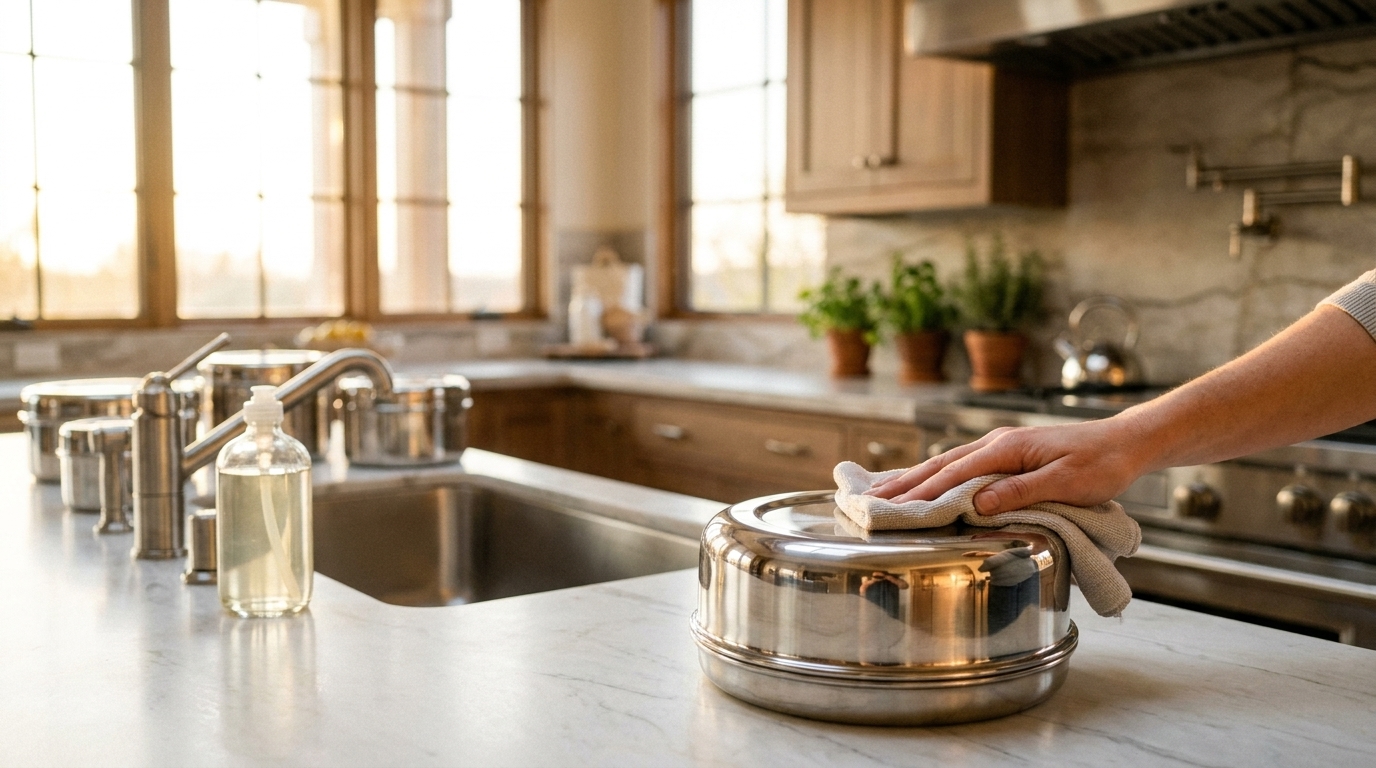
Learn how to safely clean stainless steel containers using gentle methods like mild dish soap and baking soda while avoiding harsh chemicals and abrasive tools that damage the protective chromium oxide layer. Proper cleaning technique--following the grain, drying immediately, and skipping bleach--keeps your containers free from pitting and safe for long-term food storage.
Why Stainless Steel Food Containers Need Proper Cleaning (And What Most People Get Wrong)
Aggressive scrubbing and harsh chemicals damage stainless steel's protective layer, but mild soap and soft sponges preserve it safely.
The difference between surface damage and actual rust: What you can safely ignore
Stainless steel's corrosion resistance comes from an invisible chromium oxide passive layer that forms when chromium -- at least 10.5% of the metal's composition -- reacts with oxygen in the air, blocking moisture from reaching the iron underneath. [2] Minor surface scratches from everyday use don't permanently compromise that protection; the layer reforms on its own as long as oxygen is present. [1] The brownish marks most people worry about are usually tea staining -- shallow surface discoloration that leaves the base metal structurally sound. [1] Actual rust looks different: pitting, rough patches, and spots that resist cleaning all signal that the passive film has genuinely broken down, which is more serious for both hygiene and longevity. [1] Surface discoloration you can wipe or scrub away is worth addressing but not cause for alarm -- pitting is the marker that demands real attention.
Why aggressive scrubbing and abrasive cleaners backfire on stainless steel
Aggressive scrubbing with steel wool, wire brushes, or gritty scouring pads leaves deep scratches that strip away the chromium oxide layer and create grooves where food residue and bacteria can collect. [3] Even a single hard scrub can disrupt that protective film, making the surface more vulnerable to staining and pitting going forward. [4] Harsh chemicals -- chlorine bleach, ammonia-based all-purpose cleaners -- cause the same kind of damage chemically rather than mechanically, attacking the same layer that blocks moisture from reaching the iron underneath. [3] Wiping against the steel's grain also pushes debris deeper into micro-grooves instead of lifting it, so the direction of your cloth matters as much as what you're cleaning with. [3] Can I Clean Stainless Steel With Dawn Dish Soap and Water?
(The Safe Daily Method)
Step-by-step daily cleaning routine for food residue and light stains
Yes, Dawn dish soap works well on stainless steel food containers -- mild dish soap, warm water, and a soft sponge are all you need to remove everyday food residue and oil without damaging the metal's surface. [5] Let the container cool completely before washing, then scrub gently with the grain of the steel (the faint directional lines visible on the surface) rather than against it. [6] If food is stuck, fill the container with warm soapy water and let it soak for 10-15 minutes to loosen residue before scrubbing -- this approach mirrors the same care routine that works on stainless steel pans and rarely requires much force. [5] Rinse thoroughly to remove all soap residue, then dry immediately with a soft towel; air-drying is where most water spots and streaking begin. [5]
How to dry stainless steel containers to prevent water spots and streaking
A microfiber cloth works better than a standard dish towel for drying stainless steel containers -- its fine fibers absorb moisture cleanly without redistributing it across the surface, which is what causes streaking in the first place. [7] Dry the entire container in one continuous pass rather than allowing sections to air-dry, since partial drying leaves waterline marks where moisture evaporates unevenly. [7] Following the grain direction while drying -- the same directional lines you follow when scrubbing -- produces a cleaner, streak-free result than wiping in circles. [8] After the initial pass, buff once more with a fresh dry section of the cloth to catch any remaining moisture film and restore the steel's surface sheen. [8]
Removing Stubborn Stains and Discoloration Without Scratching the Surface
Baking soda paste safely removes stains from stainless steel containers without damaging the protective chromium oxide layer that prevents corrosion.
What is the best homemade cleaner for stainless steel: vinegar, baking soda, and oil combinations
Baking soda is the most practical homemade cleaner for stainless steel food containers -- mix it with just enough water to form a paste, apply it to stained areas, and let it sit for a few minutes before scrubbing with a soft scouring pad. [9] For older or more stubborn discoloration, leaving the paste on the surface overnight improves results without risking damage to the steel's protective layer. [9] For stains that climb up the container's walls, adding baking soda to a small amount of water inside and bringing it to a boil lifts residue as the water evaporates, leaving a film you can scrub away while the container is still hot -- gloves recommended since baking soda can dry out your hands during extended scrubbing. [9]
What should you not clean stainless steel with: chemicals and tools that cause permanent damage
Chlorine-based products -- bleach (sodium hypochlorite) and any cleaner containing chloride ions -- pose the greatest chemical threat to stainless steel food containers. [11] Chloride ions directly attack the chromium oxide layer rather than just sitting on the surface, triggering pitting corrosion: microscopic holes in the metal that sustain themselves with water alone once established, making the damage permanent and unrepairable. [11] Hot chloride solutions accelerate this dramatically -- at around 50-60 degreesC, corrosion is nearly guaranteed on contact, so avoid any bleach-based cleaner even briefly, regardless of how diluted it appears. [11] Improper cleaning tools -- metal scouring pads, wire brushes, and abrasive scrubbers -- cause the same category of irreversible surface damage through mechanical means rather than chemical attack, destroying the same protective layer that keeps moisture away from the steel underneath. [10]
Maintaining Stainless Steel Containers for Long-Term Food Storage and Microwave Safety
Stainless steel containers keep food fresh longer in cold storage without leaching chemicals, and a secure airtight lid prevents odors from transferring between items.
Is it safe to store food in stainless steel in the fridge and freezer: temperature and odor management
Stainless steel is safe for refrigerator and freezer storage -- it's non-reactive and non-toxic, so it won't leach chemicals into food or alter the taste, color, or odor of what's stored inside. [12] The metal is inert, meaning it won't react with natural acids, dyes, or enzymes in food even after days in cold storage, and food generally stays fresh longer in stainless steel than in many other materials. [12] For odor management, a secure airtight lid is the most practical solution -- it prevents scent transfer between fridge items and blocks ambient freezer smells from reaching food during longer-term storage. [12] If you have questions specific to your containers, our stainless steel cookware care guide covers additional care details, or contact us directly.
Are stainless steel food containers microwave safe and how to use them without damage
Most stainless steel food containers are not microwave safe -- standard designs with stamped edges, sharp corners, and thin seams concentrate microwave energy until it arcs as visible sparks, damaging the appliance or creating a fire risk. [13] The exception is containers specifically engineered for microwave use: smooth, rounded geometry with no sharp projections keeps electrons distributed evenly across the surface rather than concentrating at points where they'd jump and arc. [13] If your container carries an explicit microwave-safe label, heat in 60-second increments at no more than 1000W, always include food or liquid inside (never microwave it empty), center the container on the turntable, and avoid running more than one metal container at a time. [14] Food-grade stainless steel won't leach chemicals into food during reheating -- a real advantage over plastic containers that can degrade with repeated heating cycles. [13]
- Stainless steel's chromium oxide layer protects against corrosion and reforms naturally with oxygen exposure.
- Tea staining is surface discoloration; pitting signals serious damage requiring immediate attention.
- Steel wool and wire brushes permanently damage the protective layer--use soft sponges with the grain instead.
- Chlorine bleach causes irreversible pitting corrosion by attacking the chromium oxide layer chemically.
- Baking soda paste safely removes stubborn stains without scratching; overnight soaking intensifies results.
- Dry immediately with microfiber cloths following the grain to prevent water spots and streaking.
- Most stainless steel containers aren't microwave safe unless explicitly labeled; microwaveable designs have smooth, rounded edges.
- https://williamsfoodequipment.com/blog/does-stainless-steel-rust-a-practical-guide-for-kitchen-equipment/?srsltid=AfmBOoqRC8TiOacTxGZ2auPzx4RbSW-zbDhp34GlXBxei_9fk-CUzVJI
- https://www.fsrmagazine.com/feature/the-unseen-science-of-your-restaurants-stainless-steel/
- https://monroeengineering.com/blog/5-mistakes-to-avoid-when-cleaning-stainless-steel/
- https://www.popularmechanics.com/home/interior-projects/a70481380/stainless-steel-cleaning-tips/
- https://www.saraverdier.com/how-to-take-care-of-your-stainless-steel-cookware/?srsltid=AfmBOoovV_WloJNXc5oSgs-O5F5kK70dNvDGWcLWOUodXwG3tpii5tYv
- https://www.bentotss.com/blogs/lunch-box/how-to-clean-steel-complete-guide?srsltid=AfmBOoobYmEYr4WBzM-pNFFdjB9-vCTiBkAWwfCg5gwjPkVPCkiriTep
- https://www.nytimes.com/wirecutter/guides/how-to-clean-stainless-steel-appliances/?eafs_enabled=false
- https://zogics.com/product-guide-library/how-to-clean-stainless-steel-appliances-tips-for-streakfree-shine/?srsltid=AfmBOoqAerA_2IQZUOkokJILkra_jOCunumm32c-T4Jcg7fLz4n2c8cz
- https://www.nytimes.com/wirecutter/guides/how-to-clean-stainless-steel-pans/
- https://www.britex.com.au/blog/post/the-ultimate-guide-to-cleaning-stainless-steel
- https://www.cleaningmasterclass.com/the-risks-of-cleaning-stainless-steel/
- https://blogs.extension.iastate.edu/answerline/2023/10/10/safe-food-storage-containers/
- https://greenvyne.com.au/blogs/news/can-you-microwave-stainless-steel?srsltid=AfmBOopSYxngBhn22G9R29B4uXDKnfxU4M2JVrKCohp2yqL9B7JkUwvl
- https://www.purecook.com/can-you-microwave-stainless-steel/