

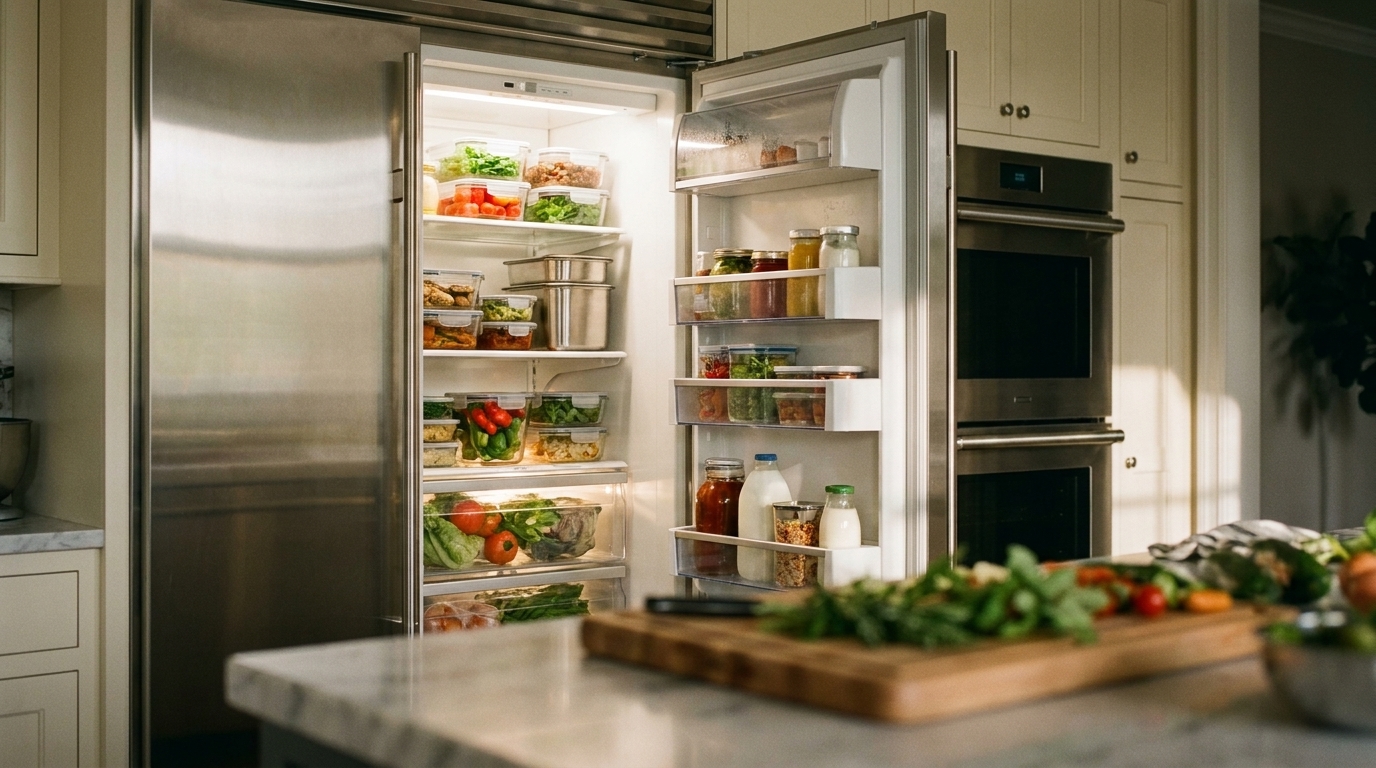
Stainless steel, glass, and plastic each offer distinct advantages: stainless steel excels at freezer storage and durability, glass provides safety for acidic foods and microwave reheating, and plastic offers convenience with trade-offs in longevity and chemical safety.
The Three Container Materials: Direct Comparison of Durability, Safety, and Performance
Stainless steel and borosilicate glass stay non-reactive with acidic foods, while certain plastics can leach harmful chemicals into storage.
How stainless steel, glass, and plastic differ in temperature tolerance and freezer safety
Stainless steel, glass, and plastic each handle temperature stress differently -- and the difference matters most in the freezer.
Food-grade 304 stainless steel with silicone gaskets retains over 92% seal fidelity at -25 degreesC, making it the most reliable choice for long-term frozen storage. [1] Glass is structurally freezer-safe -- it won't shatter -- but "freezer-safe" labeling doesn't address seal longevity: standard polypropylene latch clips lose up to 40% of their tensile strength after 12 months at -25 degreesC, leaving food exposed to freezer burn. [1] Plastic handles the freezer and microwave but can't go in the oven, and thinner plastics may warp under repeated heat cycling. [2]
Which material is safest for storing acidic foods and long-term food preservation
For storing acidic foods -- tomatoes, citrus, vinegar-based sauces -- glass and stainless steel are the safest options.
Glass is non-reactive to acids and won't leach chemicals or metals into food; borosilicate glass, in particular, also handles temperature swings without degrading. [5] High-quality stainless steel shares this non-reactive quality and doesn't release harmful substances, even with extended exposure to acidic ingredients. [5] If you use plastic, polypropylene (#5) is the most acid-resistant option -- it doesn't readily allow chemicals to leach into oily or acidic foods -- but PVC (#3), polystyrene (#6), and polycarbonate (#7) should be avoided entirely, as they can introduce phthalates, styrene, or BPA into whatever you're storing. [5][4]

What the Healthiest Container to Store Food In Really Means: Material Safety Breakdown
Glass and stainless steel eliminate harmful chemicals like BPA and phthalates that plastic containers can leach into your stored food.
Why stainless steel avoids leaching chemicals while maintaining food quality
Food-grade stainless steel -- specifically SS304 -- carries a self-renewing chromium oxide layer that acts as a barrier between the metal alloy and your food. [7] Regulatory bodies confirm that properly manufactured stainless steel releases only trace amounts of metal ions under normal use, well within safe limits. [7] The leaching concern is specific to prolonged cooking: research found that nickel and chromium concentrations in tomato sauce increased significantly only after six or more hours of direct heat contact with stainless steel -- conditions that don't apply to refrigerator or lunch-box storage. [6] For cold storage, stainless steel's non-porous surface also resists bacterial biofilm formation, adding a hygiene benefit that porous materials can't match. [7]
Glass vs plastic: understanding BPA, phthalates, and what matters for your family's health
Glass contains no BPA or phthalates -- the two plastic additives most directly tied to hormonal disruption.
Phthalates are linked to reproductive issues in men and developmental problems in children; BPA can interfere with hormones and potentially affect fertility, immune function, and cancer risk. [8][9] Plastics with resin ID codes 3 (PVC), 6 (polystyrene), and 7 (polycarbonate) carry the highest risk of releasing these compounds into food, especially when heated or stored for extended periods. [8][10] In 2024, the European Commission banned BPA from food contact materials -- a signal that regulatory standards are shifting, not settling. [10] Glass transfers none of these substances, making it the clearest choice for families trying to reduce chemical exposure through everyday food storage. [9]
The Practical Decision Framework: Essentials for Choosing Your Storage Container
Stainless steel resists damage and odors during meal prep, while glass keeps refrigerated food visible and fresh--each excels in different parts of your routine.
Stainless steel containers for meal prep, lunch boxes, and on-the-go storage
Stainless steel containers hold up through the daily friction of meal prep and commuting -- no cracking from drops, no odor retention from strong foods like tomato sauce or boiled eggs, and no cloudy, scratched interior after months of repeated use. [12] Compartment-style designs work well for portioning full meals without extra containers: one section for mains, another for sides, another for snacks or fruit. [11] Paired with quality silicone-sealed lids, they can transport soups and dressings without leaking -- though check that the specific design is fully leakproof rather than just splash-resistant before packing wet foods. [11] One practical limitation worth planning around: stainless steel is not microwave-safe, so you'll need to transfer food to a microwave-safe dish for reheating. [11]
Glass containers for refrigerator organization, microwave reheating, and visibility needs
Glass containers are the practical choice for refrigerator organization and daily reheating -- their transparency lets you spot contents at a glance, a visibility advantage that studies show reduces household food waste by roughly 23% compared to opaque alternatives. [14] Glass heats evenly in the microwave without hot spots or warping, and properly sealed glass containers extend refrigerated produce freshness by 2-3 days over plastic. [13][14] Borosilicate glass handles the fridge-to-microwave transition reliably, but moving it directly from the freezer to the microwave creates thermal stress -- a short countertop rest first prevents cracking, as explained in our guide to how borosilicate glass protects flavor and health. [13] The main trade-offs are weight and breakage risk, which is why glass works best as your at-home storage system rather than a daily commute container. [14]


Maintenance and Long-Term Value: Why Your Container Choice Affects Your Kitchen Investment
Glass containers outlast plastic in the dishwasher and resist staining from tomato sauce and curry, making them a smarter long-term investment for your kitchen.
How to clean and care for stainless steel containers to prevent odor retention and corrosion
Daily cleaning with warm soapy water and a soft cloth handles routine maintenance -- skip abrasive sponges, steel wool, and bleach, which scratch the surface and strip the chromium oxide layer that resists corrosion. [16] For odors from garlic, onions, or strong spices, coat the interior with a baking soda and water paste, leave it overnight, then rinse; lemon juice soaked overnight handles stubborn cases just as effectively. [15][16] White vinegar on a soft cloth removes water spots and mineral deposits -- rub along the grain direction, then rinse and dry immediately to prevent new deposits from forming. [16] Store containers with lids off in a dry location; trapped moisture is the main cause of long-term corrosion, and the same care principles that apply to stainless steel pans apply equally to storage containers. [16]
Extending the life of glass and plastic containers: dishwasher safety, staining, and durability over time
Glass outlasts plastic in the dishwasher -- tempered glass holds up past 500 cycles, while top-tier plastic averages just 68-92 before seal failure or visible haze sets in. [17] The "dishwasher-safe" label on plastic is unregulated and only means the container won't melt; a 2023 study in *Environmental Science & Technology* found 73% of labeled plastics released measurable microplastics after just 15 cycles when exposed to common detergents. [17] Staining follows a similar pattern: tomato sauce, curry, and beet juice permanently mark plastic after one week of storage but wipe clean from glass even after months of use. [13] Lids usually determine when a container gets retired -- silicone-rimmed glass lids hold their seal for 5-7 years, while plastic lids crack at hinge points after 2-3 years, so checking lid replacement availability before committing to any system saves money long-term. [13]
- Stainless steel maintains 92% seal integrity at freezing temperatures, outperforming plastic lids that lose 40% tensile strength after 12 months.
- Glass and stainless steel are non-reactive to acidic foods; plastic containers with codes 3, 6, and 7 risk leaching phthalates and BPA into stored food.
- Stainless steel's non-porous surface resists bacterial biofilm formation better than glass or plastic for food safety.
- Glass containers reduce household food waste by 23% through visibility and extend refrigerated produce freshness 2-3 days longer than plastic.
- Stainless steel requires no microwave reheating; glass handles fridge-to-microwave transitions but risks thermal shock when moved directly from freezer.
- Glass outlasts plastic in dishwashers past 500 cycles versus 68-92 cycles; 73% of labeled dishwasher-safe plastics released microplastics after just 15 cycles.
- Silicone-rimmed glass lids maintain seals for 5-7 years while plastic lids crack at hinges within 2-3 years, making lid replacement availability crucial.
- https://lifetips.alibaba.com/kitchen-hacks/glass-vs-stainless-steel-freezer-containers
- https://www.foodandwine.com/lifestyle/kitchen/best-food-storage-containers
- https://toxicfreefuture.org/healthy-choices/be-picky-with-plastics/
- https://www.eatingwell.com/toxicologist-approved-plastic-food-storage-containers-11969435
- https://thepaleodiet.com/food-storage-101-safe-food-storage-containers-and-best-practices/
- https://pmc.ncbi.nlm.nih.gov/articles/PMC4284091/
- https://curtissteel.com/is-stainless-steel-safe-for-food/
- https://pmc.ncbi.nlm.nih.gov/articles/PMC11193405/
- https://www.amymyersmd.com/blogs/articles/safe-food-storage
- https://www.center4research.org/bbc-plastic-food-containers-nchr/
- https://ecozoi.com/blogs/blog/is-a-stackable-stainless-steel-lunch-box-healthy-find-out-here?srsltid=AfmBOoqQeMeicZc5HNyqMKs1ngyFg8sQOfChLrXPJuG86PyNI_O14NO8
- https://www.mealsinsteel.nz/blogs/news/benefits-of-stainless-steel-lunch-box?srsltid=AfmBOoosib2YxJktmBwN2r0YGVApdmsq1L0aV23gkJu3JTz8k3w8a8bK
- https://www.messbrands.com/inspiration/glass-vs-plastic-containers-for-food-storage/
- https://www.valetpackaging.ca/blog/valet-packaging-blogs-7/glass-food-containers-a-practical-guide-to-safer-efficient-storage-52
- https://ecolunchboxes.com/pages/faq?srsltid=AfmBOoo5UQVfM7BtWnt7uQ0upOyYaytLZurkUOR_tSlOuvS1z7sxiUPv
- https://www.thestainless.co/blogs/learn/how-to-care-for-stainless-steel-food-containers-a-complete-maintenance-guide-1?srsltid=AfmBOoq-YK8DHa9GMhrDWbEVIObXDDgEAk8eLcKRO5l9ogB-ed1Rh512
- https://lifetips.alibaba.com/kitchen-hacks/glass-vs-tempered-plastic-dishwasher-survival-guide
- Summary
- The Three Container Materials: Direct Comparison of Durability, Safety, and Performance
- What the Healthiest Container to Store Food In Really Means: Material Safety Breakdown
- The Practical Decision Framework: Essentials for Choosing Your Storage Container
- Maintenance and Long-Term Value: Why Your Container Choice Affects Your Kitchen Investment
- Key Takeaways
- References