

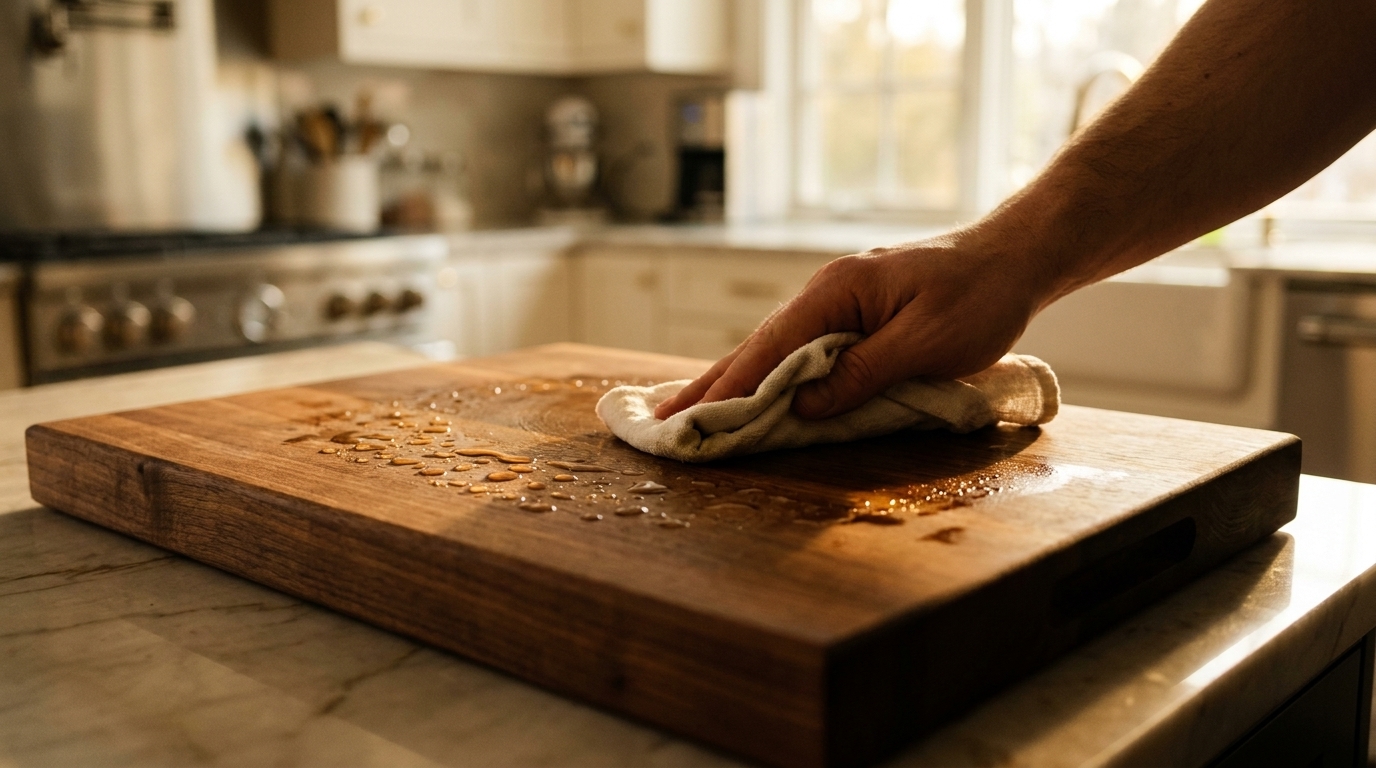
Acidic foods like dragon fruit damage wooden cutting boards by penetrating the grain and causing warping, making prompt oiling essential to protect your board. Food-grade mineral oil creates a hydrophobic barrier that prevents moisture and pigment absorption, extending your board's life significantly when applied on a regular schedule.
Why Acidic Foods Like Dragon Fruit Demand Immediate Board Care
Acidic dragon fruit juice penetrates wood grain and weakens the board's structure, so oiling within a day of washing stops moisture and pigment from causing permanent damage.
How acid from dragon fruit penetrates and damages unprotected wood
Dragon fruit juice sits at a mildly acidic pH, and on an unprotected board, that acidity absorbs directly into the wood grain along with moisture and pigment. Wood's porous fiber network pulls in liquids and any compounds traveling with them, including organic acids that begin compromising the board's structural integrity from inside [1].
Those acids target lignin -- the natural binder holding wood fibers together -- weakening the surface and opening microfissures that are invisible to the naked eye [2]. Once those microcracks form, bacteria embed deeper into the grain and moisture cycles cause uneven swelling and shrinkage, which is what drives warping -- and why knowing how to oil a wooden cutting board after cutting acidic foods matters so much [2].
The critical window: Why oiling within 24 hours prevents permanent staining and warping
Once dragon fruit's residue and moisture absorb into exposed grain, two problems develop together: pigment bonds to the wood fiber and warping begins as wet sections expand unevenly against drier ones [5]. Wood expands with moisture and contracts as it dries -- when that cycle runs asymmetrically across the board's thickness, it cups or twists [5].
Oiling within a day of washing closes the grain before that uneven drying cycle completes, creating a hydrophobic barrier that limits how far moisture and residual pigment can penetrate on the next use [4]. Boards left un-oiled after acidic exposure face accelerating damage with each wash -- and if yours is already showing signs of it, our guide on how to restore a dry cutting board covers the repair steps [5].
What Oil to Use: Food-Grade Mineral Oil vs. Natural Alternatives
Food-grade mineral oil as the safest, longest-lasting choice for cutting boards
Food-grade mineral oil is clear, odorless, tasteless, and approved for direct contact with food surfaces, which makes it the standard choice for protecting wooden cutting boards -- you can read more in our food-grade mineral oil guide. [6] It absorbs into the grain rather than pooling on the surface, creating a hydrophobic barrier that slows moisture absorption and limits how far residues like dragon fruit juice can penetrate on the next use. [6] Unlike cooking oils, it doesn't go rancid or oxidize inside the wood, so there's no flavor transfer or off-smell over time. [6] When buying, look for bottles specifically labeled food-grade -- that designation confirms the oil has been refined to remove impurities that can contaminate food prep surfaces. [6]
Why olive oil, coconut oil, and linseed oil fall short (and what happens over time)
Olive oil, regular coconut oil, and linseed oil each create distinct long-term problems on wooden cutting boards. Olive oil is semi-drying -- it both goes rancid and partially polymerizes at the same time, building up sticky, gummy patches over repeated use-and-wash cycles that trap food debris rather than repelling it [8].
Regular coconut oil lacks the processing that makes fractionated MCT coconut oil stable; its long-chain fatty acids oxidize and turn rancid faster, introducing off-smells and flavors to the board over time [7]. Linseed oil hardens as it cures -- useful for furniture, but in a kitchen's damp environment, that same drying property creates a mildew risk on a surface you wash regularly [7].
Step-by-Step: Oiling Your Wooden Cutting Board After Acidic Foods
Clean and fully dry your board before oiling to prevent trapping moisture and residue under the oil, then apply mineral oil generously and let it absorb overnight for best results.
Pre-oiling prep: Cleaning dragon fruit residue without damaging the grain
Before oiling, the board must be clean and fully dry -- residual dragon fruit juice or moisture left on the surface gets sealed under the oil rather than removed.
Use a few drops of mild dish soap with warm (not hot) water and a soft sponge, working both with and against the grain to lift residue from cuts and pores. [9] Hot water causes wood fibers to expand and can damage the board, while harsh cleaners or bleach strip the wood's natural moisture balance and leave the grain more exposed. [9] After rinsing, wipe with a dry towel and prop the board on its side until it dries completely -- oiling a damp board traps moisture inside the grain rather than displacing it. [9]
Application technique: How much oil, which direction, and drying time for best results
Pour enough mineral oil onto the board that the surface looks well-coated -- more than seems necessary -- then rub it into the flat faces with a clean cloth in even strokes, making sure to work it into the end grain too, since those cross-cut edges absorb oil faster and are the first areas to dry out [10].
Work one side at a time, resting each oiled face up so the oil soaks into the grain rather than running off; overnight is ideal, but a minimum of a few hours still provides meaningful protection after acidic exposure [11].
Once absorption is complete, buff off any remaining oil with a dry towel -- the board should feel smooth and conditioned, not slick or sticky [10].
Maintenance Schedule: How Often to Oil Based on Cutting Board Usage Patterns
Daily oiling every 3-4 weeks keeps your board protected, while waiting for visible cracks means costly restoration work ahead.
Oiling Essentials: Track frequency by board type and use intensity
How often you oil a wooden cutting board depends on both wood type and use intensity -- our cutting board oiling frequency guide breaks this down further by species.
Boards used daily need oiling every 3-4 weeks, while lighter-use boards can go 6-8 weeks between treatments; a heavy butcher's block may need oiling every 2-3 weeks due to greater end-grain exposure. [12] Softer woods like maple absorb oil faster and dry out sooner, so they need more frequent conditioning, while harder woods like oak or walnut can typically go 2-3 months between sessions because their denser grain resists moisture loss more effectively. [13] New boards of any species need more intensive treatment upfront -- oil once a week for the first month to build a baseline barrier, then shift to your standard schedule. [12]
Signs your board needs oiling sooner than scheduled (and why prevention beats repair)
The most reliable early-warning test is simple: sprinkle a few drops of water on the surface, and if they spread and absorb rather than bead up, oil immediately regardless of your usual schedule. [11] Pale or ashy patches, a rough feel under your fingertips, and discoloration after washing are additional signals that the grain is dry and exposed. [14] Once visible cracks form from repeated dry cycles, the wood's internal structure can't be fully restored at home -- oiling at that point treats existing damage rather than preventing it. [14] A few minutes of oil applied on schedule can double or triple a board's working life; waiting until warning signs appear costs significantly more time and effort to address. [14]
- Acidic dragon fruit juice penetrates wood grain and weakens lignin, the natural fiber binder, creating invisible microcracks.
- Oil wooden boards within 24 hours of acidic food exposure to seal the grain before uneven moisture drying causes warping.
- Food-grade mineral oil is the only safe choice--olive oil goes rancid, coconut oil oxidizes, and linseed oil risks mildew.
- Clean boards with mild soap and warm water, dry completely, then apply generous mineral oil to both flat faces and end grain.
- Daily-use boards need oiling every 3-4 weeks; lighter-use boards every 6-8 weeks; softer woods like maple dry faster and need more frequent treatment.
- Water droplets that absorb instead of bead up signal the grain is dry and needs immediate oiling to prevent structural damage.
- https://koppenhouse.com/blog/how-to-clean-a-wooden-cutting-board/
- https://lifetips.alibaba.com/eco-cleaning/things-you-shouldnt-use-to-clean-wood-cutting-boards
- https://www.bonappetit.com/story/how-to-clean-a-wooden-cutting-board?srsltid=AfmBOorDeaYAlxrVclkR2qn1w9oKVM67ee66WFisgvKa4KpF1EIcMmEY
- https://www.tramontina.com.sg/blogs/our-blog/essential-care-tips-wooden-chopping-board?srsltid=AfmBOoq38F8ISu9mYoJwRq0ZRzIFhCrH2_jliQaSLli4U8WGtMYFp_hc
- https://lifetips.alibaba.com/kitchen-hacks/stop-cutting-board-warping-with-mineral-oil-sun
- https://dalstrong.ca/blogs/news/how-mineral-oil-can-help-maintain-your-cutting-board?srsltid=AfmBOoqe_AyOH2gaNBI5h5AmtFq9c-7iS7lEwLP6hLudPdRHuYW-G9p3
- https://hardwood-lumber.com/blog/the-best-oils-for-wood-cutting-boards/?srsltid=AfmBOopK77hirwuxifgGZwEBpGw7S-BTYsM2KLdEDgzcpw0J9Y2LuKS0
- https://sloewood.com/what-is-the-best-oil-treatment-for-cutting-boards/
- https://seidoknives.com/blogs/news/how-to-clean-wooden-cutting-board?srsltid=AfmBOoqiktQQCDxzjApG8ZhtY1FumT-zwPHSKL4fatBMgTz_Xb4dbpou
- https://www.thekitchn.com/how-to-oil-and-maintain-a-wooden-cutting-board-lessons-from-the-kitchn-195642
- https://www.seriouseats.com/how-to-season-and-maintain-a-wood-cutting-board
- https://www.deerandoak.co.uk/blogs/news/how-often-should-you-oil-a-wooden-cutting-board?srsltid=AfmBOorTCmXtx_10K8BLROEsKr-MDzc-y5gXQfjLLgnqFBqlnSsXdtW_
- https://becauseyoucook.com/blog/the-ultimate-guide-how-to-oil-your-cutting-board-like-a-pro/?srsltid=AfmBOoo5LXJK6W0AMysTylv0EdTn1MaoxmqH4871aiA4EmoYaFhVR0CI
- https://www.deerandoak.co.uk/blogs/news/why-do-wooden-cutting-boards-need-oiling?srsltid=AfmBOoqm8UkPBjYHSyANh32dWyRd25vUvbiD3nkTdPQMqL3jYybT-OSl