

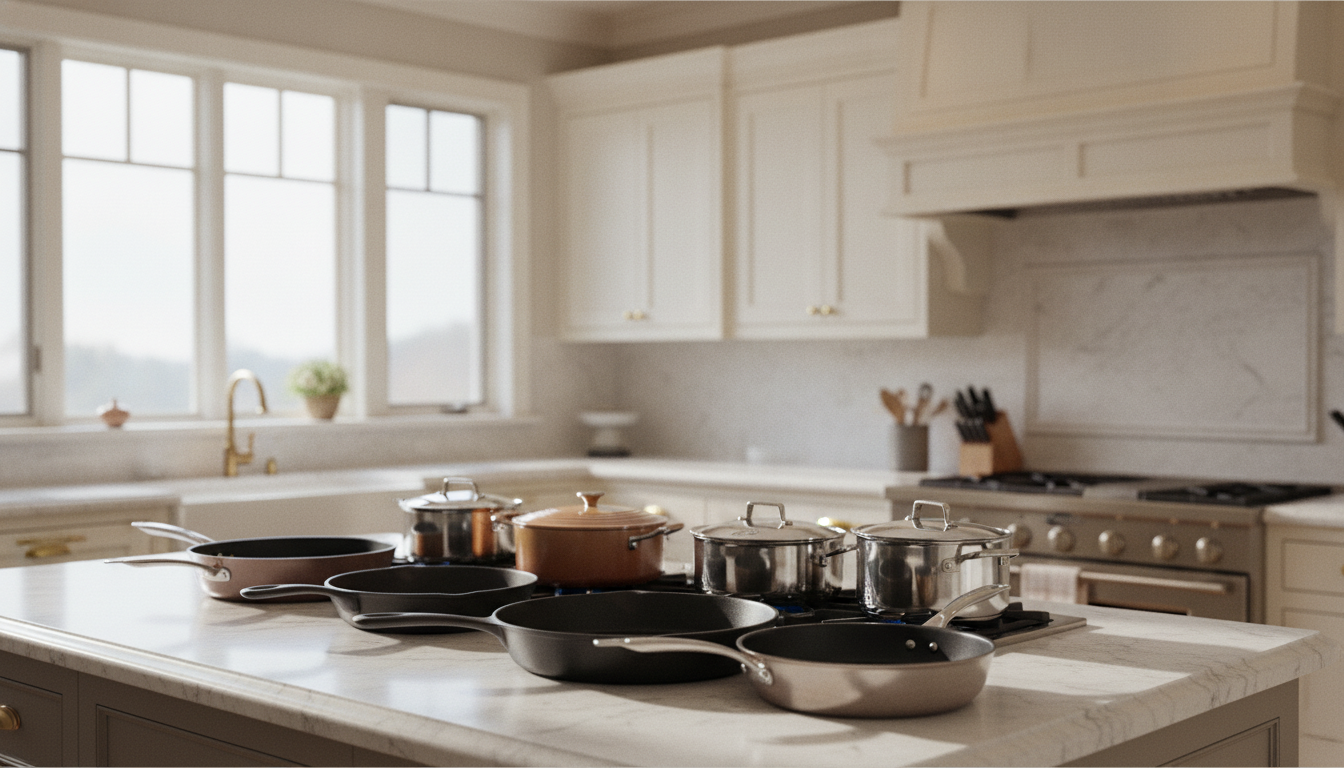
Learn which cookware materials are truly nickel-free and how to verify alloy grades before buying, so you can choose pans that match both your cooking style and health needs. Cast iron, carbon steel, and hard-anodized aluminum offer naturally nickel-free surfaces, while stainless steel requires checking the specific grade number to confirm nickel content.
Why Nickel in Cookware Matters: Health, Allergies, and Material Facts
Nickel stabilizes stainless steel and resists pitting, but people with nickel allergies can trigger eczema or dermatitis from cookware exposure as low as 67 micrograms.
What is nickel and why is it in stainless steel cookware?
Nickel is an alloying element, not a coating, added to certain stainless steel formulas to change how the metal behaves during manufacturing and cooking. Chromium is what actually forms the thin oxide layer that blocks rust, but nickel stabilizes that structure, keeps the steel non-magnetic, and lets manufacturers draw flat sheet into pots and pans without cracking during forming [1].
That's why the two most common cookware grades, 304 (18/8) and 316 (18/10), both pair roughly 18 percent chromium with 8 to 10 percent nickel [2]. Nickel also raises resistance to pitting from salt and acid, which is part of why a well-made stainless pan can handle tomato sauce or brined meat for years without staining [2].
Not every stainless part needs nickel, though:
- Ferritic grades like 430 (18/0) skip nickel and are magnetic [2].
- These show up in lids, induction base caps, and some budget cookware bodies [2].
- They pit and rust-spot more easily than 304 or 316 [2]. So a single pot can combine a nickel-containing cooking surface with nickel-free hardware elsewhere on the same piece [2].
Who needs nickel-free cookware: allergies, sensitivities, and safe cooking practices
Nickel sensitivity affects a meaningful share of the population, and women face higher risk than men. Research shows nickel-related systemic dermatitis affects roughly 10 percent of people, with women more commonly affected [3]. Separate data narrows that further, finding 12 to 15 percent of women and 1 to 2 percent of men carry a nickel allergy [4]. For sensitive individuals, exposure doesn't require direct skin contact with jewelry or zippers, since an oral dose as low as 67 micrograms of nickel can trigger a flare-up of eczema or systemic dermatitis [3]. Dermatology case reports have linked ingested nickel to generalized itching on the hands and feet that cleared once patients switched to a low-nickel diet, pointing to food and cookware as an overlooked exposure source [5]. People managing a diagnosed nickel allergy, rather than the general population, are the ones who benefit most from swapping stainless steel for nickel-free cookware, especially for acidic cooking.
Safe cooking practices for sensitive cooks include:
- Save new stainless pots for low-acid meals until seasoned through repeated use [5]
- Reserve long-simmered tomato sauce, vinegar, and citrus dishes for nickel-free pans
- Pair meals with vitamin C or iron-rich foods, which can reduce nickel absorption [5]
- Talk to a dermatologist or allergist before overhauling cookware based on diet alone [5]

Which Cookware Materials Are Naturally Nickel-Free (And Which Aren't)
Read the grade number on your cookware packaging to know exactly how much nickel you're buying, since 304 and 316 stainless contain it while 430 does not.
Is stainless steel nickel-free? Breaking down the grades and alloy composition
Not all stainless steel qualifies as nickel-free, and the answer depends entirely on which grade you're holding. Under the ASTM A240 standard, 304 stainless must contain 17.5 to 19.5 percent chromium and 8 to 10.5 percent nickel, which is why the alloy carries the informal "18/8" or "18/10" label depending on where in that nickel range a given batch lands [6]. The extra nickel in 18/10 isn't just marketing: it gives the surface a brighter, more silvery finish and slightly better resistance to organic acids and harsh detergents compared to standard 18/8 [6].
Nickel's role goes beyond corrosion resistance, too. As a strong austenite stabilizer, it keeps the steel's crystal structure stable from room temperature down to extreme cold, which is also why 304 and 316 stay non-magnetic and can't be hardened through heat treatment the way carbon steel can [6]. Manufacturers sometimes apply a passivation treatment, using a mild oxidant to strip free iron from the surface, which strengthens the existing chromium oxide layer but doesn't change the underlying nickel content [6].
Cookware labeled simply "stainless steel" could mean several different alloys:
- 304/18-8 or 18-10: nickel-containing, non-magnetic, standard cooking surface [6]
- 316: adds molybdenum plus nickel, built for harsher chemical exposure [6]
- 430/18-0: nickel-free, magnetic, used in lids and budget parts
Reading the grade number on packaging is the most reliable way to know which alloy, and how much nickel, you're actually buying.
Nickel-free alternatives: cast iron, carbon steel, ceramic, and nonstick options compared
Several common materials skip nickel by design rather than by marketing claim. Cast iron and carbon steel are both just iron, seasoned with polymerized oil rather than coated, so there's no alloy to check and nothing synthetic to flake into food [7]. Ceramic (sol-gel) nonstick coatings are sprayed onto a metal base and contain no nickel or PTFE, though the mineral layer tends to lose its slide within a year or two of regular use [7]. PTFE nonstick pans are also nickel-free at the cooking surface since the coating itself is a synthetic polymer, not a metal alloy, regardless of what base metal sits underneath [8]. Hard-anodized aluminum is another nickel-free option: the anodizing process hardens and seals the aluminum surface electrochemically, improving scratch resistance without introducing nickel or a separate coating layer [8]. Titanium cookware is another naturally nickel-free option, though it's worth confirming the specific grade (such as GR1) and requesting material certification before buying, since construction quality varies by manufacturer [16]. Each comes with trade-offs worth weighing before buying nickel-free pots and pans:
- Cast iron and carbon steel: nickel-free, but need seasoning, drying, and oil after washing [7]
- Ceramic nonstick: nickel-free and PTFE-free, but coating wears out in one to two years [7]
- PTFE nonstick: nickel-free surface, but scratches easily and shouldn't be overheated [8]
- Hard-anodized aluminum: nickel-free, durable finish, resistant to scratches and peeling [8]
None of these require checking an alloy grade the way stainless does, which simplifies shopping for anyone avoiding nickel specifically rather than managing a broader metal sensitivity.
Nickel-Free Cookware Comparison Table: Material, Performance, and Care Requirements
Cast iron lasts decades on a $20 budget, while ceramic nonstick costs less upfront but needs replacing within a few years.
Side-by-side breakdown of durability, heat distribution, and maintenance for each material
Durability, heat distribution, and maintenance follow different patterns across nickel-free materials, and knowing the pattern for each helps you match a pan to your cooking habits rather than just its price tag. Cast iron and carbon steel hold heat once they're hot, deliver strong browning, and typically outlast coated pans when cared for properly, but both rust if left wet and need a light oiling after every wash [9]. A pre-seasoned carbon steel pan gives you that naturally nickel-free surface right out of the box, with no alloy grade to track. Ceramic nonstick heats up fast and releases food easily early on, though the coating usually loses its slide within one to three years of regular cooking and shouldn't be pushed past roughly 525 degreesF or run on high stovetop heat [10]. Nickel-free stainless parts, like 430-grade lids and bases, resist scratching well but spread heat unevenly on their own, which is why shoppers look for fully clad or thick-base construction to fix that weak point.
- Cast iron and carbon steel: strong heat retention, needs drying plus oil after washing [9]
- Ceramic nonstick: heats quickly, coating fades within one to three years [10]
- Nickel-free (430) stainless: scratch-resistant, needs clad construction for even heat
- Hard-anodized aluminum parts: durable surface, no coating layer to wear off [9]
Cost, longevity, and warranty considerations when choosing your cookware
Upfront price doesn't always predict how long nickel-free cookware actually lasts, and the two numbers can pull in opposite directions depending on material. A basic cast iron skillet costs around $20, and with routine seasoning it can last for decades, with one widely used model described as "built to last" after years of daily use [11]. Ceramic nonstick sits on the other end of that curve: it's usually priced lower at checkout, but the coating "typically have a shorter lifespan than traditional PTFE-based options," so the pan gets replaced long before a cast iron or carbon steel piece would need it. Nickel-containing stainless splits the difference, since industry buying guides point to stainless as "the backbone" of a kitchen for searing, sauces, and long-term use precisely because the alloy itself doesn't wear out the way a coating does [12]. If nickel isn't a concern for you, a fully clad stainless steel pan handles searing, sauces, and deglazing for the long haul. For a shopper avoiding nickel, that tradeoff plays out as a choice between materials rather than a simple price comparison:
- Cast iron/carbon steel: low cost, decades of use with care [11]
- Ceramic nonstick: lower upfront cost, shorter working lifespan [11]
- Fully clad nickel-containing stainless: higher cost, built for long-term use [12]
Nickel-free hard-anodized aluminum and PTFE nonstick tend to land in the middle, priced closer to ceramic but without an alloy grade to track at resale or replacement time [11].


What to Buy and What to Skip: Making Your Nickel-Free Cookware Decision
Request alloy grade numbers and coating thickness from manufacturers before buying, since vague marketing language often masks nickel exposure risks.
Red flags to avoid when shopping for nickel-free pans and pots
Shopping for nickel-free cookware gets tricky when marketing language outpaces what's actually in the metal, so a few patterns are worth flagging before checkout. Watch for listings that say "nickel-free" without naming a specific alloy grade. Grade 430 stainless is genuinely nickel-free, but a brand can print that claim on packaging for hardware or a lid while the actual cooking surface is 304 or 316, both of which contain nickel by design [13].
Vague coating language is another flag: terms like "nano layer" or unspecified plating thickness usually mean the nickel-free surface is thin enough to wear through, at which point whatever sits underneath becomes the new cooking surface. A plated or coated pan doesn't eliminate a nickel concern so much as delay it, since any surface layer has a finite lifespan before it's gone [13]. Red flags to check before buying include:
- No alloy grade number listed anywhere on packaging
- "Nickel-free" claims limited to lids, handles, or bases
- Coating described by marketing name, not material or thickness
- No disclosed thickness for any plated or clad layer
- Price far below comparable solid-metal cookware
Asking a brand for construction details in actual units, rather than accepting a pattern name or a vague thickness claim, is the most reliable way to tell a durable nickel-free surface from one that's temporary [13].
That question matters more for cooking surfaces than for hardware, since food only contacts the interior of the pot or pan.
How to verify nickel-free claims and what to ask manufacturers about material sourcing
Verifying a nickel-free claim works the same way as verifying any alloy claim: ask for documentation tied to a specific batch, not a printed label. Material traceability under formal quality systems means a manufacturer can produce mill certificates and composition reports for a given order, especially when you're buying in volume [14]. A genuine certificate matches the heat or batch number on the material itself. If a supplier says the certificate is "coming later from the factory," that's a sign the material is effectively undocumented until it's already in your kitchen. For any cookware with a treated or hardened cooking surface, ask directly whether the treatment added any alloying element, since a surface process can change hardness or appearance without changing the base metal's nickel content, and a credible answer will name the specific elements involved rather than just the brand name of the process [16]. Buyers who request third-party testing alongside a certificate, rather than accepting a quoted grade number alone, get a more reliable picture on larger purchases [14].
Questions worth asking a manufacturer before buying:
- Request a material certificate tied to a batch or heat number [15]
- Ask for the exact alloy grade, not just "nickel-free"
- Ask what elements any surface treatment adds or removes [16]
- Request third-party composition testing for verification [14]
Picking nickel-free cookware really comes down to two steps: match the material to how you cook, then confirm what's in the metal before you buy. Cast iron and carbon steel give you a naturally nickel-free surface that holds up for years with a little care, while ceramic and hard-anodized aluminum offer coating-free options if you want easier release. For help keeping any pan in good shape, see our care & maintenance tips, and if you're still weighing your options, contact us. Explore our collection to find cookware made to last.
Frequently Asked Questions
-
Do I actually need nickel-free cookware, or is this only for people with a nickel allergy?
The article notes that people managing a diagnosed nickel allergy, not the general population, are the ones who benefit most from switching to nickel-free cookware, especially for acidic cooking. Nickel-related systemic dermatitis affects roughly 10 percent of people overall, with 12-15 percent of women and 1-2 percent of men carrying a nickel allergy specifically. If you're unsure whether your symptoms are diet-related, the article recommends talking to a dermatologist or allergist before overhauling your cookware.
-
Is 'stainless steel' cookware automatically nickel-free?
No. The article explains that common grades like 304 (18/8) and 316 (18/10) both contain nickel by design, roughly 8-10.5 percent under the ASTM A240 standard, so most everyday stainless cookware is not nickel-free. Only ferritic grades like 430 (18/0) skip nickel, and those typically show up in lids, induction base caps, or budget cookware parts rather than the main cooking surface. Checking the grade number on packaging is the article's recommended way to know what you're buying.
-
What are the actual nickel-free alternatives to stainless steel, and what are the trade-offs?
The article lists cast iron, carbon steel, ceramic (sol-gel) nonstick, PTFE nonstick, hard-anodized aluminum, and titanium as naturally nickel-free options. Cast iron and carbon steel need seasoning and oiling after washing but hold heat well; ceramic nonstick heats quickly but its coating fades within one to three years; PTFE nonstick resists nickel exposure at the surface but scratches easily; hard-anodized aluminum is durable with no coating layer to wear off. A pre-seasoned carbon steel pan is one example the article points to as nickel-free straight out of the box, with no alloy grade to track.
-
How does the cost of nickel-free cookware compare to nickel-containing stainless steel?
The article gives a few concrete reference points rather than a single price table: a basic cast iron skillet runs around $20 and can last decades with routine seasoning, while ceramic nonstick is usually cheaper upfront but has a shorter working lifespan before the coating wears out. Fully clad nickel-containing stainless costs more but is built for long-term searing and sauce work, so the article frames this as a materials trade-off rather than a straight price comparison. Hard-anodized aluminum and PTFE nonstick are described as landing in the middle, priced closer to ceramic - so it's worth comparing the actual listed price and construction of any specific pan you're considering against these benchmarks.
-
How can I tell if a 'nickel-free' cookware claim is legitimate before buying?
The article's red flags include: no alloy grade number listed anywhere on packaging, 'nickel-free' claims limited only to lids, handles, or bases while the cooking surface is unspecified, vague coating language like 'nano layer' without a disclosed thickness, and pricing far below comparable solid-metal cookware. For verification, it recommends asking the manufacturer for a mill certificate or composition report tied to a specific batch or heat number, rather than accepting a printed label or a promise that documentation is 'coming later.'
- Nickel stabilizes stainless steel during manufacturing and cooking, but people with nickel sensitivity can trigger eczema or dermatitis from ingested nickel as low as 67 micrograms.
- Grade 430 stainless is genuinely nickel-free, but brands often label only hardware as nickel-free while the cooking surface remains 304 or 316, both containing nickel.
- Cast iron and carbon steel are naturally nickel-free, hold heat well, and last decades with routine seasoning and oiling after washing.
- Ceramic nonstick coatings are nickel-free but typically lose their slide within one to three years of regular use.
- Request material certificates tied to batch numbers and ask manufacturers for exact alloy grades and surface treatment details rather than accepting vague marketing claims.
- Hard-anodized aluminum and PTFE nonstick are nickel-free at the cooking surface, though PTFE scratches easily and shouldn't be overheated.
- https://wonnda.com/magazine/stainless-steel-cookware-manufacturing/
- https://www.potobelo.com/blog/materials/stainless-steel-cookware-grades
- https://www.google.com/goto?url=CAESbAHrOzAVSboXv413BqQBCWBtjCumdSfox_AXrrgSrmdVYYs33DJRe3nSpgVFI0zj-q4jZVhu_eX-lWuHiynX5UufvwLKpzJ2tS-9nob5Ui8yDeyJpKMQRf4_hZPhk7Ie4_3eeVlOV8v1vw7crQ
- https://www.google.com/goto?url=CAES0AEB6zswFS3D3ddKzKbAAu0QR0qLwnsTaMVHnXvc9BEC_GBT2W1do8S3e_MLsyzs60gvJO_0P1sZdX80UikP1nuU8EUGy0EM7foNHB9-ox3IG6ruaHrUv8x0vPBmss1xaj3Vrlo0-eU6msvgRFmcCbrVeLlze8hgBYuX7ZmvWYJC2j3v_jhwVB-RYwzVEz-2VcFcj_qs9RlD1BOGfxUpgBIE3sMd3d1Dg2uzKBL5Nm__ATAepJzkuvmc-HMx9rIb634AYEeRwRgQMUc6qtV5kxrX
- https://www.google.com/goto?url=CAESswEB6zswFXymy103zj6pt_AhIi7t5dagtJTLW9vItPwwpDxlCFVsE6k-HQ2Bz9JcPx3plR4AeSYANRb8BPEwLusd5dGsDEHHYjtQP6GDTrivdVNPvOlE4l5jqsonxi_V0DxUX8zbSupmvTAS-6WARAUnSSDhwnBY77kz37vcfOlsoORMI4yM3Oeb-clb9F4CiYiyKlG-u7Hf6yjheSGAEcH5bGZxFeMdZqEOApuSJvhrfuUddg
- https://www.machining-custom.com/blog/304-stainless-steel.html
- https://www.juliencookware.com/blogs/journal/safest-cookware-materials
- https://leeknives.com/best-non-stick-pan-material/
- https://www.google.com/goto?url=CAEStwEB6zswFWqBXjnAM_xo-K5Rl4mMx7d884x1fANLO0MIOXRbpfcpr4dFFPQUvzViTYaHvo8WYiu1yDg8YIyRDR4ZgUEPEwuKu1y2iHSqq_zUpq__B6uBWhC-xtkoMEr50vWFzhwNAcMRnxDlU5cSfk63EPUopf4Au4RzBr__nUaBOenHLgF0cDxsdy2cvzm89T0x0h-ZHk3Ubc_UMB9aqyOA3EAt8x1lWRhMJFai20hGnZzmau8WIFU
- https://www.google.com/goto?url=CAESaQHrOzAVf7QSug-q--b3_ErM0Rrk0D4kTKBgltLRJGy4w9xZNZjtwjsPKkLHPmN9b1LtAvKa7ybhZC0Q9o8YoKtQgR9Nqd1DmzkEv03ejPUxu5_WSuf521NlTvQN9vQPMrUVWJXO2A6p4g
- https://www.mytruestyle.com/non-toxic-cookware-guide-ceramic-cast-iron-stainless-steel/
- https://topcookwarebrands.com/
- https://titancookware.ae/blogs/journal/best-cookware-for-a-nickel-allergy
- https://seller.alibaba.com/blogs/2026/southeast-asia/kitchen-appliances/stainless-steel-iso-9001-certification-guide-alibaba-b2b
- https://world.taobao.com/lang/en-us/shopping-guide/2002341528940314624.htm
- https://www.titaudoumiu.com/industry-news/titanium-cookware-super-hardening-technology/
- Summary
- Why Nickel in Cookware Matters: Health, Allergies, and Material Facts
- Which Cookware Materials Are Naturally Nickel-Free (And Which Aren't)
- Nickel-Free Cookware Comparison Table: Material, Performance, and Care Requirements
- What to Buy and What to Skip: Making Your Nickel-Free Cookware Decision
- Key Takeaways
- References