

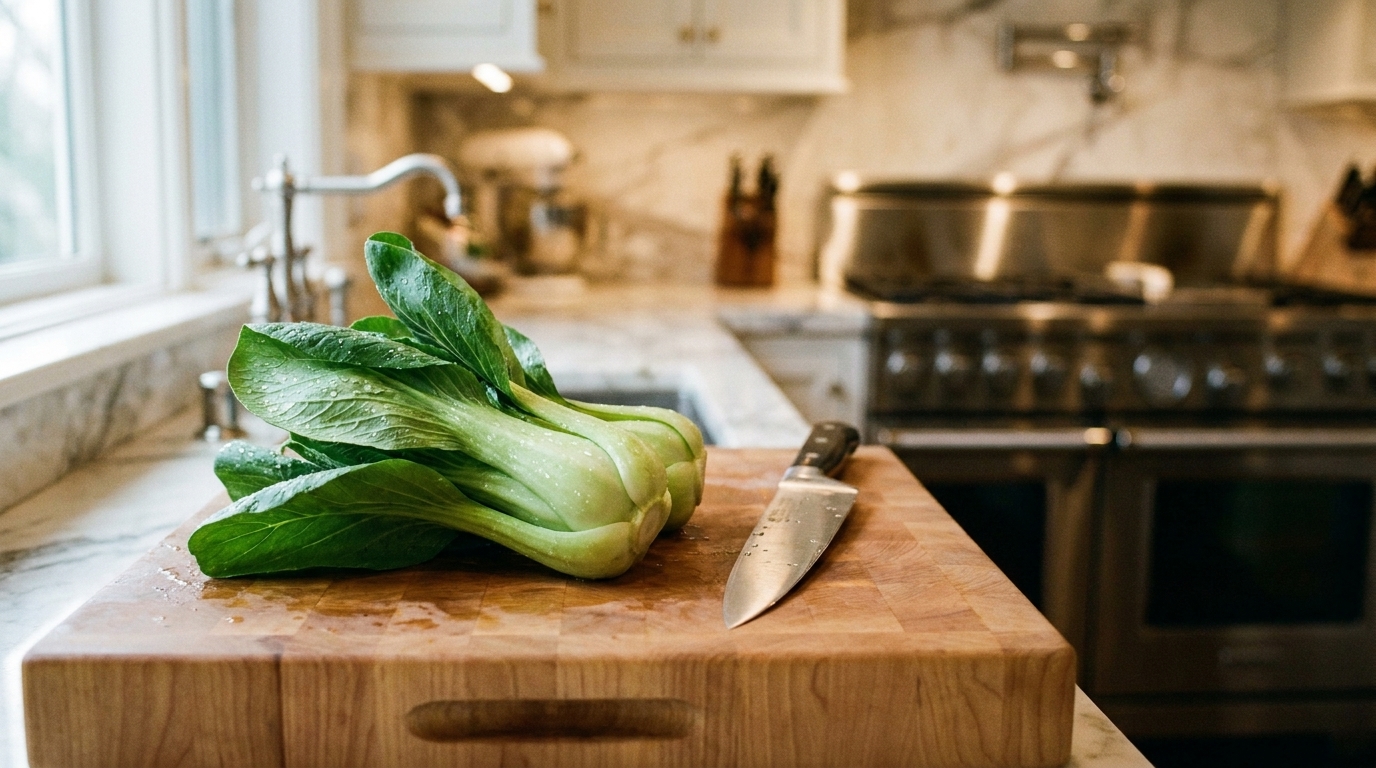
Uniform bok choy cuts ensure even cooking in 5 to 7 minutes by matching the different cook times of tender leaves and dense stalks. A sharp knife and proper technique protect the vegetable's texture and nutrients while keeping prep to just 30 seconds.
Why Cutting Technique Matters for Steamed Bok Choy
Cutting bok choy into uniform pieces ensures even cooking and preserves nutrients, while removing the woody root base prevents tough, inedible sections.
How uniform cuts ensure even cooking in 5-7 minutes
Bok choy's stalks and leaves cook at different rates -- the thick white stems need more time to soften than the tender greens, so uneven cuts mean some pieces overcook while others stay underdone. [1] Cutting everything to a consistent size, whether halved lengthwise or sliced into 2-inch pieces, closes that timing gap and gets the whole vegetable ready in 5 to 7 minutes. [2] Overcooking degrades both texture and nutritional content, so uniform cuts protect the vegetable's vitamins and minerals just as much as they simplify timing. [3]
What part of bok choy do you cut off and why it matters for steaming
The only part of bok choy you remove before steaming is the root end -- the dense, woody base that holds the stalks together, similar to the bottom of a celery bunch. [4] Slice off about an inch or two at the base, then keep everything else: both the white stalks and the dark green leaves are edible and worth cooking. [5] For steaming specifically, removing the root lets you either halve the head lengthwise while keeping the leaves intact, or separate the plant into individual spoon-shaped leaves so steam can circulate more freely between them. [6] Skipping this trim leaves a tough, fibrous section that won't soften during steaming and makes the rest of the vegetable harder to eat.
The 30-Second Prep Method: Step-by-Step Cutting Guide
Rinsing thoroughly, drying completely, and cutting with a sharp knife in one fluid motion ensures even cooking and clean leaf edges.
Washing and drying bok choy before you cut to prevent steam pooling
Bok choy hides grit between its leaves and stalks, so rinse it before cutting -- plunge baby heads a few times in a large bowl of cold water, or gently pry the stalks apart to rinse between them [9]. Dirt and sand collect most heavily near the base of the stems, so give that area extra scrubbing before rinsing [8].
After washing, dry the exterior thoroughly with a kitchen towel; if you're halving the bok choy lengthwise, dry the cut interior too [7]. Skipping the drying step leaves surface moisture that becomes excess liquid in the steamer, softening the leaves faster than the stems and throwing off your 5-to-7-minute cook time.
The lengthwise halve cut: fastest technique for baby and full-size bok choy
For baby bok choy, place the dried head flat on your board and cut straight down through the center lengthwise -- one clean motion from base through the top of the leaves. [5] Keep the root end intact; it holds the leaves together as a unit, which makes each half easier to position in the steamer basket. [5] Full-size bok choy follows the same logic but gets quartered instead of halved -- cut in half lengthwise, then cut each half again -- because the larger heads are too thick for steam to penetrate evenly when only halved. [6] A sharp chef's knife completes both cuts in one fluid stroke and keeps the leaf edges clean rather than torn. [10]
Three Cutting Styles for Different Steaming Results
Cut bok choy into halves or 2-inch pieces to match your cooking method and ensure even, tender results without overcrowding.
Halved lengthwise for whole bok choy steaming with flat sides down
Positioning halved bok choy flat side down in the steamer basket serves two practical purposes: the cut surface gives steam direct access to the dense white stalks, and the flat base keeps each half stable so pieces don't shift and block airflow around the leaves. [11] Baby bok choy halved lengthwise sits securely without rolling, which makes fitting multiple heads into a single steamer layer straightforward. [12] Crowding the basket or stacking pieces traps moisture rather than circulating it, softening the leaves before the stalks are ready -- the same problem that occurs when overcrowding a pan. [12] Arrange them cut side down in a single layer and the 5-to-7-minute window holds. [13]
Chopped into 2-inch pieces for mixed vegetable steam bowls and ramen
For ramen and mixed vegetable steam bowls, the 2-inch chop gives you pieces sized to eat with chopsticks and cook evenly in hot broth. [14] Separate the stalks from the leaves after trimming the root, chop the white stems crosswise into 2-inch sections, then roughly chop the greens to a similar size. [5] When adding to simmering ramen, drop the stem pieces in first and give them about 30 seconds before the greens -- both parts finish tender at roughly the same time without the leaves going limp. [15] The same sizing logic applies to steam bowls: 2-inch pieces laid flat in a single layer steam in 3 to 4 minutes, faster than the 5 to 7 minutes halved heads require.
The Right Knife and Board Make 30-Second Cuts Possible
A sharp chef's knife and wood cutting board work together to preserve bok choy's cell structure and keep leaves crisp through cooking.
Why a sharp chef's knife reduces prep time and prevents bruising
A dull knife bruises bok choy's leaf cells rather than cutting through them cleanly -- damaged cells oxidize faster, releasing moisture that wilts the leaves before the stems have finished cooking. [16] A sharp chef's knife slices through the tender greens and firm white stalks in a single fluid stroke, reducing the force you apply and protecting cell walls from unnecessary damage. [17] Less force also means less hand contact and less time on the board, both of which slow deterioration by limiting heat transfer to the vegetable. [16] If you want to confirm your blade is ready before you start, our chef knife buying guide covers what to look for in steel type and edge geometry for everyday prep.
Cutting board selection: wood versus plastic for leafy greens
For bok choy and other leafy greens, wood boards offer two practical advantages over plastic: they're gentler on knife edges, and their closed-pore structure -- particularly dense maple -- resists surface moisture released during leafy vegetable prep. [18] End-grain maple boards also self-heal over time, closing surface marks that can otherwise trap bacteria, which matters when you're doing daily produce work. [18] Plastic boards are harder on knife edges and can shed microplastics into food during cutting, though they're dishwasher-safe and easier to sanitize after handling raw proteins on a separate board. [19] If you go with wood for vegetable prep, regular oiling keeps the surface from drying out -- our cutting board oiling guide covers the full care & maintenance tips in five minutes.
- Cut bok choy into uniform sizes so stalks and leaves cook evenly in 5-7 minutes.
- Remove only the root end; white stalks and dark green leaves are both edible and nutritious.
- Rinse thoroughly between leaves and scrub the stem base to remove hidden grit and sand.
- Halve baby bok choy lengthwise; quarter full-size heads so steam penetrates evenly.
- A sharp chef's knife cuts cleanly without bruising cells, preserving texture and nutrients.
- Arrange halved pieces cut-side down in a single layer to prevent crowding and moisture trapping.
- Wood cutting boards are gentler on knife edges and resist moisture better than plastic for leafy greens.
- https://hexclad.ca/blogs/posts/how-to-cut-bok-choy?srsltid=AfmBOooM_IVQQDAGnDzQc7H22DmP45c1aYAlxdQIBY-MGInzclLth0uG
- https://lykyn.com/blogs/news/how-to-cut-baby-bok-choy?srsltid=AfmBOoptFqJG7td7E3V2FTspFct5I0JqAQr2ti60acj_D0kRvrB5YorN
- https://theskinnypot.com/bok-choy-steamed-in-oyster-garlic-sauce/
- https://naturalkitchenschool.com/how-to-cut-bok-choy/
- https://itsavegworldafterall.com/how-to-cut-bok-choy/
- https://iheartumami.com/how-to-cut-bok-choy/
- https://www.jessicagavin.com/how-to-cook-bok-choy/
- https://vickypham.com/blog/easy-blanched-bok-choy/
- https://iheartumami.com/bok-choy-stir-fry/
- https://www.healthyseasonalrecipes.com/how-to-cut-bok-choy/
- https://cleangreensimple.com/recipe/how-to-cook-bok-choy/
- https://www.thisgalcooks.com/easy-brown-butter-miso-bok-choy-recipe/
- https://muchbutter.com/garlic-bok-coy/
- https://kyokuknives.com/blogs/kyoku-chef-blog/how-to-prepare-bok-choy-for-ramen-stir-fries?srsltid=AfmBOopCnflkYqCLDf0ga0FStTD4IXAkQw_zdauC0AOljpWcW0G22Qfb
- https://bigdeliciouslife.com/mushroom-and-bok-choy-ramen/
- https://togknives.com/blogs/news/sharp-knives-better-food?srsltid=AfmBOorFeWAjh3uL75Jziyt3LjwC-5-Vltg33y9PdvrinHMXUDyJHiVK
- https://www.chowhound.com/1651894/sharp-knife-makes-better-salad/
- https://www.nytimes.com/wirecutter/reviews/best-cutting-board/
- https://theroundup.org/non-toxic-cutting-boards/